
Physical Products
-

Raspberry Pi Foundation Netzteil für Raspberry Pi Build HAT (48 W)
Dieses 48 W (8 V DC , 6 A) Netzteil ist für die Verwendung mit dem Raspberry Pi Build HAT konzipiert. Eingang: 110–240 V Wechselstrom Ausgang: 8 V DC , 6 A Kabel: 1,5 m, 16 AWG
-

Raspberry Pi Foundation Raspberry Pi Build HAT
Bauen Sie robuste, intelligente Maschinen, die die Rechenleistung des Raspberry Pi mit LEGO-Komponenten kombinieren. Der Raspberry Pi Build HAT bietet vier Anschlüsse für LEGO Technic Motoren und Sensoren aus dem SPIKE Portfolio. Zu den verfügbaren Sensoren gehören ein Abstandssensor, ein Farbsensor und ein vielseitiger Kraftsensor. Die Winkelmotoren sind in verschiedenen Größen erhältlich und verfügen über integrierte Encoder, die ihre Position abfragen können. Der Build HAT passt auf alle Raspberry Pi-Computer mit einem 40-Pin-GPIO-Header, einschließlich – mit der Hinzufügung eines Flachbandkabels oder eines anderen Erweiterungsgeräts – Raspberry Pi 400. Angeschlossene LEGO Technic-Geräte können neben Standard-Raspberry-Pi-Zubehör problemlos in Python gesteuert werden wie zum Beispiel ein Kameramodul. Merkmale Steuert bis zu 4 Motoren und Sensoren Versorgt den Raspberry Pi mit Strom (bei Verwendung mit einem geeigneten externen Netzteil) Einfache Verwendung von Python auf dem Raspberry Pi
-

Kitronik Kitronik Motor Driver Board for Raspberry Pi Pico
Dieses Board ermöglicht es dem Raspberry Pi Pico (angeschlossen über die Stiftleiste), zwei Motoren gleichzeitig mit voller Vorwärts-, Rückwärts- und Stoppsteuerung anzutreiben, was es ideal für Pico-gesteuerte Buggy-Projekte macht. Alternativ kann die Platine auch zum Betrieb eines Schrittmotors verwendet werden. Die Platine ist mit dem Motortreiber-IC DRV8833 ausgestattet, der über einen integrierten Kurzschluss-, Überstrom- und Wärmeschutz verfügt. Die Platine hat 4 externe Anschlüsse für GPIO-Pins und eine 3-V- und GND-Versorgung vom Pico. Dies ermöglicht zusätzliche IO-Optionen für Ihre Buggy-Bauten, die vom Pico gelesen oder gesteuert werden können. Außerdem gibt es einen Ein/Aus-Schalter und eine Power-Status-LED, so dass Sie auf einen Blick sehen können, ob das Board eingeschaltet ist, und Ihre Batterien schonen können, wenn Ihr Projekt nicht in Gebrauch ist. Um die Motortreiberplatine verwenden zu können, muss der Pico über eine verlötete Stiftleiste verfügen und fest in den Stecker eingesteckt werden. Die Platine erzeugt eine geregelte Stromversorgung, die in den 40-poligen Stecker eingespeist wird, um den Pico mit Strom zu versorgen, so dass dieser nicht direkt mit Strom versorgt werden muss. Die Motortreiberplatine wird entweder über Schraubklemmen oder einen Servostecker versorgt. Kitronik hat ein Micro-Python Modul und Beispielcode entwickelt, um die Verwendung des Motor Driver Boards mit dem Pico zu unterstützen. Dieser Code ist im GitHub Repo verfügbar. Merkmale Ein kompaktes und dennoch funktionsreiches Board, das als Herzstück Ihrer Raspberry Pi Pico Roboter-Buggy-Projekte entwickelt wurde. Die Platine kann 2 Motoren gleichzeitig mit voller Vorwärts-, Rückwärts- und Stoppsteuerung antreiben. Sie enthält den Motortreiber-IC DRV8833, der über einen integrierten Kurzschluss-, Überstrom- und Überhitzungsschutz verfügt. Darüber hinaus verfügt die Platine über einen Ein/Aus-Schalter und eine Power-Status-LED. Die Stromversorgung der Platine erfolgt über einen Klemmenleistenanschluss. Die 3V- und GND-Pins sind ebenfalls herausgebrochen, so dass externe Geräte mit Strom versorgt werden können. Programmieren Sie es mit MicroPython über einen Editor wie den Thonny-Editor. Abmessungen: 63 mm (L) x 35 mm (B) x 11,6 mm (H) Download Datenblatt
-
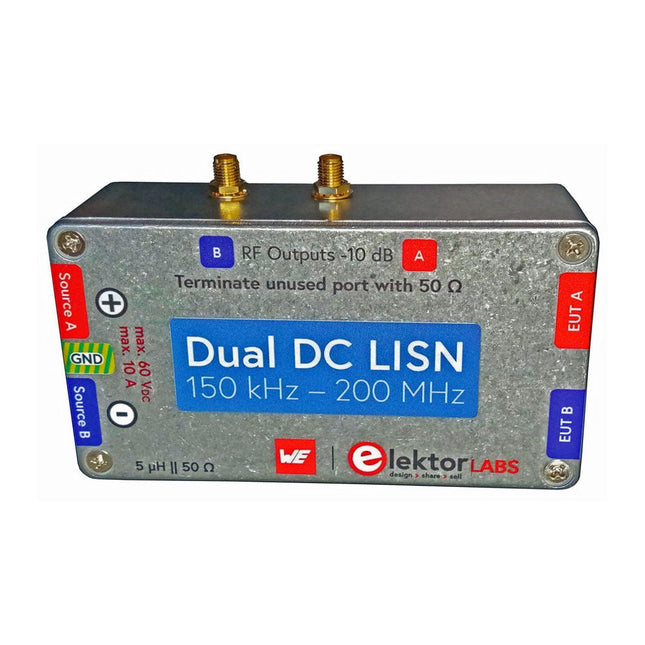
Elektor Labs Elektor Dual DC LISN (150 kHz – 200 MHz)
Die Messung der leitungsgebundenen Emission ist die einfachste und kostengünstigste Methode, um einen Hinweis darauf zu erhalten, ob ein Design die EMI/EMV-Anforderungen erfüllen kann. Ein Line Impedance Stabilization Network (LISN) ist dabei ein unverzichtbarer Bestandteil eines EMV-Prüfaufbaus (Pre-Compliance). In Zusammenarbeit mit Würth Elektronik hat Elektor einen 5 µH, 50 Ω Dual DC LISN entwickelt, der Spannungen bis zu 60 V und Ströme bis zu 10 A unterstützt. Das Gerät misst HF-Störungen auf beiden Kanälen (der Stromversorgung) mit Hilfe von 5-μH-Sperrinduktivitäten. Das interne 10-dB-Dämpfungsnetzwerk – eines in jedem Kanal – enthält einen Hochpassfilter dritter Ordnung mit einer Grenzfrequenz von 9 kHz, um den Eingang von Instrumenten wie z. B. einem Spektrumanalysator vor potenziell schädlichen Gleichspannungen oder niedrigen Frequenzen zu schützen, die vom Prüfling (EUT – Equipment Under Test) stammen. Technische Daten RF-Pfad Kanäle 2 (mit Klemmdioden) Bandbreite 150 kHz – 200 MHz Induktivität 5 μH || 50 Ω Interne Abschwächung 10 dB Steckverbinder SMA DC-Pfad Max. Strom < 10 ADC Max. Spannung < 60 VDC DC-Widerstand < 2 x 70 mΩ Platinengröße 94,2 x 57,4 mm Steckverbinder 4-mm-Bananenstecker Hammond-Gehäuse Typ 1590N Abmessungen 121 x 66 x 40 mm Lieferumfang 1x 4-lagige Platine mit allen SMD-Bauteilen bestückt 1x Vorgebohrtes Gehäuse mit vorgedrucktem Frontplattenlayout 5x Vergoldete, isolierte 4-mm-Bananenbuchsen, ausgelegt für 24 A, 1 kV 1x Hammond-Gehäuse 1590N1, Aluminium (Druckgusslegierung) Mehr Info Projekt auf Elektor Labs: Dual DC LISN for EMC pre-compliance testing Elektor 9-10/2021: EMV-Vor-Konformitätstester für Ihr Projekt mit DC-Versorgung (Teil 1) Elektor 11-12/2021: EMV-Vorkonformitätstest für Ihr DC-versorgtes Projekt (Teil 2)
-
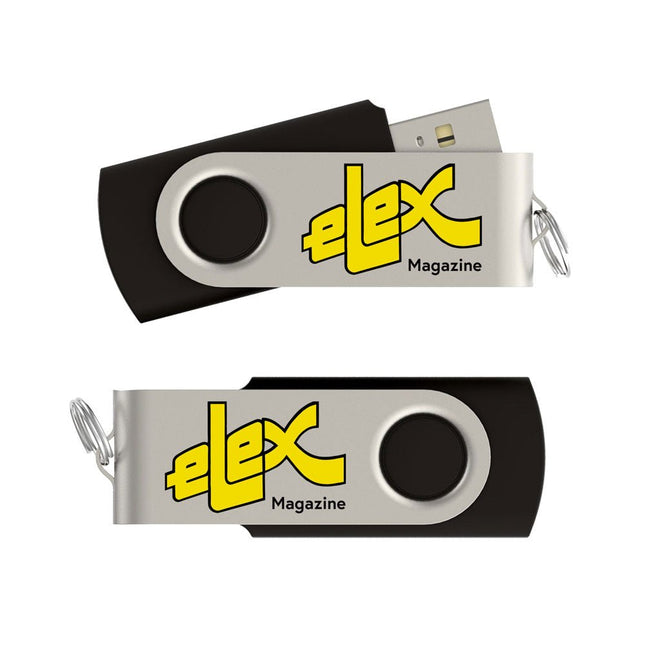
Elektor Classics Elex Archiv (USB-Stick)
In der Zeit von 1982 bis 1992 publizierte der Elektor Verlag parallel zur Elektor für die jüngere Zielgruppe die Elex und den Nachfolger ESM. Den Redakteuren war vor allem daran gelegen, Elektronik auf einfache Art und Weise unter Verzicht auf „Fachchinesisch“ zu vermitteln. Aufgrund der anhaltend großen Nachfrage in den letzten Jahren nach verschiedenen Elex-Schaltungen, haben wir alle Elex- und ESM-Ausgaben auf diesem USB-Stick zusammengefasst. Neben vielen Grundlagenartikeln enthält der Stick viele einfache und interessante Schaltungen für den Selbstbau.
-
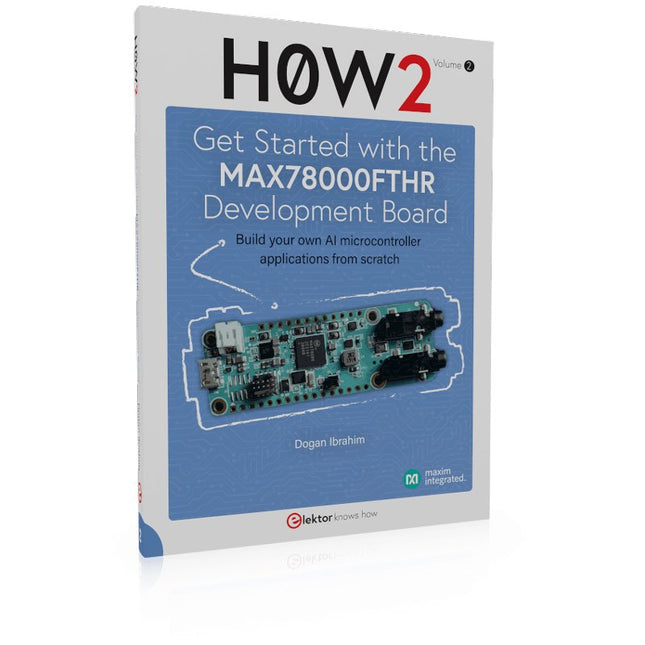
Elektor Publishing H0W2: Get Started with the MAX78000FTHR Development Board
Build your own AI microcontroller applications from scratch The MAX78000FTHR from Maxim Integrated is a small development board based on the MAX78000 MCU. The main usage of this board is in artificial intelligence applications (AI) which generally require large amounts of processing power and memory. It marries an Arm Cortex-M4 processor with a floating-point unit (FPU), convolutional neural network (CNN) accelerator, and RISC-V core into a single device. It is designed for ultra-low power consumption, making it ideal for many portable AI-based applications. This book is project-based and aims to teach the basic features of the MAX78000FTHR. It demonstrates how it can be used in various classical and AI-based projects. Each project is described in detail and complete program listings are provided. Readers should be able to use the projects as they are, or modify them to suit their applications. This book covers the following features of the MAX78000FTHR microcontroller development board: Onboard LEDs and buttons External LEDs and buttons Using analog-to-digital converters I²C projects SPI projects UART projects External interrupts and timer interrupts Using the onboard microphone Using the onboard camera Convolutional Neural Network
€ 39,95
Mitglieder: € 35,96
-
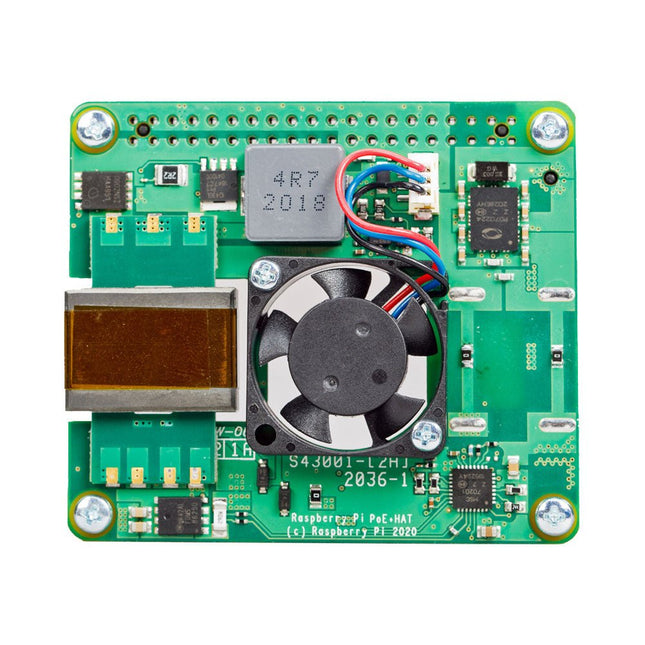
Raspberry Pi Foundation Raspberry Pi PoE+ HAT (für Raspberry Pi 3 B+ und 4)
Der Raspberry Pi PoE+ HAT ist eine Zusatzplatine für Raspberry Pi 3 B+ und Raspberry Pi 4 mit PoE-Pins. Er versorgt den Raspberry Pi über ein Ethernet-Kabel mit Strom, sofern kompatibles Power-Sourcing Equipment (PSE) im Ethernet-Netzwerk vorhanden ist. Zusätzlich verfügt der HAT über einen integrierten Lüfter zur Kühlung des Raspberry Pi-Prozessors. Technische Daten Standard IEEE 802.3at-2003 PoE Eingangsspannung 37-57 V DC, Klasse 4 Gerät Ausgangsspannung 5 V DC/4 A Kühlung 25 x 25 mm bürstenloser Lüfter mit 2,2 CFM zur Prozessorkühlung Betriebstemperatur 0°C bis +50°C Downloads Datasheet
-
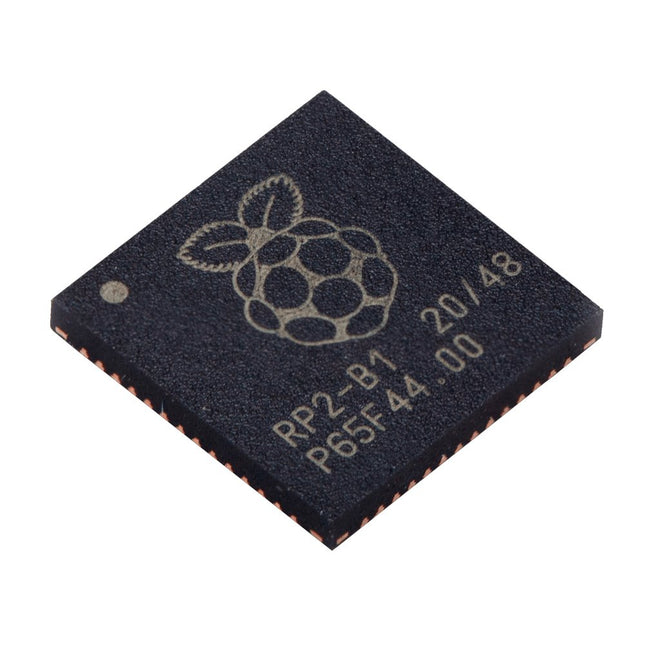
Raspberry Pi Foundation Raspberry Pi RP2040 Microcontroller (10 pcs)
Technische Spezifikationen Zwei ARM Cortex-M0+ mit 133 MHz 264 kB On-Chip-SRAM in sechs unabhängigen Bänken Unterstützung für bis zu 16 MB Off-Chip-Flash-Speicher über dedizierten QSPI-Bus DMA-Steuerung Vollständig angeschlossene AHB-Crossbar Interpolator- und Integer-Teiler-Peripherie On-Chip programmierbarer LDO zur Erzeugung der Kernspannung 2x On-Chip-PLLs zur Erzeugung von USB- und Kerntakten 30x GPIO-Pins, von denen 4 als Analogeingänge verwendet werden können Peripheriegeräte 2x UARTs 2x SPI-Steuerungen 2x I²C-Steuerungen 16x PWM-Kanäle USB 1.1-Controller und PHY, mit Host- und Geräteunterstützung 8x PIO-Zustandsmaschinen Was Sie erhalten 10x nackte RP2040-Chips
€ 7,95€ 3,18Bestpreis
-

OWON OWON HDS272S 2-Kanal-Oszilloskop (70 Mhz) + Multimeter + Signalgenerator
Der OWON HDS272S ist die perfekte All-in-One-Lösung!Oszilloskop, Multimeter und Wellenformgenerator in einem batteriebetriebenen Gerät zum Arbeiten unterwegs.FeaturesOszilloskop + Multimeter + Wellenformgenerator, Multifunktion in einem3,5 Zoll hochauflösendes, kontrastreiches Farb-LCD-Display, geeignet für den Außeneinsatz18650-Lithium-Batterie, umfassende Leistungsaufnahme ≤3W, kann ca. 6 Stunden lang ununterbrochen arbeitenUSB-Typ-C-Schnittstelle, unterstützt Powerbank, unterstützt PC-Software-AnschlussSelbst-KalibrierungsfunktionSCPI unterstützt, erleichtert sekundäre EntwicklungTechnische DatenOscilloscopeBandbreite70 MHzKanäle2-Kanal-Oszilloskop + 1-Kanal-SignalgeneratorAbtastrate250 MSa/sAkquisitionsmodellNormal, Spitzenwert erkennenDatensatzlänge8KDisplay3,5-Zoll-LCDWellenform-Bildwiederholrate10.000 wfrms/sEingangskopplungDC, AC und MasseEingangsimpedanz1 MΩ ±2%, parallel mit 16pF ±10pFSonden-Dämpfungsfaktoren1X,10X,100X,1000X,10000XMax. Eingangsspannung400 V (DC+AC, PK-PK, 1MΩ Eingangsimpedanz) (10:1 Sondenabschwächung)Bandbreitengrenze (typisch)20MHzHorizontale Skala5ns/div - 1000s/div, Schrittweite 1 - 2 - 5Vertikale Empfindlichkeit10mV/div - 10V/divVertikale Auflösung8 BitTriggertypEdgeAuslöser-ModiAuto, Normal, einzelnAutomatische MessungPeriode, Frequenz, Mittelwert, PK-PK, Max, MinCursor-MessungΔV, ΔT, ΔT&ΔV zwischen CursorenKommunikationsschnittstelleUSB Typ-CMultimeterMax. Auflösung20.000 ZählungenTestmodusSpannungs-, Strom-, Widerstands-, Kapazitäts-, Dioden- und DurchgangsprüfungEingangsimpedanz10MΩMax. EingangsspannungAC 750V, DC 1000VMax. EingangsstromDC: 10A | AC: 10 ADiode0-2 VWellenformgeneratorFrequenzausgangSinus0,1 Hz - 25 MHzQuadrat0,1 Hz - 5 MHzRampe0,1 Hz - 1 MHzPuls0,1 Hz - 5 MHzArbiträr0,1 Hz - 5 MHzAbtastrate125 MSa/sKanal1-KanalAmplitudenbereich20 mVpp - 5 VppWellenformlänge8KVertikale Auflösung14bitsAusgangsimpedanz50ΩDownloadsUser Manual für HDS200 Serie (Deutsch)SCPI Protocol for HDS200 SeriesQuick Guide for HDS200 SeriesPC Software for OWON HDS200 Series
€ 196,35
-

OWON OWON XDM1041 True RMS Multimeter
The OWON XDM1041 is a fast, high-precision digital True RMS benchtop multimeter with a high-resolution 3.5-inch LCD and 50,000 counts. Its DC voltage accuracy is up to 0.05% and it can measure up to 65 values per second. Features 3.5“ high-resolution LCD (480x320 pixels) 55000 counts, DC voltage accuracy up to 0.05% Up to 65 readings per second Dual line display supported Trend analysis accessible in chart mode AC True RMS measurements (bandwidth: 20 Hz – 1 kHz) SCPI support: Remote control the multimeter through PC software via USB port Data record function, you can record the measured data into internal memory, and then read and process the recorded data with your computer. Technische Daten Measurement Range Resolution Accuracy DC Voltage 50.000 mV 0.001 mV 0.1% +10 500.00 mV 0.01 mV 0.05% +5 5.0000 V 0.0001 V 0.05% +5 50.000 V 0.001 V 0.05% +5 500.00 V 0.01 V 0.1% +5 1000.0 V 0.1 V 0.1% +10 AC Voltage 500 mV~750 V 20 Hz~45 Hz 1% +30 45 Hz~65 Hz 0.5% +30 65 Hz~1 KHz 0.7% +30 DC Current 500 uA 0.01 uA 0.15% +20 5000 uA 0.1 uA 0.15% +10 50 mA 0.001 mA 0.15% +20 500 mA 0.01 mA 0.15% +10 5 A 0.0001 A 0.5% +10 10 A 0.001 A 0.5% +10 AC Current 500 uA~500 mA 20 Hz~1 KHz 0.5% +20 5 A-10 A 1.5% +20 Resistance 500 Ω 0.01 Ω 0.15% +10 5 KΩ 0.0001 KΩ 0.15% +5 50 KΩ 0.001 KΩ 0.15% +5 500 KΩ 0.01 KΩ 0.15% +5 5 MΩ 0.0001 MΩ 0.3% +5 50 MΩ 0.001 MΩ 1% +10 Frequency 10.000 Hz~60 MHz / ±(0.2% +10) Capacitance 50 nF~500 uF / 2.5% +10 5 mF~50 mF 5% +10 Diode 3.0000 V 0.0001 V / Continuity 1000 Ω 0.1 Ω Adjustable threshold Temperature K type, PT100 Max Display 55,000 counts Data-logging Function Logging Duration 15ms~9999.999s Logging Length 1,000 points Display 3.5“ TFT LCD (480x320 pixels) Power supply 230 V AC mains voltage Dimensions 200 x 88 x 150 mm Weight approx. 0.5 kg Lieferumfang 1x OWON XDM1041 Multimeter 1x Power cord 2x Test leads 1x Fuse 1x USB cable 1x Manual Downloads Programming Manual PC Software
€ 92,82
-

Elektor Publishing Raspberry Pi Pico Essentials
Program, build, and master over 50 projects with MicroPython and the RP2040 microprocessor The Raspberry Pi Pico is a high-performance microcontroller module designed especially for physical computing. Microcontrollers differ from single-board computers, like the Raspberry Pi 4, in not having an operating system. The Raspberry Pi Pico can be programmed to run a single task very efficiently within real-time control and monitoring applications requiring speed. The ‘Pico’ as we call it, is based on the fast, efficient, and low-cost dual-core ARM Cortex-M0+ RP2040 microcontroller chip running at up to 133 MHz and sporting 264 KB of SRAM, and 2 MB of Flash memory. Besides its large memory, the Pico has even more attractive features including a vast number of GPIO pins, and popular interface modules like ADC, SPI, I²C, UART, and PWM. To cap it all, the chip offers fast and accurate timing modules, a hardware debug interface, and an internal temperature sensor. The Raspberry Pi Pico is easily programmed using popular high-level languages such as MicroPython and or C/C++. This book is an introduction to using the Raspberry Pi Pico microcontroller in conjunction with the MicroPython programming language. The Thonny development environment (IDE) is used in all the projects described. There are over 50 working and tested projects in the book, covering the following topics: Installing the MicroPython on Raspberry Pi Pico using a Raspberry Pi or a PC Timer interrupts and external interrupts Analogue-to-digital converter (ADC) projects Using the internal temperature sensor and external temperature sensor chips Datalogging projects PWM, UART, I²C, and SPI projects Using Wi-Fi and apps to communicate with smartphones Using Bluetooth and apps to communicate with smartphones Digital-to-analogue converter (DAC) projects All projects given in the book have been fully tested and are working. Only basic programming and electronics experience is required to follow the projects. Brief descriptions, block diagrams, detailed circuit diagrams, and full MicroPython program listings are given for all projects described. Readers can find the program listings on the Elektor web page created to support the book.
€ 39,95
Mitglieder: € 35,96
-
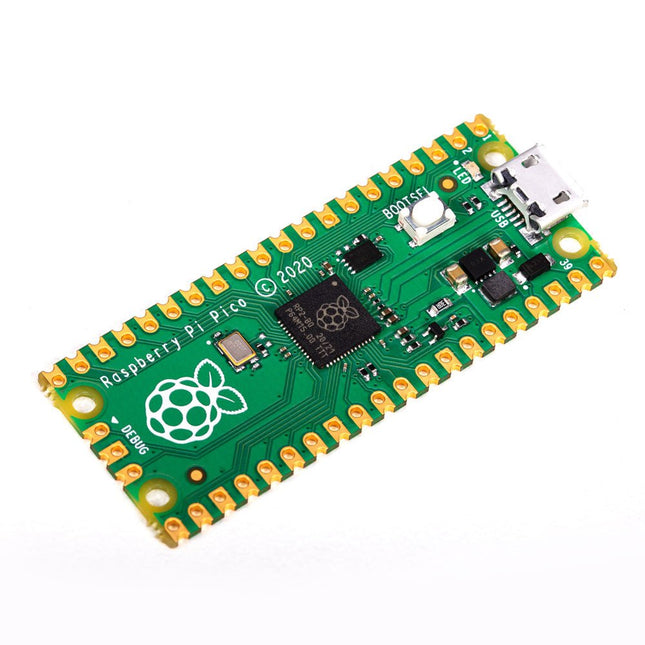
Raspberry Pi Foundation Raspberry Pi Pico
Technische Daten RP2040-Mikrocontroller-Chip, entwickelt von Raspberry Pi in Großbritannien Dual-Core ARM Cortex M0+ Prozessor mit flexiblem Takt von bis zu 133 MHz 264 kB SRAM und 2 MB on-board Flash-Speicher Gegossenes Modul ermöglicht direktes Löten auf Trägerplatinen USB 1.1 Host- und Device-Unterstützung Stromsparende Sleep- und Dormant-Modi Drag-and-Drop-Programmierung mit Massenspeicher über USB 26x multifunktions-GPIO-Pins 2x SPI, 2x I²C, 2x UART, 3x 12-bit ADC, 16x steuerbare PWM-Kanäle Genaue Uhr und Timer auf dem Chip Temperatursensor Beschleunigte Fließkomma-Bibliotheken auf dem Chip 8x programmierbare IO (PIO) Zustandsautomaten für eigene Peripherie Warum ein Raspberry Pi Pico? Einen eigenen Mikrocontroller zu entwerfen, anstatt einen bestehenden zu kaufen, bringt eine Reihe von Vorteilen mit sich. Laut Raspberry Pi selbst kommt kein einziges der dafür erhältlichen Produkte auch nur annähernd an das Preis-/Leistungsverhältnis heran. Außerdem hat Raspberry Pi mit dem Raspberry Pi Pico die Möglichkeit, einige innovative und leistungsstarke eigene Funktionen hinzuzufügen. Diese Features sind nirgendwo anders verfügbar. Ein dritter Grund ist, dass der Raspberry Pi Pico dem Raspberry Pi die Möglichkeit gegeben hat, leistungsstarke Software um das Produkt herum zu erstellen. Um diesen Software-Stack herum gibt es eine umfangreiche Dokumentation. Die Software und die Dokumentation entsprechen dem hohen Standard der Kernprodukte von Raspberry Pi (wie dem Raspberry Pi 400, Pi 4 Model B und Pi 3 Model A+). Für wen ist dieser Mikrocontroller geeignet? Der Raspberry Pi Pico ist sowohl für Fortgeschrittene als auch für Einsteiger geeignet. Von der Steuerung eines Displays bis hin zur Steuerung vieler verschiedener Geräte, die Sie jeden Tag benutzen. Die Automatisierung von alltäglichen Abläufen wird durch diese Technologie möglich gemacht. Einsteiger Der Raspberry Pi Pico ist in den Sprachen C und MicroPython programmierbar und kann für eine Vielzahl von Geräten angepasst werden. Darüber hinaus ist der Pico so einfach zu bedienen wie das Ziehen und Ablegen von Dateien. Damit ist dieser Mikrocontroller ideal für den Einsteiger geeignet. Fortgeschrittene Für fortgeschrittene Anwender ist es möglich, die Vorteile der umfangreichen Peripherie des Pico zu nutzen. Zu den Peripherien gehören SPI, I²C und acht programmierbare I/O (PIO)-State-Maschinen. Was macht den Raspberry Pi Pico so besonders? Das Besondere am Pico ist, dass er von Raspberry Pi selbst entwickelt wurde. Der RP2040 verfügt über einen Dual-Core ARM Cortex-M0+ Prozessor mit 264 KB internem RAM und Unterstützung für bis zu 16 MB Off-Chip Flash. Der Raspberry Pi Pico ist aus mehreren Gründen einzigartig: Das Produkt hat das beste Preis-/Leistungsverhältnis auf dem Markt der Mikrocontroller-Boards. Der Raspberry Pi Pico wurde von Raspberry Pi selbst entwickelt. Der Software-Stack, der dieses Produkt umgibt, ist von hoher Qualität und kommt gepaart mit einer umfangreichen Dokumentation.
-
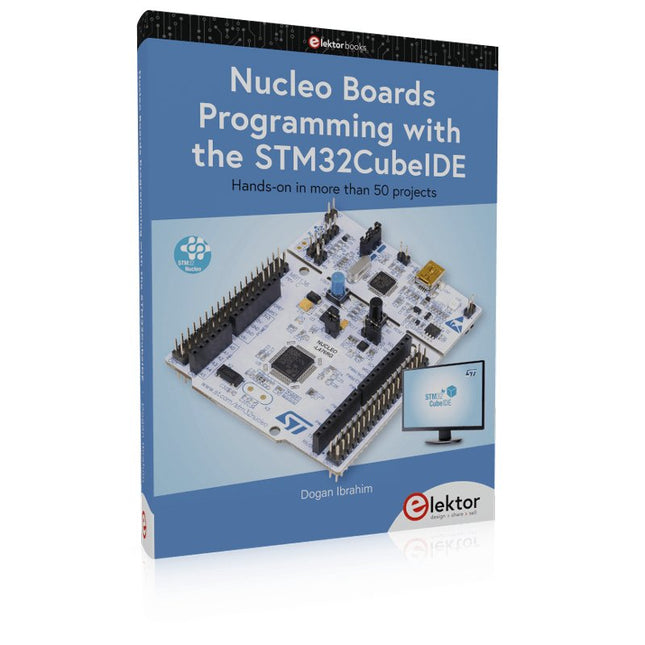
Elektor Publishing Nucleo Boards Programming with the STM32CubeIDE
Hands-on in more than 50 projects STM32 Nucleo family of processors are manufactured by STMicroelectronics. These are low-cost ARM microcontroller development boards. This book is about developing projects using the popular STM32CubeIDE software with the Nucleo-L476RG development board. In the early Chapters of the book the architecture of the Nucleo family is briefly described. The book covers many projects using most features of the Nucleo-L476RG development board where the full software listings for the STM32CubeIDE are given for each project together with extensive descriptions. The projects range from simple flashing LEDs to more complex projects using modules, devices, and libraries such as GPIO, ADC, DAC, I²C, SPI, LCD, DMA, analogue inputs, power management, X-CUBE-MEMS1 library, DEBUGGING, and others. In addition, several projects are given using the popular Nucleo Expansion Boards. These Expansion Boards plug on top of the Nucleo development boards and provide sensors, relays, accelerometers, gyroscopes, Wi-Fi, and many others. Using an expansion board together with the X-CUBE-MEMS1 library simplifies the task of project development considerably. All the projects in the book have been tested and are working. The following sub-headings are given for each project: Project Title, Description, Aim, Block Diagram, Circuit Diagram, and Program Listing for the STM32CubeIDE. In this book you will learn about STM32 microcontroller architecture; the Nucleo-L476RG development board in projects using the STM32CubeIDE integrated software development tool; external and internal interrupts and DMA; DEBUG, a program developed using the STM32CubeIDE; the MCU in Sleep, Stop, and in Standby modes; Nucleo Expansion Boards with the Nucleo development boards. What you need a PC with Internet connection and a USB port; STM32CubeIDE software (available at STMicroelectronics website free of charge) the project source files, available from the book’s webpage hosted by Elektor; Nucleo-L476RG development board; simple electronic devices such as LEDs, temperature sensor, I²C and SPI chips, and a few more; Nucleo Expansion Boards (optional).
€ 49,95
Mitglieder: € 44,96
-

OWON OWON SDS1104 4-Kanal Oszilloskop (100 MHz)
Das OWON SDS1104 Oszilloskop ist eine praktische Wahl für Ingenieure, Techniker, Studierende und Hobbyelektroniker, die eine präzise Signalanalyse benötigen, ohne in teure High-End-Messgeräte investieren zu müssen. Mit einer Bandbreite von 100 MHz und einer Abtastrate von 1 GSa/s erfasst es Signale im niedrigen bis mittleren Frequenzbereich zuverlässig und eignet sich damit ideal für Elektronikentwicklung, Fehlersuche und den Einsatz in der Ausbildung. Ausgestattet mit einem 7-Zoll-Farb-TFT-Display bietet das SDS1104 eine klare Darstellung von Signalverläufen. Automatische Messfunktionen und FFT-Analyse helfen Anwendern dabei, Frequenz-, Spannungs- und Zeitparameter schnell zu bewerten. Erweiterte mathematische Funktionen, Cursor-Messungen und mehrere Trigger-Modi sorgen für zusätzliche Flexibilität und machen das Oszilloskop zu einem vielseitigen Werkzeug für unterschiedlichste Testszenarien. Technische Daten Bandwidth 100 MHz Sample Rate 1 GS/s Horizontal Scale (s/div) 5ns/div - 1000s/div, step by 1 - 2 - 5 Channel 4 Display 7" color LCD, 800 x 480 pixels Input Coupling DC, AC and GND Vertical Resolution (A/D) Vertical Resolution (A/D) Vertical Sensitivity 5mV/div - 5V/div (at input) Trigger Type Edge, Video Trigger Mode Auto, Normal and Single Waveform Math +, -, x, ÷, invert, FFT Fuse 2A, T class, 250 V Dimension (W x H x D) 301 x 152 x 70 mm Weight 1.1 kg Lieferumfang 1x OWON SDS1104 Oscilloscope 1x Mains power cord 1x CD Rom 1x Quickstart Guide 1x USB Cable 4x Oscilloscope probe 1x Probe Adjust Downloads Datasheet Manual
€ 244,88
-
Raspberry Pi Foundation microSD-Karte mit vorinstalliertem Raspberry Pi OS (32 GB)
Mit dieser microSD-Karte (32 GB) mit vorinstalliertem Raspberry Pi OS können Sie Ihren Raspberry Pi sofort nutzen. Einfach einstecken und loslegen!
-
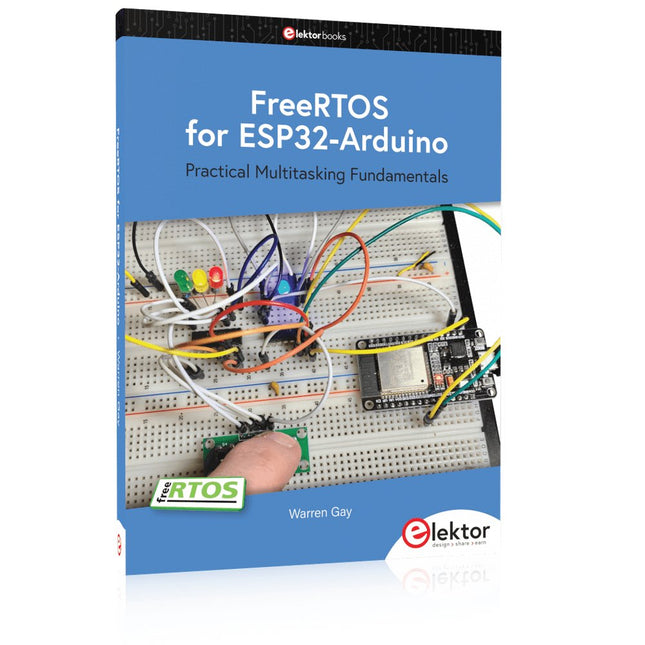
Elektor Publishing FreeRTOS for ESP32-Arduino
Practical Multitasking Fundamentals Programming embedded systems is difficult because of resource constraints and limited debugging facilities. Why develop your own Real-Time Operating System (RTOS) as well as your application when the proven FreeRTOS software is freely available? Why not start with a validated foundation? Every software developer knows that you must divide a difficult problem into smaller ones to conquer it. Using separate preemptive tasks and FreeRTOS communication mechanisms, a clean separation of functions is achieved within the entire application. This results in safe and maintainable designs. Practicing engineers and students alike can use this book and the ESP32 Arduino environment to wade into FreeRTOS concepts at a comfortable pace. The well-organized text enables you to master each concept before starting the next chapter. Practical breadboard experiments and schematics are included to bring the lessons home. Experience is the best teacher. Each chapter includes exercises to test your knowledge. The coverage of the FreeRTOS Application Programming Interface (API) is complete for the ESP32 Arduino environment. You can apply what you learn to other FreeRTOS environments, including Espressif’s ESP-IDF. The source code is available from GitHub. All of these resources put you in the driver’s seat when it is time to develop your next uber-cool ESP32 project. What you will learn: How preemptive scheduling works within FreeRTOS The Arduino startup “loopTask” Message queues FreeRTOS timers and the IDLE task The semaphore, mutex, and their differences The mailbox and its application Real-time task priorities and its effect Interrupt interaction and use with FreeRTOS Queue sets Notifying tasks with events Event groups Critical sections Task local storage The gatekeeper task
€ 49,95
Mitglieder: € 44,96
-

Weller Weller WT1013 Digitale Lötstation (95 W)
Das Weller WT 1013 Lötstationsset beinhaltet die Versorgungseinheit WT 1, den Lötkolben WP 80 und die Sicherheitsablage WSR 201. Es ist stapelbar und schafft so mehr Platz am Arbeitsplatz. Durch einen integrierten Nutzungssensor schaltet sich das Lötgerät automatisch ab. Technische Daten Kanäle 1 Stromspannung 230 V Leistung 95 W Anzeige Hintergrundbeleuchtetes LCD Temperaturbereich 50°C - 450°C Temperaturstabilität ±2 °C Temperaturgenauigkeit ±9 °C Sicherung 0,5 A Potenzialausgleich An WT-kompatibel An ESD-sicher An Stromkabel EMEA Maße 149 x 138 x 101 mm Gewicht ca.) 1,9 kg
€ 434,35
-
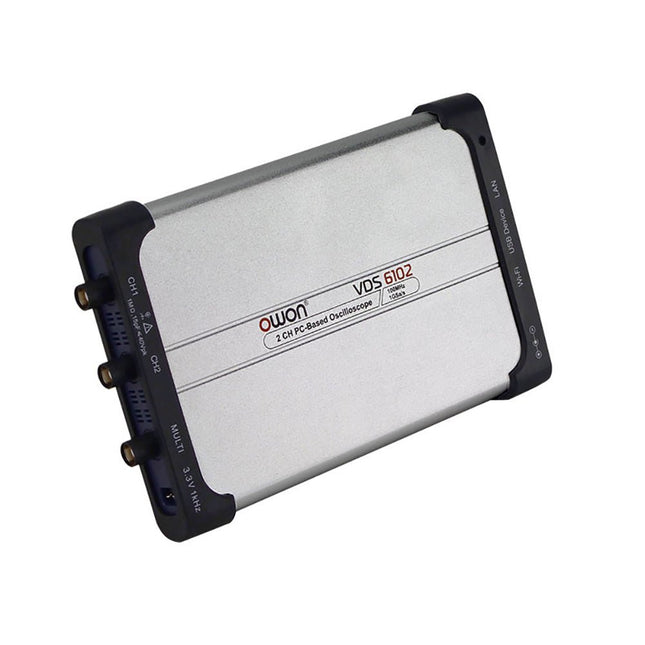
OWON OWON VDS6102A 2-Kanal USB-Oszilloskop (100 MHz)
The OWON VDS6000 Series PC Oscilloscope combines powerful performance with a sleek, ultra-thin design. With 100 MHz bandwidth, 1 GSa/s real-time sampling, and up to 14-bit resolution, it delivers highly accurate measurements. The built-in 5 MHz function generator, USB-C power supply, and optional WiFi connectivity make it incredibly versatile. Compatible with Windows, Linux, Android, and iOS, the VDS6000 is perfect for labs, fieldwork, and remote diagnostics – compact, flexible, and ready for any challenge. Features Bandwidth: 100 MHz Vertical resolution: 14 bits Rise time: ≤3.5 ns Memory: 10 Mpts Number of channels: 2 channels + 1 channel function generator Horizontal scale: 5ns - 100s/div Sample rate: Max. 1 GSa/s Maximum voltage: 40 V (peak - peak) Automatic measurements: Vpp, Vavg, Vamp, Vrms, Freq, Period, Vmax, Vmin, Vtop, Vbase, Overshoot, Preshoot, Rise Time, Connectivity: USB-C, LAN, Wifi (optional) Fall Time, Delay A→B↑, Delay A→B↓, +Width, -Width, +Duty, -Duty Bandwidth: 5 MHz Sample rate: 25 MSa/s Standard waveforms: Sine (0.1 Hz - 5 MHz), Square (0.1 Hz - 200 kHz), Ramp (1 Hz - 10 kHz), Pulse (1 Hz - 10 kHz) Resolution: 10 bits DC offset range (AC + DC): ±2.5 V Amplitude range: 10 mVpp - 5 Vpp Dimensions: 190 x 120 x 18 mm Weight: 380 g Downloads Manual Quick Guide PC Software MacOS Software
€ 324,55
-

OWON OWON XDM2041 True RMS Multimeter
The OWON XDM2041 is a low-cost, high-precision benchtop multimeter. The meter has a True RMS function to measure the AC voltage and current and it has a reading speed of up to 65 values per second. Also, the XDM2041 is equipped with functions such as measuring 2-wire and 4-wire resistance. The XDM2041 is able to store data internally in the memory of the meter and display it on the 3.7" high-resolution LCD display. Up to 1000 points can be stored and the time interval can be varied from 15ms to 9999s. By means of the RS232 port on the back of the device, the meter can be programmed and controlled via SCPI. Technische Daten Measurement Range Resolution Accuracy ±(% of reading + LSB) DC Voltage 50.000mV 0.001mV 0.1%+10 500.00mV 0.01mV 0.025%+5 5.0000V 0.0001V 0.025%+5 50.000V 0.001V 0.03%+5 500.00V 0.01V 0.1%+5 1000.0V 0.1V 0.1%+5 AC Voltage 500mv-750v 20Hz~45Hz 1%+30 45Hz~65Hz 0.5%+30 65Hz~1KHz 0.7%+30 DC Current 500uA 0.01uA 0.15%+20 5000uA 0.1uA 0.15%+10 50mA 0.001mA 0.15%+20 500mA 0.01mA 0.15%+10 5A 0.0001A 0.5%+10 10A 0.001A 0.5%+10 AC Current 500uA-500mA 20 Hz-1 kHz 0.5%+20 5A-10A 1.5%+20 Resistance 500Ω 0.01Ω 0.1%+10 5KΩ 0.0001KΩ 0.1%+5 50KΩ 0.001KΩ 0.1%+5 500KΩ 0.01KΩ 0.1%+5 5MΩ 0.0001MΩ 0.25%+5 50MΩ 0.001MΩ 0.1%+10 Four-wire resistance 500Ω 0.01Ω 0.1%+10 5KΩ 0.0001KΩ 0.1%+5 50KΩ 0.001KΩ 0.1%+5 Measurement Range Resolution Accuracy ±(% of reading + % of range) Frequency 10.000Hz-60MHz / ±(0.2%+8) Capacitance 50nF-500uF / 2.5%+5 5mF-50mF 5%+8 Diode 3.0000 V 0.0001V / Continuity 1000 Ω 0.1Ω / Temperature K type,PT100 Display 55,000 Data-logging Function Logging Duration 15ms-9999s Logging Length 1,000 points Lieferumfang 1x OWON XDM2041 Multimeter 2x Multimeter leads 2x Alligator clips 1x Fuse 1x Manual Downloads User manual Programming manual PC software
€ 152,32
-
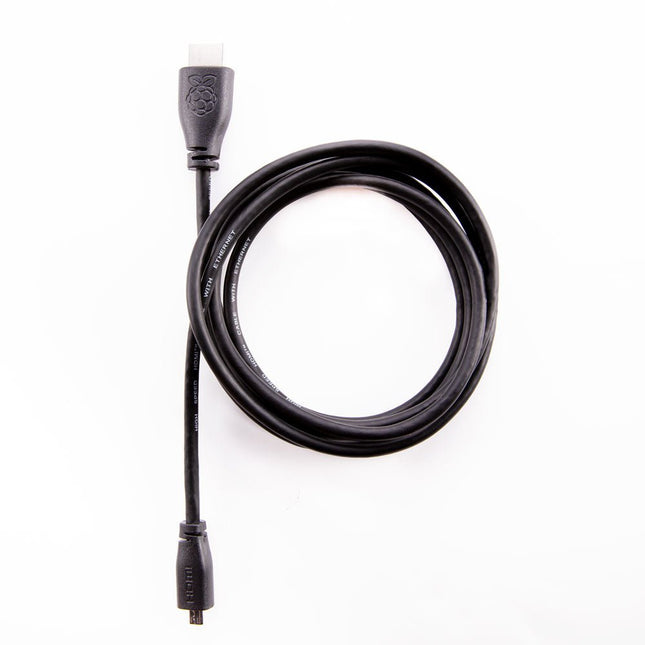
Raspberry Pi Foundation Offizielles HDMI-Kabel für Raspberry Pi (schwarz, 1 m)
Offizielles Micro-HDMI auf Standard-HDMI-Kabel für Raspberry Pi 4 und 5 (schwarz, 1 m) 19-poliges HDMI Typ D(M) auf 19-poliges HDMI Typ A(M) 1 m Kabel (schwarz) Vernickelte Stecker 4Kp60-konform RoHS-konform 3 Mohm 300 VDC Isolierung, hält 300 VDC für 0,1s stand
-
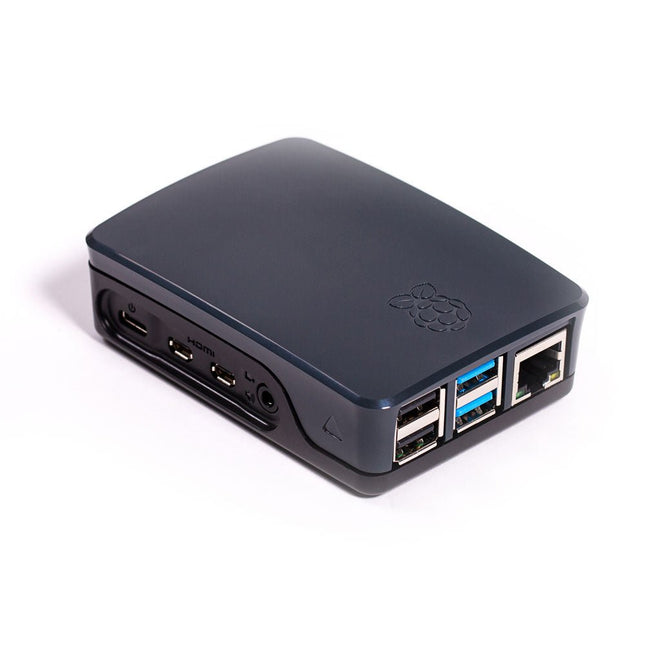
Raspberry Pi Foundation Offizielles Gehäuse für Raspberry Pi 4 (schwarz/grau)
Offizielles Gehäuse für Raspberry Pi 4 (schwarz/grau)
-

Raspberry Pi Foundation Raspberry Pi High Quality Camera Module
Die Raspberry Pi High Quality Kamera bietet eine Alternative zum Kameramodul v2 für Industrie- und Verbraucheranwendungen, einschließlich Sicherheitskameras, die ein Höchstmaß an visueller Wiedergabetreue und/oder die Integration mit Spezialoptiken erfordern. Sie ist mit allen Raspberry-Pi-Modellen kompatibel. Die Raspberry Pi High Quality Kamera bietet eine höhere Auflösung (12 Megapixel im Vergleich zu 8 Megapixel) und Empfindlichkeit (ca. 50% mehr Fläche pro Pixel für eine bessere Leistung bei schlechten Lichtverhältnissen) als das bestehende Kameramodul v2 und ist für die Verwendung von Wechselobjektiven mit C- und CS-Mount-Formfaktoren ausgelegt. Andere Objektivformfaktoren können mit Objektivadaptern von Drittanbietern angepasst werden. Technische Daten Sensor Sony IMX477R sternförmig angeordneter, rückseitig beleuchteter Sensor12,3 Megapixel7,9 mm Sensordiagonale1,55 x 1,55 μm Pixelgröße Output RAW12/10/8, COMP8 Hintergrundbeleuchtung Einstellbar (12,5-22,4 mm) Objektivstandards CS-MountC-Mount (C/CS-Adapter inbegriffen) IR-Sperrfilter Integriert Kabellänge 200 mm Stativhalterung 1/4”-20 Lieferumfang 1x Platine mit Sony IMX477 Sensor 1x FPC-Kabel zum Anschluss an Raspberry Pi 1x Gefräste Aluminium-Objektivhalterung mit integrierter Stativbefestigung und Fokuseinstellring 1x C/CS-Mount-Adapter Benötigt C/CS-Mount Objektiv
-

OWON OWON OW18E True RMS Multimeter
Features 4 1/2 Bit Auflösung (20000 Zählungen) Datenlogger Multimeter Thermometer True RMS Test unterstützt BLE 4.0 drahtlose Übertragung, stabiler, weniger Stromverbrauch Integrierte Offline-Aufzeichnungsfunktion Chart und Diagramm-Modus hilft bei der Analyse der Daten Tendenz Taschenlampenfunktion erhellt die Dunkelheit Unterstützt NCV berührungslose Spannungsmessung Weitgehend unterstützt auf Android, iOS, Windows Lieferumfang OWON OW18E Multimeter Kurzanleitung Multimeterleitung Thermoelement Typ K Bolzen-Treiber App Download Die Bluetooth-Funktion dieses Multimeters ist mit der Android-App Version 1.5.8.0 oder neuer kompatibel. Verwenden Sie den QR-Code in der Box oder nutzen Sie http://files.owon.com.cn/bluetooth.
€ 58,96
-

Elektor Publishing Electric Guitar (2nd Edition)
Sound Secrets and Technology What would today’s rock and pop music be without electric lead and bass guitars? These instruments have been setting the tone for more than sixty years. Their underlying sound is determined largely by their electrical components. But, how do they actually work? Almost no one is able to explain this to the true musician with no technical background. This book answers many questions simply, in an easily-understandable manner. For the interested musician (and others), this book unveils, in a simple and well-grounded way, what have, until now, been regarded as manufacturer secrets. The examination explores deep within the guitar, including pickups and electrical environment, so that guitar electronics are no longer considered highly secret. With a few deft interventions, many instruments can be rendered more versatile and made to sound a lot better – in the most cost-effective manner. The author is an experienced electronics professional and active musician. He has thoroughly tested everything described here, in practice.
€ 39,95
Mitglieder: € 35,96


