Der HDS242 ist ein tragbares 2-in-1-Multifunktionsmessgerät, das als 2-Kanal-Oszilloskop und Multimeter verwendet werden kann. Es verfügt über ein kontrastreiches 3,5-Zoll-Farbdisplay und eignet sich für die Wartung von Außenanlagen, schnelle Vor-Ort-Messungen, die Wartung von Kraftfahrzeugen, die Erkennung von Energie usw.FeaturesOszilloskop + MultimeterHochauflösendes, kontrastreiches 3,5-Zoll-LCD-Farbdisplay – für den Außeneinsatz geeignet18650 Lithium Batterie – bis zu 6 Stunden Dauerbetrieb möglichUSB Typ-C-Schnittstelle – unterstützt Powerbank und PC-VerbindungSelbst-KalibrierungsfunktionSCPI unterstützt für sekundäre EntwicklungTechnische DatenOszilloskopBandbreite40 MHzKanäle2-Kanal-OszilloskopAbtastrate250 MSa/sAkquisitionsmodellNormal, Spitzenwert erkennenDatensatzlänge8KAnzeigen3,5-Zoll-LCDWellenform-Aktualisierungsrate10.000 wfrms/sEingangskopplungDC, AC und ErdeEingangsimpedanz1 MΩ ±2%, parallel zu 16 pF ±10 pFSondendämpfungsfaktoren1X, 10X, 100X, 1000X, 10000XMax. Eingangsspannung400 V (DC+AC, PK-PK, 1 MΩ Eingangsimpedanz) (10:1 Sondendämpfung)Bandbreitenbegrenzung (typisch)20 MHzHorizontale Skala5 ns/div - 1000 s/div, schrittweise 1 - 2 - 52 ns/div - 1000 s/div, schrittweise 1 - 2 - 55 ns/div - 1000 s/div, schrittweise um 1 - 2 - 52ns/div - 1000s/div, schrittweise um 1 - 2 - 5Vertikale Empfindlichkeit10 mV/div - 10 V/divVertikale Auflösung8 BitTriggertypRandTrigger-ModiAuto, Normal, EinzelAutomatische MessungFrequenz, Periode, Amplitude, Max, Min, Mittelwert, PK-PKCursor-MessungΔV, ΔT, ΔT & ΔV zwischen CursornMultimeterMax. Auflösung20.000 CountsTestmodusSpannungs-, Strom-, Widerstands-, Kapazitäts-, Dioden- und DurchgangsprüfungEingangsimpedanz10 MΩMax. EingangsspannungWechselspannung: 750 V | Gleichstrom: 1000 VMax. EingangsstromGleichstrom: 10 A | Wechselstrom: 10 ADiode0-2 VAndereKonnektivitätUSB-CAbmessungen198 x 96 x 38 mmGewicht600 g (ohne Batterien)Lieferumfang1x OWON HDS242 Oszilloskop1x Tasche1x Tastkopf1x Netzkabel1x Tastkopfjustierung1x USB-Kabel1x Netzadapter1x Paar Sondenkabel für Multimeter (rot und schwarz)1x Paar Oszilloskop-Tastkopfkabel (BNC auf Krokodilklemme)1x Benutzerhandbuch (Englisch)DownloadsUser Manual für HDS200 Serie (Deutsch)SCPI Protocol for HDS200 SeriesQuick Guide for HDS200 SeriesPC Software for OWON HDS200 Series
Projects with Arduino Uno & Raspberry Pi with Examples for the MCP2515 CAN Bus Interface Module
This book details the use of the Arduino Uno and the Raspberry Pi 4 in practical CAN bus based projects. Using either the Arduino Uno or the Raspberry Pi with off-the-shelf CAN bus interface modules considerably ease developing, debugging, and testing CAN bus based projects.
This book is written for students, practicing engineers, enthusiasts, and for everyone else wanting to learn more about the CAN bus and its applications. The book assumes that the reader has some knowledge of basic electronics. Knowledge of the C and Python programming languages and programming the Arduino Uno using its IDE and Raspberry Pi will be useful, especially if the reader intends to develop microcontroller-based projects using the CAN bus.
The book should be a useful source of reference material for anyone interested in finding answers to questions such as:
What bus systems are available for the automotive industry?
What are the principles of the CAN bus?
How can I create a physical CAN bus?
What types of frames (or data packets) are available in a CAN bus system?
How can errors be detected in a CAN bus system and how dependable is a CAN bus system?
What types of CAN bus controllers exist?
How do I use the MCP2515 CAN bus controller?
How do I create 2-node Arduino Uno-based CAN bus projects?
How do I create 3-node Arduino Uno-based CAN bus projects?
How do I set the acceptance masks and acceptance filters?
How do I analyze data on the CAN bus?
How do I create 2-node Raspberry Pi-based CAN bus projects?
How do I create 3-node Raspberry Pi-based CAN bus projects?
This book details the use of the Arduino Uno and the Raspberry Pi 4 in practical CAN bus based projects. Using either the Arduino Uno or the Raspberry Pi with off-the-shelf CAN bus interface modules considerably ease developing, debugging, and testing CAN bus based projects.
This book is written for students, practicing engineers, enthusiasts, and for everyone else wanting to learn more about the CAN bus and its applications. The book assumes that the reader has some knowledge of basic electronics. Knowledge of the C and Python programming languages and programming the Arduino Uno using its IDE and Raspberry Pi will be useful, especially if the reader intends to develop microcontroller-based projects using the CAN bus.
The book should be a useful source of reference material for anyone interested in finding answers to questions such as:
What bus systems are available for the automotive industry?
What are the principles of the CAN bus?
How can I create a physical CAN bus?
What types of frames (or data packets) are available in a CAN bus system?
How can errors be detected in a CAN bus system and how dependable is a CAN bus system?
What types of CAN bus controllers exist?
How do I use the MCP2515 CAN bus controller?
How do I create 2-node Arduino Uno-based CAN bus projects?
How do I create 3-node Arduino Uno-based CAN bus projects?
How do I set the acceptance masks and acceptance filters?
How do I analyze data on the CAN bus?
How do I create 2-node Raspberry Pi-based CAN bus projects?
How do I create 3-node Raspberry Pi-based CAN bus projects?
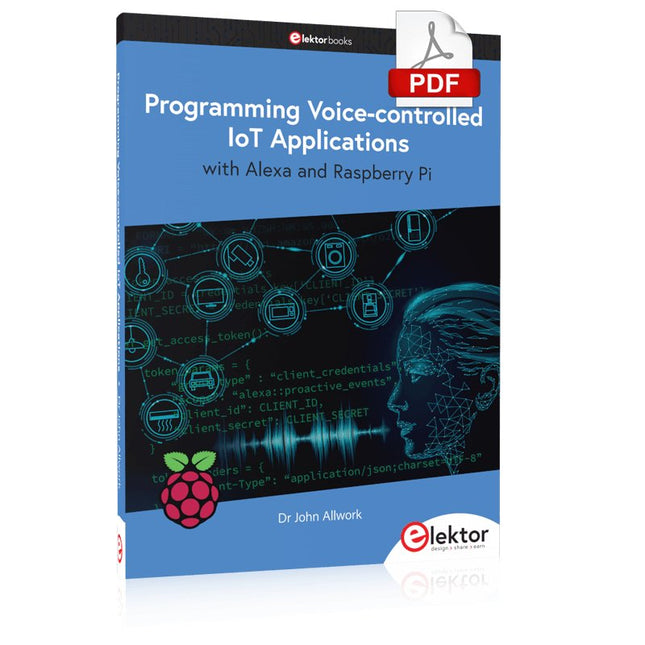
Learn programming for Alexa devices, extend it to smart home devices and control the Raspberry Pi
The book is split into two parts: the first part covers creating Alexa skills and the second part, designing Internet of Things and Smart Home devices using a Raspberry Pi.
The first chapters describe the process of Alexa communication, opening an Amazon account and creating a skill for free. The operation of an Alexa skill and terminology such as utterances, intents, slots, and conversations are explained. Debugging your code, saving user data between sessions, S3 data storage and Dynamo DB database are discussed.
In-skill purchasing, enabling users to buy items for your skill as well as certification and publication is outlined. Creating skills using AWS Lambda and ASK CLI is covered, along with the Visual Studio code editor and local debugging. Also covered is the process of designing skills for visual displays and interactive touch designs using Alexa Presentation Language.
The second half of the book starts by creating a Raspberry Pi IoT 'thing' to control a robot from your Alexa device. This covers security issues and methods of sending and receiving MQTT messages between an Alexa device and the Raspberry Pi.
Creating a smart home device is described including forming a security profile, linking with Amazon, and writing a Lambda function that gets triggered by an Alexa skill. Device discovery and on/off control is demonstrated.
Next, readers discover how to control a smart home Raspberry Pi display from an Alexa skill using Simple Queue Service (SQS) messaging to switch the display on and off or change the color.
A node-RED design is discussed from the basic user interface right up to configuring MQTT nodes. MQTT messages sent from a user are displayed on a Raspberry Pi.
A chapter discusses sending a proactive notification such as a weather alert from a Raspberry Pi to an Alexa device. The book concludes by explaining how to create Raspberry Pi as a stand-alone Alexa device.
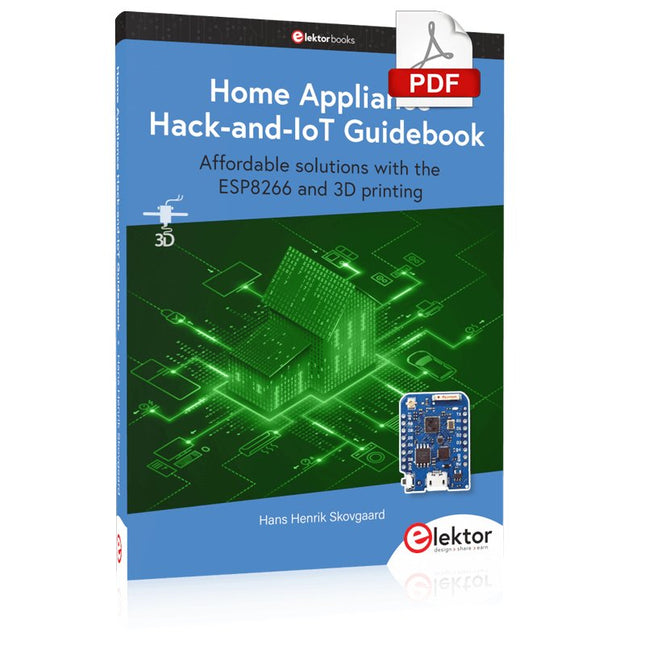
Affordable solutions with the ESP8266 and 3D printing
If you are looking for a small yet powerful IoT device, you are likely to come across the ESP8266 and compatible products on the market today. One of these, the Wemos/Lolin D1 Mini Pro board strikes a remarkable balance between cost and performance. A small and very affordable prototype board, the D1 Mini Pro stands out with its WiFi functionality and a 16-Mbytes flash memory for easy creation of a flash file system. In addition, there are sufficient input and output pins (only one analog input though) to support PWM, I²C, and One-Wire systems to mention but a few. The book describes the operation, modding, construction, and programming of home appliances including a colorful smart home accessory, a refrigerator/greenhouse controller, an AC powerline monitor, a door lock monitor, and an IKEA Trådfri controller.
As a benefit, all firmware developed for these DIY, "IoT-ized" devices can be updated over-the-air (OTA).
For most of the designs in the book, a small printed circuit board (PCB) and an enclosure are presented so readers can have a finished and attractive-looking product. Readers having – or with access to! – a 3D printer can "print" the suggested enclosures at home or in a shop.
Some of the constructions benefit from a Raspberry Pi configured as a gateway or cms server. This is also described in detail with all the necessary configuring.
You don’t need to be an expert but the prerequisites to successful replication of the projects include basic skills with PC software including the ability to surf the Internet. In terms of hardware, you should be comfortable with soldering and generally assembling the PCBs presented in the book.
All custom software written for the IoT devices, the PCB layouts, and 3D print files described in the book are available for free downloading.
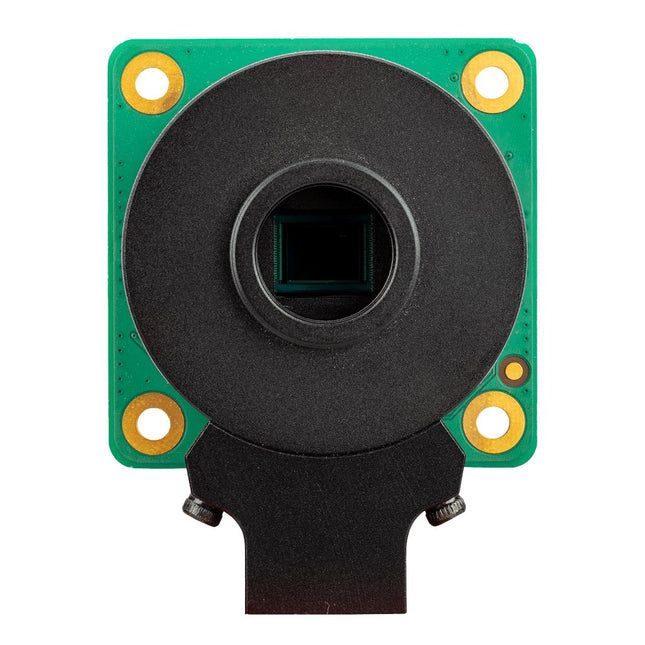
Die Raspberry Pi High Quality Camera ist eine günstige, hochwertige Kamera von Raspberry Pi. Es bietet eine Auflösung von 12 Megapixel und einen Sensor mit 7,9 mm Diagonale für eine beeindruckende Leistung bei schlechten Lichtverhältnissen. Die M12-Mount-Variante ist so konzipiert, dass sie mit den meisten austauschbaren M12-Objektiven funktioniert, und die CS-Mount-Variante ist so konzipiert, dass sie mit Wechselobjektiven sowohl in CS- als auch in C-Mount-Formfaktoren funktioniert (C-Mount-Objektive erfordern die Verwendung des C/CS-Adapter bei dieser Variante enthalten). Andere Objektivformfaktoren können mit Objektivadaptern von Drittanbietern angepasst werden. Die hochwertige Kamera eignet sich gut für Industrie- und Verbraucheranwendungen, einschließlich Sicherheitskameras, die ein Höchstmaß an visueller Wiedergabetreue und/oder Integration mit Spezialoptiken erfordern. Es ist mit allen Raspberry Pi-Modellen ab Modell B kompatibel. Technische Daten Sensor Sony IMX477R gestapelter, rückseitig beleuchteter Sensor Auflösung 12,3 Megapixel Sensorgröße 7,9 mm Sensordiagonale Pixelgröße 1,55 x 1,55 μm Output RAW12/10/8, COMP8 Backfokuslänge des Objektivs 2,6–11,8 mm (M12-Mount-Variante)12,5–22,4 mm (CS-Mount-Variante) Objektivsensorformat 1/2,3” (7,9 mm) oder größer IR-Sperrfilter Integriert Länge des Flachbandkabels 200 mm Stativhalterung 1/4”-20 Lieferumfang 1x Platine mit Sony IMX477-Sensor 1x FPC-Kabel zum Anschluss an Raspberry Pi 1x Gefräste Aluminium-Objektivhalterung mit integrierter Stativhalterung 1x C-zu-CS-Mount-Adapter 3x Objektiv-Feststellring Benötigt M12-Mount Objektiv
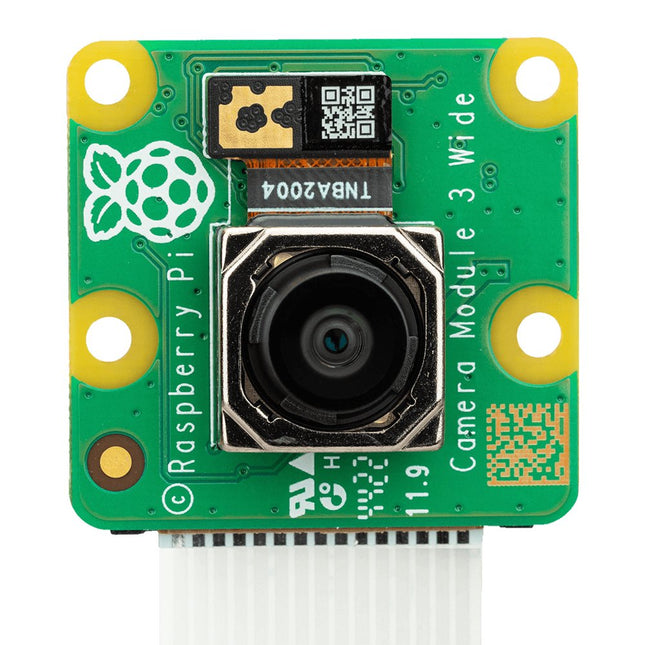
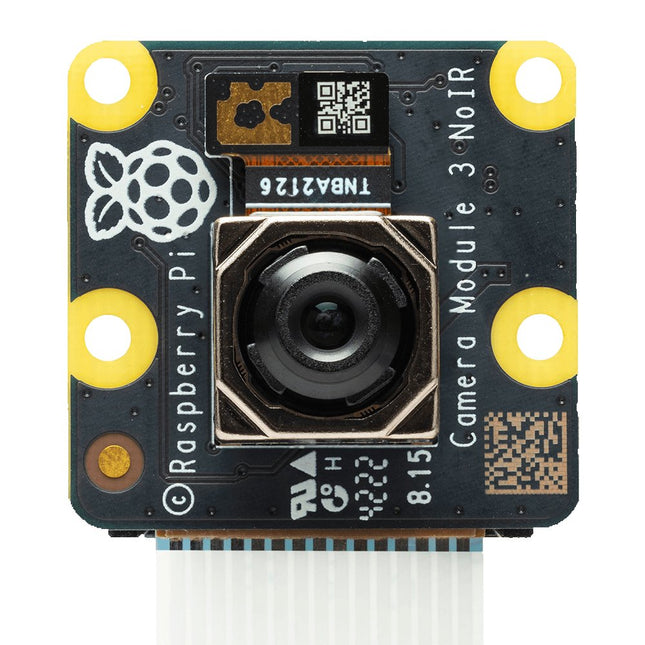
Raspberry Pi Camera Module 3 ist eine Kompaktkamera von Raspberry Pi. Es bietet einen IMX708 12-Megapixel-Sensor mit HDR und verfügt über einen Autofokus mit Phasenerkennung. Das Camera Module 3 ist in Standard- und Weitwinkelvarianten erhältlich, die beide mit oder ohne Infrarot-Sperrfilter erhältlich sind. Das Camera Module 3 kann sowohl Full-HD-Videos als auch Fotos aufnehmen und bietet einen HDR-Modus mit bis zu 3 MP. Sein Betrieb wird vollständig von der libcamera-Bibliothek unterstützt, einschließlich der schnellen Autofokus-Funktion des Camera Module 3: Dies macht es für Anfänger einfach zu bedienen und bietet gleichzeitig viel für fortgeschrittene Benutzer. Das Camera Module 3 ist mit allen Raspberry-Pi-Modellen kompatibel. Alle Varianten von Raspberry Pi Camera Module 3 bieten: Hintergrundbeleuchteter und gestapelter CMOS-12-Megapixel-Bildsensor (Sony IMX708) Hohes Signal-Rausch-Verhältnis (SNR) Integrierte dynamische 2D-Fehlerpixelkorrektur (DPC) Autofocus mit Phasenerkennung (PDAF) für schnellen Autofokus QBC Remosaic-Funktion HDR-Modus (bis zu 3 Megapixel-Ausgabe) Serielle CSI-2-Datenausgabe Serielle 2-Draht-Kommunikation (unterstützt I²C Fast Mode und Fast-Mode Plus) Serielle 2-Draht-Steuerung des Fokusmechanismus Technische Daten Sensor Sony IMX708 Auflösung 11,9 MP Sensorgröße 7,4 mm Sensor diagonal Pixelgröße 1.4 x 1.4 µm Horizontal/vertikal 4608 x 2592 Pixel Allgemeine Video-Modes 1080p50, 720p100, 480p120 Output RAW10 IR-Sperrfilter In Standardvarianten integriert; in NoIR-Varianten nicht vorhanden. Autofokus-System Autofokus mit Phasenerkennung Länge des Flachbandkabels 200 mm Kabelverbinder 15 x 1 mm FPC Abmessungen 25 x 24 x 11,5 mm (12,4 mm Höhe für Wide-Varianten) Varianten von Raspberry Pi Camera Module 3 Camera Module 3 Camera Module 3 NoIR Camera Module 3 Wide Camera Module 3 Wide NoIR Fokusbereich 10 cm - ∞ 10 cm - ∞ 5 cm - ∞ 5 cm - ∞ Brennweite 4,74 mm 4,74 mm 2,75 mm 2,75 mm Diagonales Sichtfeld 75 Grad 75 Grad 120 Grad 120 Grad Horizontales Sichtfeld 66 Grad 66 Grad 102 Grad 102 Grad Vertikales Sichtfeld 41 Grad 41 Grad 67 Grad 67 Grad Öffnungsverhältnis (Blende) F1.8 F1.8 F2.2 F2.2 Infrarot-empfindlich Nein Ja Nein Ja Downloads GitHub Documentation
Raspberry Pi Camera Module 3 ist eine Kompaktkamera von Raspberry Pi. Es bietet einen IMX708 12-Megapixel-Sensor mit HDR und verfügt über einen Autofokus mit Phasenerkennung. Das Camera Module 3 ist in Standard- und Weitwinkelvarianten erhältlich, die beide mit oder ohne Infrarot-Sperrfilter erhältlich sind. Das Camera Module 3 kann sowohl Full-HD-Videos als auch Fotos aufnehmen und bietet einen HDR-Modus mit bis zu 3 MP. Sein Betrieb wird vollständig von der libcamera-Bibliothek unterstützt, einschließlich der schnellen Autofokus-Funktion des Camera Module 3: Dies macht es für Anfänger einfach zu bedienen und bietet gleichzeitig viel für fortgeschrittene Benutzer. Das Camera Module 3 ist mit allen Raspberry-Pi-Modellen kompatibel. Alle Varianten von Raspberry Pi Camera Module 3 bieten: Hintergrundbeleuchteter und gestapelter CMOS-12-Megapixel-Bildsensor (Sony IMX708) Hohes Signal-Rausch-Verhältnis (SNR) Integrierte dynamische 2D-Fehlerpixelkorrektur (DPC) Autofocus mit Phasenerkennung (PDAF) für schnellen Autofokus QBC Remosaic-Funktion HDR-Modus (bis zu 3 Megapixel-Ausgabe) Serielle CSI-2-Datenausgabe Serielle 2-Draht-Kommunikation (unterstützt I²C Fast Mode und Fast-Mode Plus) Serielle 2-Draht-Steuerung des Fokusmechanismus Technische Daten Sensor Sony IMX708 Auflösung 11,9 MP Sensorgröße 7,4 mm Sensor diagonal Pixelgröße 1.4 x 1.4 µm Horizontal/vertikal 4608 x 2592 Pixel Allgemeine Video-Modes 1080p50, 720p100, 480p120 Output RAW10 IR-Sperrfilter In Standardvarianten integriert; in NoIR-Varianten nicht vorhanden. Autofokus-System Autofokus mit Phasenerkennung Länge des Flachbandkabels 200 mm Kabelverbinder 15 x 1 mm FPC Abmessungen 25 x 24 x 11,5 mm (12,4 mm Höhe für Wide-Varianten) Varianten von Raspberry Pi Camera Module 3 Camera Module 3 Camera Module 3 NoIR Camera Module 3 Wide Camera Module 3 Wide NoIR Fokusbereich 10 cm - ∞ 10 cm - ∞ 5 cm - ∞ 5 cm - ∞ Brennweite 4,74 mm 4,74 mm 2,75 mm 2,75 mm Diagonales Sichtfeld 75 Grad 75 Grad 120 Grad 120 Grad Horizontales Sichtfeld 66 Grad 66 Grad 102 Grad 102 Grad Vertikales Sichtfeld 41 Grad 41 Grad 67 Grad 67 Grad Öffnungsverhältnis (Blende) F1.8 F1.8 F2.2 F2.2 Infrarot-empfindlich Nein Ja Nein Ja Downloads GitHub Documentation
Raspberry Pi Camera Module 3 ist eine Kompaktkamera von Raspberry Pi. Es bietet einen IMX708 12-Megapixel-Sensor mit HDR und verfügt über einen Autofokus mit Phasenerkennung. Das Camera Module 3 ist in Standard- und Weitwinkelvarianten erhältlich, die beide mit oder ohne Infrarot-Sperrfilter erhältlich sind. Das Camera Module 3 kann sowohl Full-HD-Videos als auch Fotos aufnehmen und bietet einen HDR-Modus mit bis zu 3 MP. Sein Betrieb wird vollständig von der libcamera-Bibliothek unterstützt, einschließlich der schnellen Autofokus-Funktion des Camera Module 3: Dies macht es für Anfänger einfach zu bedienen und bietet gleichzeitig viel für fortgeschrittene Benutzer. Das Camera Module 3 ist mit allen Raspberry-Pi-Modellen kompatibel. Alle Varianten von Raspberry Pi Camera Module 3 bieten: Hintergrundbeleuchteter und gestapelter CMOS-12-Megapixel-Bildsensor (Sony IMX708) Hohes Signal-Rausch-Verhältnis (SNR) Integrierte dynamische 2D-Fehlerpixelkorrektur (DPC) Autofocus mit Phasenerkennung (PDAF) für schnellen Autofokus QBC Remosaic-Funktion HDR-Modus (bis zu 3 Megapixel-Ausgabe) Serielle CSI-2-Datenausgabe Serielle 2-Draht-Kommunikation (unterstützt I²C Fast Mode und Fast-Mode Plus) Serielle 2-Draht-Steuerung des Fokusmechanismus Technische Daten Sensor Sony IMX708 Auflösung 11,9 MP Sensorgröße 7,4 mm Sensor diagonal Pixelgröße 1.4 x 1.4 µm Horizontal/vertikal 4608 x 2592 Pixel Allgemeine Video-Modes 1080p50, 720p100, 480p120 Output RAW10 IR-Sperrfilter In Standardvarianten integriert; in NoIR-Varianten nicht vorhanden. Autofokus-System Autofokus mit Phasenerkennung Länge des Flachbandkabels 200 mm Kabelverbinder 15 x 1 mm FPC Abmessungen 25 x 24 x 11,5 mm (12,4 mm Höhe für Wide-Varianten) Varianten von Raspberry Pi Camera Module 3 Camera Module 3 Camera Module 3 NoIR Camera Module 3 Wide Camera Module 3 Wide NoIR Fokusbereich 10 cm - ∞ 10 cm - ∞ 5 cm - ∞ 5 cm - ∞ Brennweite 4,74 mm 4,74 mm 2,75 mm 2,75 mm Diagonales Sichtfeld 75 Grad 75 Grad 120 Grad 120 Grad Horizontales Sichtfeld 66 Grad 66 Grad 102 Grad 102 Grad Vertikales Sichtfeld 41 Grad 41 Grad 67 Grad 67 Grad Öffnungsverhältnis (Blende) F1.8 F1.8 F2.2 F2.2 Infrarot-empfindlich Nein Ja Nein Ja Downloads GitHub Documentation
Vorübergehende Verzögerung bei der Lieferung von Unitree-Robotern
Wie viele andere Lieferanten erleben auch wir derzeit Verzögerungen bei der Lieferung von Unitree-Robotern. Eine Sendung unseres Lieferanten steckt derzeit im Zoll fest, was leider zu späteren Lieferungen bereits aufgegebener Bestellungen führt.
Wir arbeiten aktiv mit unserem Lieferanten daran, dieses Problem zu lösen, und erwarten in Kürze mehr Klarheit. Leider können wir derzeit jedoch keine festen Zusagen machen. Eine neue Lieferung ist bereits auf dem Weg, wird aber noch etwas Zeit in Anspruch nehmen. Da auch andere Lieferanten mit denselben Herausforderungen konfrontiert sind, ist ein Wechsel zu einem anderen Anbieter derzeit keine schnellere Lösung. Unsere oberste Priorität ist die Lieferung der bestehenden Bestellungen.
Falls Sie Fragen haben oder Ihre Bestellung aktualisieren möchten, zögern Sie bitte nicht, unseren Kundenservice zu kontaktieren. Wir halten Sie über weitere Entwicklungen auf dem Laufenden.
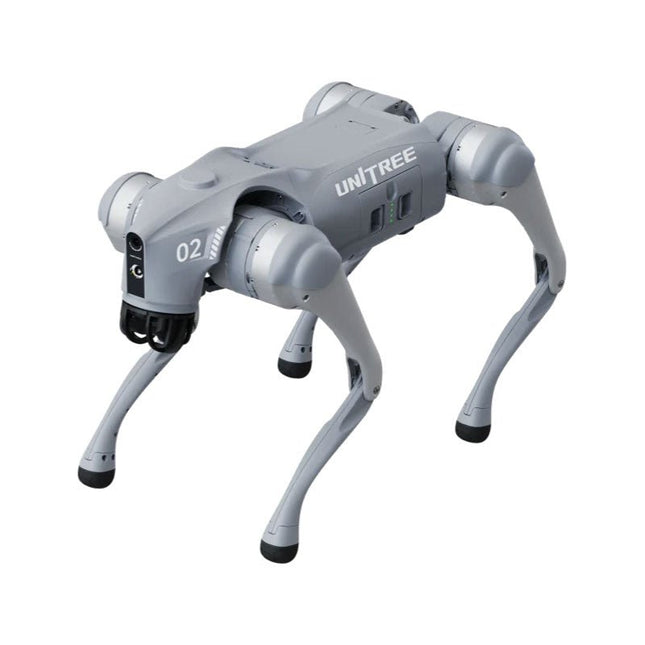
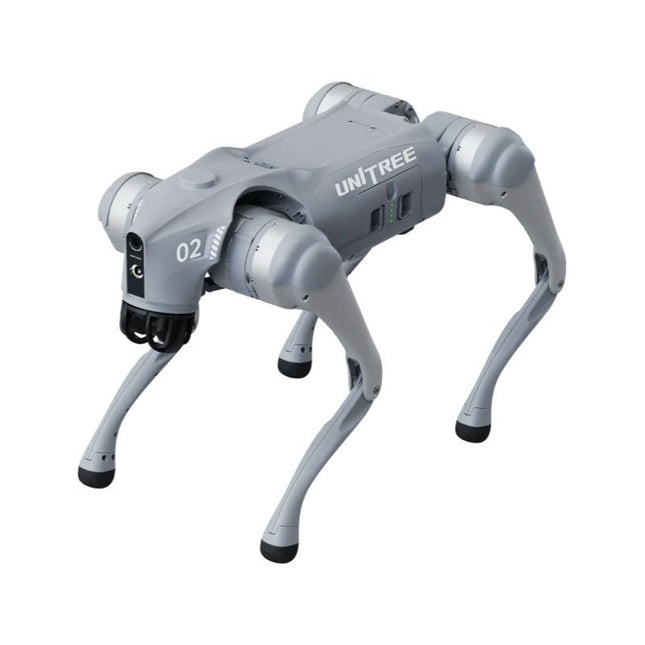
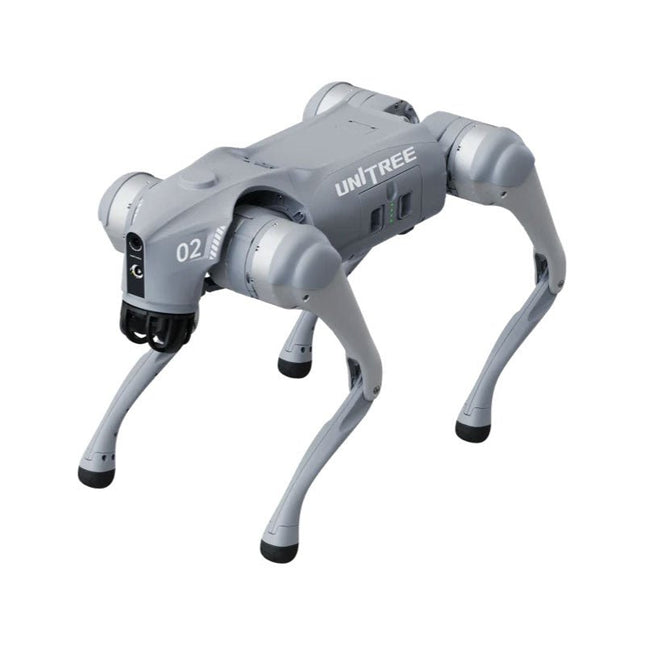
Die Unitree Go2-Serie besteht aus vierbeinigen Robotern für die Forschung und Entwicklung. Entwicklung autonomer Systeme in den Bereichen Mensch-Roboter-Interaktion (HRI), SLAM & Transport. Aufgrund der vier Beine und des 12DOF kann dieser Roboter eine Vielzahl unterschiedlicher Gelände bewältigen. Der Go2 verfügt über einen perfektionierten Antrieb & Power-Management-System, das eine Geschwindigkeit (je nach Ausführung) von bis zu 3,7 m/s oder 11,88 km/h bei einer Betriebszeit von bis zu 4 Stunden ermöglicht. Darüber hinaus verfügen die Motoren über ein Drehmoment von 45 N.m am Körper/Oberschenkel und an den Knien, was auch Sprünge oder Backflips ermöglicht.
Features
Super-Erkennungssystem: 4D LIDAR L1
Maximale Laufgeschwindigkeit: ca. 5 m/s
Spitzengelenkdrehmoment: ca. 45 Nm
Wireless-Modul: WiFi 6/Bluetooth/4G
Extrem lange Akkulaufzeit: ca. 2-4 Stunden
Intelligentes Side-Follow-System: ISS 2.0
Technische Daten
Tracking-Modul: Ferngesteuertes oder automatisches Tracking
Frontkamera: Bildübertragungsauflösung 1280 x 720, Sichtfeld 120°, Ultraweitwinkelobjektiv sorgt für satte Klarheit
Frontlampe: Erhellt den Weg vor Ihnen hell
4D LiDAR L1: 360°x90° omnidirektionales Ultraweitwinkel-Scannen ermöglicht automatisches Ausweichen mit kleinem toten Winkel und stabilen Betrieb
12 Kniegelenkmotoren: Stark und kraftvoll, schön und einfach, Brandy neues visuelles Erlebnis
Intercom-Mikrofon: Effektive Kommunikation ohne Szenario-Einschränkungen
Selbstaufrollender Gurt: Einfaches Tragen und Laden von Gegenständen
Stabiler, leistungsfähiger mit fortschrittlichen Geräten: 3D LiDAR, 4G-ESIM-Karte, WiFi 6 mit Dualband, Bluetooth 5.2 für stabile Verbindung und Fernsteuerung
Leistungsstarker Rechenkern: Motion Controller, Hochleistungs-ARM-Prozessor, verbesserter Al-Algorithmus-Prozessor, externes ORIN NX/NANO
Intelligenter Akku: Standard 8000-mAh-Akku, langlebiger 15000-mAh-Akku, Schutz vor Übertemperatur, Überladung und Kurzschluss.
Lautsprecher für die Musikwiedergabe: Hören Sie Musik nach Lust und Laune
Unitree Go2-Varianten
Der Go2 überzeugt nicht nur durch seine technischen Fähigkeiten, sondern auch durch ein modernes und schlankes Design, das ihm einen futuristischen Look verleiht und ihn zu einem echten Hingucker macht. Der Go2 Air ist speziell für Demos und Präsentationen konzipiert. Mit seinen Grundmerkmalen bietet es eine solide Grundlage, um die Bewegungsfähigkeiten und Funktionalität eines vierbeinigen Roboters zu demonstrieren. Wichtig: Der Go2 Air wird ohne Controller geliefert. Dies kann optional erworben werden.
Mit einer leistungsstarken 8-Core-Hochleistungs-CPU bieten Pro und Edu beeindruckende Rechenleistung, die für komplexe Aufgaben und anspruchsvolle Berechnungen erforderlich ist. Dies ermöglicht eine schnellere und effizientere Datenverarbeitung und macht den Pro und Edu zu einem zuverlässigen Partner für Ihre Projekte.
Ab der Edu-Version ist der Go2 programmierbar und eröffnet endlose Möglichkeiten für die Entwicklung und Erforschung eigener Robotikanwendungen. Der Go2 ist außerdem in der Lage, eine Stufenhöhe von bis zu 14 cm zu bewältigen. Dies macht es zu einem idealen Werkzeug für Forschung, Ausbildung und den Einstieg in die Welt der Robotik.
Der Go2 Edu wird mit einer Fernbedienung geliefert, die Ihnen eine einfache und intuitive Steuerung ermöglicht. Außerdem erhalten Sie eine Dockingstation mit beeindruckender Rechenleistung von 100 TOPS, die mit leistungsstarken KI-Algorithmen ausgestattet ist und Ihnen technischen Support bietet.
Go2 Edu ist mit einem leistungsstarken 15000 mAh-Akku ausgestattet, der ihm eine beeindruckende Laufzeit von bis zu 4 Stunden ermöglicht. Diese lange Betriebszeit ermöglicht es dem Roboter, längere Erkundungsmissionen durchzuführen und anspruchsvolle Aufgaben zu erledigen.
Modellvergleich
Air
Pro
Edu/Edu Plus
Abmessungen (stehend)
70 x 31 x 40 cm
70 x 31 x 40 cm
70 x 31 x 40 cm
Abmessungen (hockend)
76 x 31 x 20 cm
76 x 31 x 20 cm
76 x 31 x 20 cm
Material
Aluminiumlegierung + hochfester Kunststoff
Aluminiumlegierung + hochfester Kunststoff
Aluminiumlegierung + hochfester Kunststoff
Gewicht (mit Akku)
ca. 15 kg
ca. 15 kg
ca. 15 kg
Spannung
28~33,6 V
28~33,6 V
28~33,6 V
Spitzenleistung
ca. 3000 W
ca. 3000 W
ca. 3000 W
Nutzlast
≈7 kg (MAX ~ 10 kg)
≈8 kg (MAX ~ 10 kg)
≈8 kg (MAX ~ 12 kg)
Geschwindigkeit
0~2.5 m/s
0~3.5 m/s
0~3.7 m/s (MAX ~ 5 m/s)
Max. Steigfallhöhe
ca. 15 cm
ca. 16 cm
ca. 16 cm
Max. Steigwinkel
30°
40°
40°
Basisrechenleistung
N/A
8-Kern-Hochleistungs-CPU
8-Kern-Hochleistungs-CPU
Aluminium-Kniegelenkmotor
12 Satz
12 Satz
12 Satz
Gelenkinterne Schaltung (Knie)
✓
✓
✓
Joint Heat Pipe Kühler
✓
✓
✓
Bewegungsbereich
Körper: −48~48°
Körper: −48~48°
Körper: −48~48°
Oberschenkel: −200°~90°
Oberschenkel: −200°~90°
Oberschenkel: −200°~90°
Schaft: −156°~−48°
Schaft: −156°~−48°
Schaft: −156°~−48°
Max. Drehmoment
N/A
ca. 45 N.m
ca. 45 N.m
Super-Weitwinkel 3D-LiDAR
✓
✓
✓
Wireless Vektorpositionierungs-Tracking-Modul
N/A
✓
✓
HD-Weitwinkelkamera
✓
✓
✓
Fußende-Kraftsensor
N/A
N/A
✓
Grundlegende Aktion
✓
✓
✓
Auto-Skalierband
N/A
✓
N/A
Aktualisiertes intelligentes OTA
✓
✓
✓
RTT 2.0 Bildübertragung
✓
✓
✓
App Basic Fernsteuerung
✓
✓
✓
App-Daten anzeigen
✓
✓
✓
App Grafisches Programm
✓
✓
✓
Frontlampe (3 W)
✓
✓
✓
WiFi 6 mit Dualband
✓
✓
✓
Bluetooth 5.2/4.2/2.1
✓
✓
✓
4G-Modul
N/A
CN/GB
CN/GB
Sprachunktion
N/A
✓
✓
Musikwiedergabe
N/A
✓
✓
ISS 2.0 Intelligentes Side-Follow-System
N/A
✓
✓
Intelligente Erkennung und Vermeidung
✓
✓
✓
Sekundäre Entwicklung
N/A
N/A
✓
Manuelle Steuerung
Optional
Optional
✓
Modul mit hoher Rechenleistung
N/A
N/A
Edu: 40 TOPS Rechenleistung
Edu Plus: 100 TOPS Rechenleistung
NVIDIA Jetson Orin (optional)
Intelligente Batterie
Standard (8000 mAh)
Standard (8000 mAh)
Lange Lebensdauer (15000 mAh)
Akkulaufzeit
1-2 Stunden
1-2 Stunden
2-4 Stunden
Ladegerät
Standard (33,6 V, 3,5 A)
Standard (33,6 V, 3,5 A)
Schnellladung (33,6 V, 9 A)
Lieferumgang
1x Unitree Go2 Edu
1x Unitree Go2 Fernbedienung
1x Unitree Go2 Akku (15000 mAh)
1x Unitree Dockingstation mit 40 TOPS Rechenleistung
Downloads
Documentation
iOS/Android apps
GitHub
Vorübergehende Verzögerung bei der Lieferung von Unitree-Robotern
Wie viele andere Lieferanten erleben auch wir derzeit Verzögerungen bei der Lieferung von Unitree-Robotern. Eine Sendung unseres Lieferanten steckt derzeit im Zoll fest, was leider zu späteren Lieferungen bereits aufgegebener Bestellungen führt.
Wir arbeiten aktiv mit unserem Lieferanten daran, dieses Problem zu lösen, und erwarten in Kürze mehr Klarheit. Leider können wir derzeit jedoch keine festen Zusagen machen. Eine neue Lieferung ist bereits auf dem Weg, wird aber noch etwas Zeit in Anspruch nehmen. Da auch andere Lieferanten mit denselben Herausforderungen konfrontiert sind, ist ein Wechsel zu einem anderen Anbieter derzeit keine schnellere Lösung. Unsere oberste Priorität ist die Lieferung der bestehenden Bestellungen.
Falls Sie Fragen haben oder Ihre Bestellung aktualisieren möchten, zögern Sie bitte nicht, unseren Kundenservice zu kontaktieren. Wir halten Sie über weitere Entwicklungen auf dem Laufenden.
Die Unitree Go2-Serie besteht aus vierbeinigen Robotern für die Forschung und Entwicklung. Entwicklung autonomer Systeme in den Bereichen Mensch-Roboter-Interaktion (HRI), SLAM & Transport. Aufgrund der vier Beine und des 12DOF kann dieser Roboter eine Vielzahl unterschiedlicher Gelände bewältigen. Der Go2 verfügt über einen perfektionierten Antrieb & Power-Management-System, das eine Geschwindigkeit (je nach Ausführung) von bis zu 3,7 m/s oder 11,88 km/h bei einer Betriebszeit von bis zu 4 Stunden ermöglicht. Darüber hinaus verfügen die Motoren über ein Drehmoment von 45 N.m am Körper/Oberschenkel und an den Knien, was auch Sprünge oder Backflips ermöglicht.
Features
Super-Erkennungssystem: 4D LIDAR L1
Maximale Laufgeschwindigkeit: ca. 5 m/s
Spitzengelenkdrehmoment: ca. 45 Nm
Wireless-Modul: WiFi 6/Bluetooth/4G
Extrem lange Akkulaufzeit: ca. 2-4 Stunden
Intelligentes Side-Follow-System: ISS 2.0
Technische Daten
Tracking-Modul: Ferngesteuertes oder automatisches Tracking
Frontkamera: Bildübertragungsauflösung 1280 x 720, Sichtfeld 120°, Ultraweitwinkelobjektiv sorgt für satte Klarheit
Frontlampe: Erhellt den Weg vor Ihnen hell
4D LiDAR L1: 360°x90° omnidirektionales Ultraweitwinkel-Scannen ermöglicht automatisches Ausweichen mit kleinem toten Winkel und stabilen Betrieb
12 Kniegelenkmotoren: Stark und kraftvoll, schön und einfach, Brandy neues visuelles Erlebnis
Intercom-Mikrofon: Effektive Kommunikation ohne Szenario-Einschränkungen
Selbstaufrollender Gurt: Einfaches Tragen und Laden von Gegenständen
Stabiler, leistungsfähiger mit fortschrittlichen Geräten: 3D LiDAR, 4G-ESIM-Karte, WiFi 6 mit Dualband, Bluetooth 5.2 für stabile Verbindung und Fernsteuerung
Leistungsstarker Rechenkern: Motion Controller, Hochleistungs-ARM-Prozessor, verbesserter Al-Algorithmus-Prozessor, externes ORIN NX/NANO
Intelligenter Akku: Standard 8000-mAh-Akku, langlebiger 15000-mAh-Akku, Schutz vor Übertemperatur, Überladung und Kurzschluss.
Lautsprecher für die Musikwiedergabe: Hören Sie Musik nach Lust und Laune
Unitree Go2-Varianten
Der Go2 überzeugt nicht nur durch seine technischen Fähigkeiten, sondern auch durch ein modernes und schlankes Design, das ihm einen futuristischen Look verleiht und ihn zu einem echten Hingucker macht. Der Go2 Air ist speziell für Demos und Präsentationen konzipiert. Mit seinen Grundmerkmalen bietet es eine solide Grundlage, um die Bewegungsfähigkeiten und Funktionalität eines vierbeinigen Roboters zu demonstrieren. Wichtig: Der Go2 Air wird ohne Controller geliefert. Dies kann optional erworben werden.
Mit einer leistungsstarken 8-Core-Hochleistungs-CPU bieten Pro und Edu beeindruckende Rechenleistung, die für komplexe Aufgaben und anspruchsvolle Berechnungen erforderlich ist. Dies ermöglicht eine schnellere und effizientere Datenverarbeitung und macht den Pro und Edu zu einem zuverlässigen Partner für Ihre Projekte.
Ab der Edu-Version ist der Go2 programmierbar und eröffnet endlose Möglichkeiten für die Entwicklung und Erforschung eigener Robotikanwendungen. Der Go2 ist außerdem in der Lage, eine Stufenhöhe von bis zu 14 cm zu bewältigen. Dies macht es zu einem idealen Werkzeug für Forschung, Ausbildung und den Einstieg in die Welt der Robotik.
Der Go2 Edu wird mit einer Fernbedienung geliefert, die Ihnen eine einfache und intuitive Steuerung ermöglicht. Außerdem erhalten Sie eine Dockingstation mit beeindruckender Rechenleistung von 100 TOPS, die mit leistungsstarken KI-Algorithmen ausgestattet ist und Ihnen technischen Support bietet.
Go2 Edu ist mit einem leistungsstarken 15000 mAh-Akku ausgestattet, der ihm eine beeindruckende Laufzeit von bis zu 4 Stunden ermöglicht. Diese lange Betriebszeit ermöglicht es dem Roboter, längere Erkundungsmissionen durchzuführen und anspruchsvolle Aufgaben zu erledigen.
Modellvergleich
Air
Pro
Edu/Edu Plus
Abmessungen (stehend)
70 x 31 x 40 cm
70 x 31 x 40 cm
70 x 31 x 40 cm
Abmessungen (hockend)
76 x 31 x 20 cm
76 x 31 x 20 cm
76 x 31 x 20 cm
Material
Aluminiumlegierung + hochfester Kunststoff
Aluminiumlegierung + hochfester Kunststoff
Aluminiumlegierung + hochfester Kunststoff
Gewicht (mit Akku)
ca. 15 kg
ca. 15 kg
ca. 15 kg
Spannung
28~33,6 V
28~33,6 V
28~33,6 V
Spitzenleistung
ca. 3000 W
ca. 3000 W
ca. 3000 W
Nutzlast
≈7 kg (MAX ~ 10 kg)
≈8 kg (MAX ~ 10 kg)
≈8 kg (MAX ~ 12 kg)
Geschwindigkeit
0~2.5 m/s
0~3.5 m/s
0~3.7 m/s (MAX ~ 5 m/s)
Max. Steigfallhöhe
ca. 15 cm
ca. 16 cm
ca. 16 cm
Max. Steigwinkel
30°
40°
40°
Basisrechenleistung
N/A
8-Kern-Hochleistungs-CPU
8-Kern-Hochleistungs-CPU
Aluminium-Kniegelenkmotor
12 Satz
12 Satz
12 Satz
Gelenkinterne Schaltung (Knie)
✓
✓
✓
Joint Heat Pipe Kühler
✓
✓
✓
Bewegungsbereich
Körper: −48~48°
Körper: −48~48°
Körper: −48~48°
Oberschenkel: −200°~90°
Oberschenkel: −200°~90°
Oberschenkel: −200°~90°
Schaft: −156°~−48°
Schaft: −156°~−48°
Schaft: −156°~−48°
Max. Drehmoment
N/A
ca. 45 N.m
ca. 45 N.m
Super-Weitwinkel 3D-LiDAR
✓
✓
✓
Wireless Vektorpositionierungs-Tracking-Modul
N/A
✓
✓
HD-Weitwinkelkamera
✓
✓
✓
Fußende-Kraftsensor
N/A
N/A
✓
Grundlegende Aktion
✓
✓
✓
Auto-Skalierband
N/A
✓
N/A
Aktualisiertes intelligentes OTA
✓
✓
✓
RTT 2.0 Bildübertragung
✓
✓
✓
App Basic Fernsteuerung
✓
✓
✓
App-Daten anzeigen
✓
✓
✓
App Grafisches Programm
✓
✓
✓
Frontlampe (3 W)
✓
✓
✓
WiFi 6 mit Dualband
✓
✓
✓
Bluetooth 5.2/4.2/2.1
✓
✓
✓
4G-Modul
N/A
CN/GB
CN/GB
Sprachunktion
N/A
✓
✓
Musikwiedergabe
N/A
✓
✓
ISS 2.0 Intelligentes Side-Follow-System
N/A
✓
✓
Intelligente Erkennung und Vermeidung
✓
✓
✓
Sekundäre Entwicklung
N/A
N/A
✓
Manuelle Steuerung
Optional
Optional
✓
Modul mit hoher Rechenleistung
N/A
N/A
Edu: 40 TOPS Rechenleistung
Edu Plus: 100 TOPS Rechenleistung
NVIDIA Jetson Orin (optional)
Intelligente Batterie
Standard (8000 mAh)
Standard (8000 mAh)
Lange Lebensdauer (15000 mAh)
Akkulaufzeit
1-2 Stunden
1-2 Stunden
2-4 Stunden
Ladegerät
Standard (33,6 V, 3,5 A)
Standard (33,6 V, 3,5 A)
Schnellladung (33,6 V, 9 A)
Lieferumgang
1x Unitree Go2 Pro
1x Unitree Go2 Akku (8000 mAh)
Downloads
Documentation
iOS/Android apps
GitHub
Vorübergehende Verzögerung bei der Lieferung von Unitree-Robotern
Wie viele andere Lieferanten erleben auch wir derzeit Verzögerungen bei der Lieferung von Unitree-Robotern. Eine Sendung unseres Lieferanten steckt derzeit im Zoll fest, was leider zu späteren Lieferungen bereits aufgegebener Bestellungen führt.
Wir arbeiten aktiv mit unserem Lieferanten daran, dieses Problem zu lösen, und erwarten in Kürze mehr Klarheit. Leider können wir derzeit jedoch keine festen Zusagen machen. Eine neue Lieferung ist bereits auf dem Weg, wird aber noch etwas Zeit in Anspruch nehmen. Da auch andere Lieferanten mit denselben Herausforderungen konfrontiert sind, ist ein Wechsel zu einem anderen Anbieter derzeit keine schnellere Lösung. Unsere oberste Priorität ist die Lieferung der bestehenden Bestellungen.
Falls Sie Fragen haben oder Ihre Bestellung aktualisieren möchten, zögern Sie bitte nicht, unseren Kundenservice zu kontaktieren. Wir halten Sie über weitere Entwicklungen auf dem Laufenden.
Die Unitree Go2-Serie besteht aus vierbeinigen Robotern für die Forschung und Entwicklung. Entwicklung autonomer Systeme in den Bereichen Mensch-Roboter-Interaktion (HRI), SLAM & Transport. Aufgrund der vier Beine und des 12DOF kann dieser Roboter eine Vielzahl unterschiedlicher Gelände bewältigen. Der Go2 verfügt über einen perfektionierten Antrieb & Power-Management-System, das eine Geschwindigkeit (je nach Ausführung) von bis zu 3,7 m/s oder 11,88 km/h bei einer Betriebszeit von bis zu 4 Stunden ermöglicht. Darüber hinaus verfügen die Motoren über ein Drehmoment von 45 N.m am Körper/Oberschenkel und an den Knien, was auch Sprünge oder Backflips ermöglicht.
Features
Super-Erkennungssystem: 4D LIDAR L1
Maximale Laufgeschwindigkeit: ca. 5 m/s
Spitzengelenkdrehmoment: ca. 45 Nm
Wireless-Modul: WiFi 6/Bluetooth/4G
Extrem lange Akkulaufzeit: ca. 2-4 Stunden
Intelligentes Side-Follow-System: ISS 2.0
Technische Daten
Tracking-Modul: Ferngesteuertes oder automatisches Tracking
Frontkamera: Bildübertragungsauflösung 1280 x 720, Sichtfeld 120°, Ultraweitwinkelobjektiv sorgt für satte Klarheit
Frontlampe: Erhellt den Weg vor Ihnen hell
4D LiDAR L1: 360°x90° omnidirektionales Ultraweitwinkel-Scannen ermöglicht automatisches Ausweichen mit kleinem toten Winkel und stabilen Betrieb
12 Kniegelenkmotoren: Stark und kraftvoll, schön und einfach, Brandy neues visuelles Erlebnis
Intercom-Mikrofon: Effektive Kommunikation ohne Szenario-Einschränkungen
Selbstaufrollender Gurt: Einfaches Tragen und Laden von Gegenständen
Stabiler, leistungsfähiger mit fortschrittlichen Geräten: 3D LiDAR, 4G-ESIM-Karte, WiFi 6 mit Dualband, Bluetooth 5.2 für stabile Verbindung und Fernsteuerung
Leistungsstarker Rechenkern: Motion Controller, Hochleistungs-ARM-Prozessor, verbesserter Al-Algorithmus-Prozessor, externes ORIN NX/NANO
Intelligenter Akku: Standard 8000-mAh-Akku, langlebiger 15000-mAh-Akku, Schutz vor Übertemperatur, Überladung und Kurzschluss.
Lautsprecher für die Musikwiedergabe: Hören Sie Musik nach Lust und Laune
Unitree Go2-Varianten
Der Go2 überzeugt nicht nur durch seine technischen Fähigkeiten, sondern auch durch ein modernes und schlankes Design, das ihm einen futuristischen Look verleiht und ihn zu einem echten Hingucker macht. Der Go2 Air ist speziell für Demos und Präsentationen konzipiert. Mit seinen Grundmerkmalen bietet es eine solide Grundlage, um die Bewegungsfähigkeiten und Funktionalität eines vierbeinigen Roboters zu demonstrieren. Wichtig: Der Go2 Air wird ohne Controller geliefert. Dies kann optional erworben werden.
Mit einer leistungsstarken 8-Core-Hochleistungs-CPU bieten Pro und Edu beeindruckende Rechenleistung, die für komplexe Aufgaben und anspruchsvolle Berechnungen erforderlich ist. Dies ermöglicht eine schnellere und effizientere Datenverarbeitung und macht den Pro und Edu zu einem zuverlässigen Partner für Ihre Projekte.
Ab der Edu-Version ist der Go2 programmierbar und eröffnet endlose Möglichkeiten für die Entwicklung und Erforschung eigener Robotikanwendungen. Der Go2 ist außerdem in der Lage, eine Stufenhöhe von bis zu 14 cm zu bewältigen. Dies macht es zu einem idealen Werkzeug für Forschung, Ausbildung und den Einstieg in die Welt der Robotik.
Der Go2 Edu wird mit einer Fernbedienung geliefert, die Ihnen eine einfache und intuitive Steuerung ermöglicht. Außerdem erhalten Sie eine Dockingstation mit beeindruckender Rechenleistung von 100 TOPS, die mit leistungsstarken KI-Algorithmen ausgestattet ist und Ihnen technischen Support bietet.
Go2 Edu ist mit einem leistungsstarken 15000 mAh-Akku ausgestattet, der ihm eine beeindruckende Laufzeit von bis zu 4 Stunden ermöglicht. Diese lange Betriebszeit ermöglicht es dem Roboter, längere Erkundungsmissionen durchzuführen und anspruchsvolle Aufgaben zu erledigen.
Modellvergleich
Air
Pro
Edu/Edu Plus
Abmessungen (stehend)
70 x 31 x 40 cm
70 x 31 x 40 cm
70 x 31 x 40 cm
Abmessungen (hockend)
76 x 31 x 20 cm
76 x 31 x 20 cm
76 x 31 x 20 cm
Material
Aluminiumlegierung + hochfester Kunststoff
Aluminiumlegierung + hochfester Kunststoff
Aluminiumlegierung + hochfester Kunststoff
Gewicht (mit Akku)
ca. 15 kg
ca. 15 kg
ca. 15 kg
Spannung
28~33,6 V
28~33,6 V
28~33,6 V
Spitzenleistung
ca. 3000 W
ca. 3000 W
ca. 3000 W
Nutzlast
≈7 kg (MAX ~ 10 kg)
≈8 kg (MAX ~ 10 kg)
≈8 kg (MAX ~ 12 kg)
Geschwindigkeit
0~2.5 m/s
0~3.5 m/s
0~3.7 m/s (MAX ~ 5 m/s)
Max. Steigfallhöhe
ca. 15 cm
ca. 16 cm
ca. 16 cm
Max. Steigwinkel
30°
40°
40°
Basisrechenleistung
N/A
8-Kern-Hochleistungs-CPU
8-Kern-Hochleistungs-CPU
Aluminium-Kniegelenkmotor
12 Satz
12 Satz
12 Satz
Gelenkinterne Schaltung (Knie)
✓
✓
✓
Joint Heat Pipe Kühler
✓
✓
✓
Bewegungsbereich
Körper: −48~48°
Körper: −48~48°
Körper: −48~48°
Oberschenkel: −200°~90°
Oberschenkel: −200°~90°
Oberschenkel: −200°~90°
Schaft: −156°~−48°
Schaft: −156°~−48°
Schaft: −156°~−48°
Max. Drehmoment
N/A
ca. 45 N.m
ca. 45 N.m
Super-Weitwinkel 3D-LiDAR
✓
✓
✓
Wireless Vektorpositionierungs-Tracking-Modul
N/A
✓
✓
HD-Weitwinkelkamera
✓
✓
✓
Fußende-Kraftsensor
N/A
N/A
✓
Grundlegende Aktion
✓
✓
✓
Auto-Skalierband
N/A
✓
N/A
Aktualisiertes intelligentes OTA
✓
✓
✓
RTT 2.0 Bildübertragung
✓
✓
✓
App Basic Fernsteuerung
✓
✓
✓
App-Daten anzeigen
✓
✓
✓
App Grafisches Programm
✓
✓
✓
Frontlampe (3 W)
✓
✓
✓
WiFi 6 mit Dualband
✓
✓
✓
Bluetooth 5.2/4.2/2.1
✓
✓
✓
4G-Modul
N/A
CN/GB
CN/GB
Sprachunktion
N/A
✓
✓
Musikwiedergabe
N/A
✓
✓
ISS 2.0 Intelligentes Side-Follow-System
N/A
✓
✓
Intelligente Erkennung und Vermeidung
✓
✓
✓
Sekundäre Entwicklung
N/A
N/A
✓
Manuelle Steuerung
Optional
Optional
✓
Modul mit hoher Rechenleistung
N/A
N/A
Edu: 40 TOPS Rechenleistung
Edu Plus: 100 TOPS Rechenleistung
NVIDIA Jetson Orin (optional)
Intelligente Batterie
Standard (8000 mAh)
Standard (8000 mAh)
Lange Lebensdauer (15000 mAh)
Akkulaufzeit
1-2 Stunden
1-2 Stunden
2-4 Stunden
Ladegerät
Standard (33,6 V, 3,5 A)
Standard (33,6 V, 3,5 A)
Schnellladung (33,6 V, 9 A)
Lieferumgang
1x Unitree Go2 Air
1x Unitree Go2 Akku (8000 mAh)
Downloads
Documentation
iOS/Android apps
GitHub
Der uArm Swift Pro ist ein hochwertiger Roboterarm, der in einer Vielzahl von Anwendungen eingesetzt werden kann. Der uArm Swift Pro wurde für den Einsatz in der Ausbildung entwickelt und optimiert, was bedeutet, dass viele Pakete bereits für Open-Source-Plattformen wie ROS verfügbar sind. Der uArm Swift Pro hat eine Positionswiederholgenauigkeit von 0,2 mm und ist zudem mit einem Schrittmotor und einem 12-Bit-Encoder ausgestattet. Dies sind nur einige Gründe, die den uArm Swift Pro zu einer ausgezeichneten Wahl für den Einsatz in der Ausbildung machen. Ein weiteres großartiges Merkmal ist das 3D Druck-Kit, das den uArm Swift Pro in weniger als 1 Minute in einen 3D Drucker verwandelt.
Das uArm unterstützt die folgenden Entwicklungsplattformen/Systeme:
UFACTORY SDK
Arduino
Python
ROS
GRABCAD
OpenMV
Smartphone-App
Die Smartphone-App für iOS ist bereits im App Store erhältlich und ermöglicht eine einfache Steuerung und Überwachung des Roboterarms. Die App für Android befindet sich in der Entwicklung und wird bald verfügbar sein.
An example of the Machine Vision
Das folgende GIF zeigt den uArm in Kombination mit der OpenMV Machine Vision Cam M7 und den Gesichtserkennungsanwendungen, die in MicroPython implementiert werden können.
Technische Daten
Freiheitsgrade: 4
Wiederholbarkeit: Bis zu 0,2 mm
Nutzlast: 500 g
Arbeitsbereich: 50-320 mm
Positioniergeschwindigkeit: 100 m/s
Positionsrückmeldung: 12-Bit-Encoder
Abmessungen: 150 x 140 x 281 mm
Gewicht: 2,2 kg
Lieferumfang
UFactory uArm Swift Pro
Bluetooth & Vakuumgreifer
Downloads
Datasheet
Weltweit beliebteste ROS-Plattform
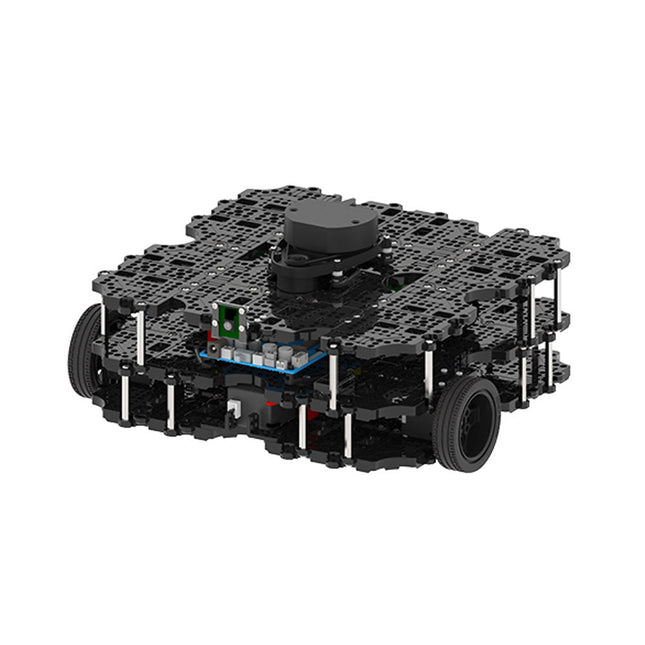
TurtleBot ist der beliebteste Open-Source-Roboter für Bildung und Forschung. Die neue Generation TurtleBot3 ist ein kleiner, kostengünstiger, voll programmierbarer, ROS-basierter mobiler Roboter. Er ist für Bildung, Forschung, Hobby und Produktprototyping gedacht.
Erschwingliche Kosten
TurtleBot wurde entwickelt, um die kostenbewussten Bedürfnisse von Schulen, Laboren und Unternehmen zu erfüllen. TurtleBot3 ist der erschwinglichste Roboter unter den SLAM-fähigen mobilen Robotern, die mit einem 360°-Laser-Distanzsensor LDS-01 ausgestattet sind.
ROS Standard
Die Marke TurtleBot wird von Open Robotics verwaltet, das ROS entwickelt und pflegt. Heutzutage ist ROS die bevorzugte Plattform für alle Robotiker auf der ganzen Welt geworden. TurtleBot kann mit bestehenden ROS-basierten Roboterkomponenten integriert werden, aber TurtleBot3 kann eine erschwingliche Plattform für diejenigen sein, die mit dem Erlernen von ROS beginnen möchten.
Erweiterbarkeit
TurtleBot3 ermutigt Benutzer, seine mechanische Struktur mit einigen alternativen Optionen anzupassen: Open Source Embedded Board (als Steuerplatine), Computer und Sensoren. Der TurtleBot3 Waffle Pi ist eine zweirädrige Plattform mit Differentialantrieb, kann aber strukturell und mechanisch in vielerlei Hinsicht angepasst werden: Autos, Fahrräder, Anhänger und so weiter. Erweitern Sie Ihre Ideen jenseits der Vorstellungskraft mit verschiedenen SBC, Sensoren und Motoren auf einer skalierbaren Struktur.
Modularer Aktuator für mobilen Roboter
TurtleBot3 ist in der Lage, durch den Einsatz von 2 DYNAMIXEL's in den Radgelenken präzise räumliche Daten zu erhalten. Die DYNAMIXEL der XM-Serie können in einem von 6 Betriebsmodi betrieben werden (XL-Serie: 4 Betriebsmodi): Geschwindigkeitsregelung für die Räder, Drehmomentregelung oder Positionsregelung für die Gelenke, usw. DYNAMIXEL kann auch für die Herstellung eines mobilen Manipulators verwendet werden, der leicht ist, aber mit Geschwindigkeits-, Drehmoment- und Positionssteuerung präzise gesteuert werden kann. DYNAMIXEL ist eine Kernkomponente, die den TurtleBot3 perfekt macht. Er ist einfach zu montieren, zu warten, zu ersetzen und neu zu konfigurieren.
Offene Steuerplatine für ROS
Die Steuerplatine ist sowohl hardware- als auch softwareseitig für die ROS-Kommunikation offengelegt. Die Open-Source-Steuerungsplatine OpenCR1.0 ist leistungsfähig genug, um nicht nur DYNAMIXELs, sondern auch ROBOTIS-Sensoren zu steuern, die häufig für grundlegende Erkennungsaufgaben auf kostengünstige Weise verwendet werden. Verschiedene Sensoren wie z. B. Berührungssensor, Infrarotsensor, Farbsensor und eine Handvoll weiterer sind verfügbar. Das OpenCR1.0 verfügt über einen IMU-Sensor im Inneren des Boards, so dass es die präzise Steuerung für unzählige Anwendungen verbessern kann. Das Board verfügt über 3,3 V, 5 V und 12 V Stromversorgungen, um die verfügbaren Computergeräte zu verstärken.
Open Source
Die Hardware, Firmware und Software von TurtleBot3 sind Open Source, was bedeutet, dass die Benutzer willkommen sind, die Quellcodes herunterzuladen, zu ändern und zu teilen. Alle Komponenten des TurtleBot3 werden aus kostengünstigem Kunststoff im Spritzgussverfahren hergestellt, die 3D-CAD-Daten sind jedoch auch für den 3D-Druck verfügbar.
Technische Daten
Maximale Translationsgeschwindigkeit
0,26 m/s
Maximale Rotationsgeschwindigkeit
1,82 rad/s (104.27 deg/s)
Maximale Nutzlast
30 kg
Abmessungen (L x B x H)
281 x 306 x 141 mm
Gewicht (+ SBC + Batterie + Sensoren)
1,8 kg
Schwelle des Kletterns
10 mm oder niedriger
Voraussichtliche Betriebsdauer
2h
Voraussichtliche Ladezeit
2h 30m
SBC (Single Board Computer)
Raspberry Pi 4 (2 GB RAM)
MCU
32-bit ARM Cortex-M7 mit FPU (216 MHz, 462 DMIPS)
Fernbedienung
RC-100B + BT-410 Set (Bluetooth 4, BLE)
Aktuator
XL430-W210
LDS (Laser-Abstandssensor)
360 Laser-Abstandssensor LDS-01 or LDS-02
Kamera
Raspberry Pi Camera Module v2.1
IMU
Gyroskop 3 AchsenBeschleunigungsmesser 3 Achsen
Stromanschlüsse
3,3 V/800 mA5 V/4 A12 V/1 A
Erweiterungspins
GPIO 18 PinsArduino 32 Pin
Peripherie
3x UART, 1x CAN, 1x SPI, 1x I²C, 5x ADC, 4x 5-pin OLLO
DYNAMIXEL Ports
3x RS485, 3x TTL
Audio
Several programmable beep sequences
Programmierbare LEDs
4x User LED
Status-LEDs
1x Board Status LED1x Arduino-LED1x Power-LED
Tasten und Schalter
2x Drucktasten, 1x Reset-Taste, 2x Dip-Schalter
Akku
Lithium Polymer 11,1 V 1800 mAh / 19,98 Wh 5C
PC-Verbindung
USB
Firmware-Upgrade
via USB / via JTAG
Netzadapter (SMPS)
Eingang: 100-240 VAC 50/60 Hz, 1,5 A @maxAusgang: 12 VDC, 5 A
Downloads
ROS Robot Programming
GitHub
E-Manual
Community
TurtleBot 4 ist die nächste Generation der weltweit beliebtesten Open-Source-Robotikplattform für Bildung und Forschung und bietet bessere Rechenleistung, bessere Sensoren und ein erstklassiges Benutzererlebnis zu einem erschwinglichen Preis.
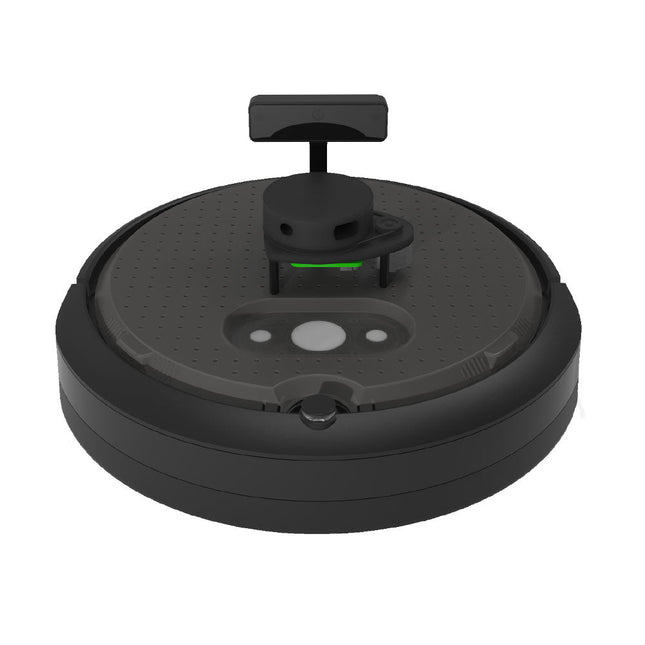
TurtleBot 4 Lite ist mit einer mobilen iRobot Create 3-Basis, einem leistungsstarken Raspberry Pi 4 mit ROS 2, einer räumlichen KI-Stereokamera OAK-D, 2D LiDAR und mehr ausgestattet. Alle Komponenten wurden nahtlos integriert, um eine sofort einsatzbereite Entwicklungs- und Lernplattform zu bieten.
Technische Daten
Basisplattform
iRobot Create 3
Räder (Durchmesser)
72 mm
Bodenfreiheit
4,5 mm
Bordcomputer
Raspberry Pi 4 (4 GB)
Maximale Lineargeschwindigkeit
0,31 m/s im abgesicherten Modus0,46 m/s ohne abgesicherten Modus
Maximale Winkelgeschwindigkeit
1,90 rad/s
Maximale Nutzlast
9kg
Betriebszeit
2h 30m – 4h je nach Belastung
Ladezeit
2h 30m
Lidar
RPLIDAR A1M8
Kamera
OAK-D-Lite
Benutzerleistung
VBAT @1,9 A5 V @ Schwachstrom3,3 V @ Schwachstrom
USB-Erweiterung
2x USB 2.0 (Typ A)2x USB 3.0 (Typ A)
Programmierbare LEDs
Erstelle 3 Lichtringe
Tasten und Schalter
2x Create 3 User Buttons1x Create 3 Power Button
Batterie
26 Wh Lithium-Ionen (14,4 V nominal)
Ladestation
Inbegriffen
Größe (L x B x H)
342 x 339 x 192 mm
Gewicht
3,3 kg
Downloads
User Manual
Diese exklusiv bei Elektor erhältliche überarbeitete Version 2.0 enthält folgende Verbesserungen:
Verbesserte Schutzerdung (PE) für das Ofengehäuse
Zusätzliche Wärmedämmschicht um den Ofen herum zur Geruchsreduzierung
Anschluss an einen Computer zur Kurvenbearbeitung am PC
Funktionen wie konstante Temperaturregelung und Zeitfunktionen
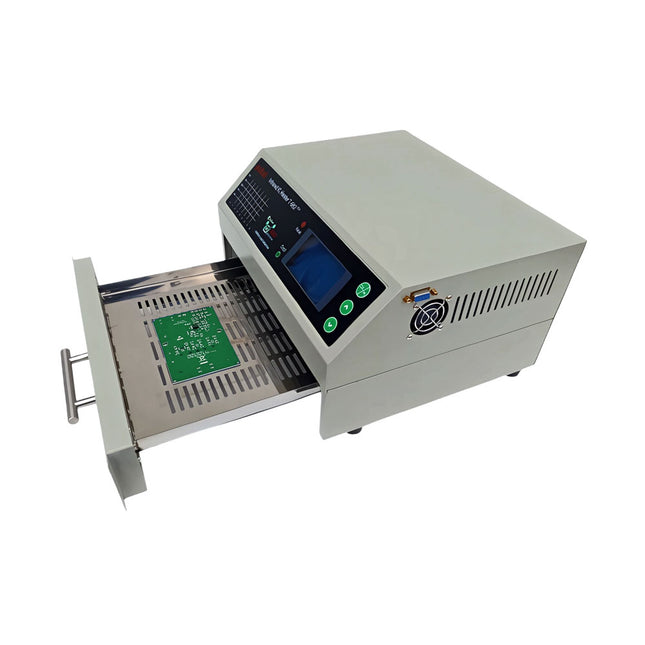
Der Infrarot-IC-Strahler T-962 v2.0 ist ein mikroprozessorgesteuerter Reflow-Ofen. Er kann zum effektiven Löten verschiedener SMD- und BGA-Komponenten verwendet werden. Der gesamte Lötprozess kann automatisch durchgeführt werden und ist sehr einfach zu bedienen. Diese Maschine verwendet eine leistungsstarke Infrarotemission und Zirkulation des Heißluftstroms, so dass die Temperatur sehr genau und gleichmäßig verteilt gehalten wird.
Eine verglaste Schublade dient zur Aufnahme des Werkstücks und ermöglicht sichere Löttechniken und die Handhabung von SMDBGA und anderen kleinen elektronischen Bauteilen, die auf einer Leiterplatte montiert sind. Der T-962 v2.0 kann zum automatischen Nachlöten verwendet werden, um schlechte Lötstellen zu korrigieren, schlechte Komponenten zu entfernen/zu ersetzen und kleine technische Modelle oder Prototypen zu vervollständigen.
Features
Große Infrarot-Lötfläche
Effektive Lötfläche: 180 x 235 mm; das erhöht den Einsatzbereich dieser Maschine drastisch und macht sie zu einer wirtschaftlichen Investition.
Wahlmöglichkeit zwischen verschiedenen Lötzyklen
Die Parameter von acht Lötzyklen sind vordefiniert und der gesamte Lötprozess kann automatisch von Preheat, Soak und Reflow bis hin zur Abkühlung durchgeführt werden.
Spezielles Aufheizen und Temperaturausgleich bei allen Ausführungen
Nutzt bis zu 800 Watt energieeffiziente Infrarotheizung und Luftzirkulation zum Reflow-Löten.
Ergonomisches Design, praktisch und leicht zu bedienen
Die gute Verarbeitungsqualität, das geringe Gewicht und die kleine Stellfläche ermöglichen es, den T-962 v2.0 auf der Werkbank zu platzieren, zu transportieren oder zu lagern.
Große Anzahl von verfügbaren Funktionen
Der T-962 v2.0 kann die meisten Kleinteile von Leiterplatten löten, zum Beispiel CHIP, SOP, PLCC, QFP, BGA etc. Sie ist die ideale Rework-Lösung für Einzelläufe bis hin zur bedarfsgerechten Kleinserienproduktion.
Technische Daten
Lötfläche (max.)
180 x 235 mm
Leistung (max.)
800 W
Temperaturbereich
0-280°C
Heizmethode
Infrarot
Bearbeitungszeit
1-8 Minuten
Stromversorgung
220 V AC/50 Hz
Display
LCD mit Hintergrundbeleuchtung
Regelmodus
8 intelligente Temperaturkurven
Abmessungen
310 x 290 x 170 mm
Gewicht
6,2 kg
Lieferumfang
1x T-962 v2.0 Reflow-Lötofen (Elektor Version)
2x Sicherungen
1x Netzkabel (EU)
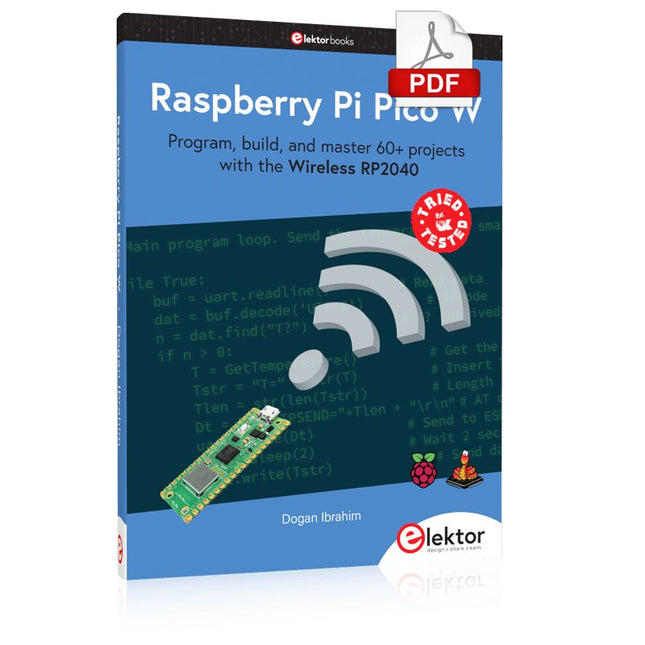
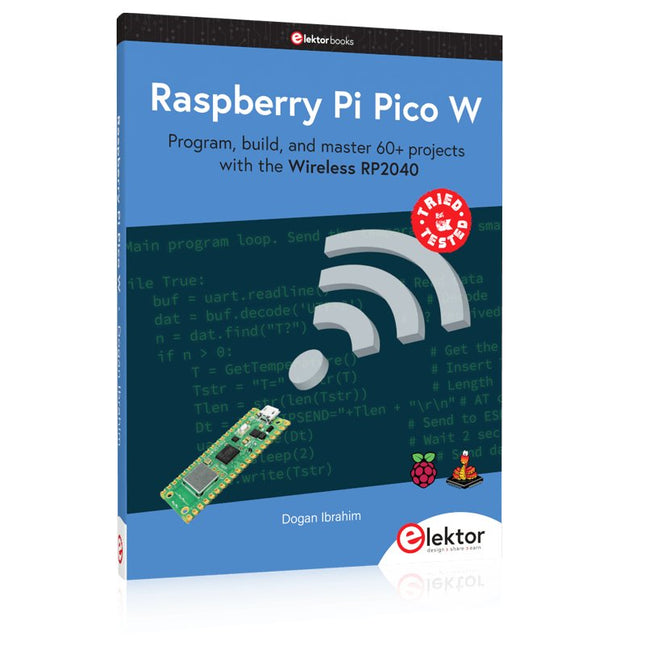
Program, build, and master 60+ projects with the Wireless RP2040
The Raspberry Pi Pico and Pico W are based on the fast, efficient, and low-cost dual-core ARM Cortex M0+ RP2040 microcontroller chip running at up to 133 MHz and sporting 264 KB of SRAM and 2 MB of Flash memory. Besides spacious memory, the Pico and Pico W offer many GPIO pins, and popular peripheral interface modules like ADC, SPI, I²C, UART, PWM, timing modules, a hardware debug interface, and an internal temperature sensor.
The Raspberry Pi Pico W additionally includes an on-board Infineon CYW43439 Bluetooth and Wi-Fi chipset. At the time of writing this book, the Bluetooth firmware was not yet available. Wi-Fi is however fully supported at 2.4 GHz using the 802.11b/g/n protocols.
This book is an introduction to using the Raspberry Pi Pico W in conjunction with the MicroPython programming language. The Thonny development environment (IDE) is used in all of the 60+ working and tested projects covering the following topics:
Installing the MicroPython on Raspberry Pi Pico using a Raspberry Pi or a PC
Timer interrupts and external interrupts
Analogue-to-digital converter (ADC) projects
Using the internal temperature sensor and external sensor chips
Using the internal temperature sensor and external temperature sensor chips
Datalogging projects
PWM, UART, I²C, and SPI projects
Using Bluetooth, WiFi, and apps to communicate with smartphones
Digital-to-analogue converter (DAC) projects
All projects are tried & tested. They can be implemented on both the Raspberry Pi Pico and Raspberry Pi Pico W, although the Wi-Fi-based subjects will run on the Pico W only. Basic programming and electronics experience are required to follow the projects. Brief descriptions, block diagrams, detailed circuit diagrams, and full MicroPython program listings are given for all projects.
Program, build, and master 60+ projects with the Wireless RP2040
The Raspberry Pi Pico and Pico W are based on the fast, efficient, and low-cost dual-core ARM Cortex M0+ RP2040 microcontroller chip running at up to 133 MHz and sporting 264 KB of SRAM and 2 MB of Flash memory. Besides spacious memory, the Pico and Pico W offer many GPIO pins, and popular peripheral interface modules like ADC, SPI, I²C, UART, PWM, timing modules, a hardware debug interface, and an internal temperature sensor.
The Raspberry Pi Pico W additionally includes an on-board Infineon CYW43439 Bluetooth and Wi-Fi chipset. At the time of writing this book, the Bluetooth firmware was not yet available. Wi-Fi is however fully supported at 2.4 GHz using the 802.11b/g/n protocols.
This book is an introduction to using the Raspberry Pi Pico W in conjunction with the MicroPython programming language. The Thonny development environment (IDE) is used in all of the 60+ working and tested projects covering the following topics:
Installing the MicroPython on Raspberry Pi Pico using a Raspberry Pi or a PC
Timer interrupts and external interrupts
Analogue-to-digital converter (ADC) projects
Using the internal temperature sensor and external sensor chips
Using the internal temperature sensor and external temperature sensor chips
Datalogging projects
PWM, UART, I²C, and SPI projects
Using Bluetooth, WiFi, and apps to communicate with smartphones
Digital-to-analogue converter (DAC) projects
All projects are tried & tested. They can be implemented on both the Raspberry Pi Pico and Raspberry Pi Pico W, although the Wi-Fi-based subjects will run on the Pico W only. Basic programming and electronics experience are required to follow the projects. Brief descriptions, block diagrams, detailed circuit diagrams, and full MicroPython program listings are given for all projects.
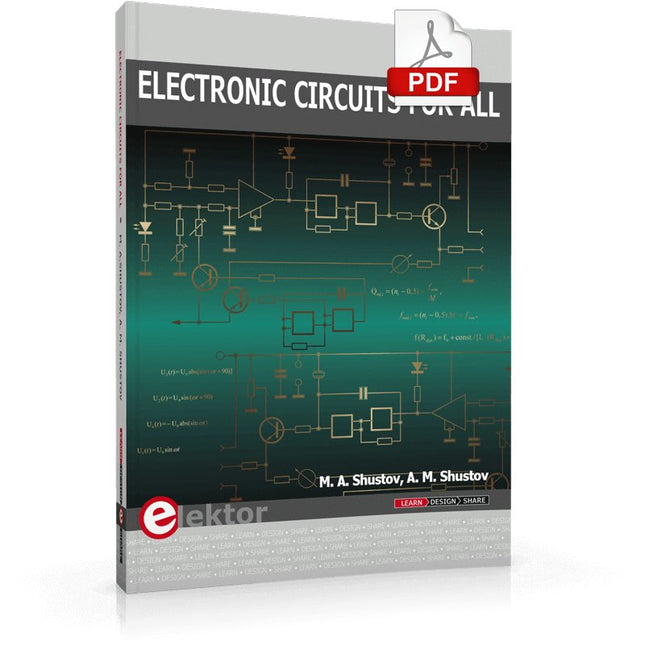
This book contains more than 400 simple electronic circuits which are developed and tested in practice by the authors. The technical solutions presented in the book are intended to stimulate the creative imagination of readers and broaden their area of thought. This should allow readers to look beyond the horizons of possibilities and use ordinary electronic items in a new way.
This book includes new and original radio electronic multipurpose circuits. The chapters of the book are devoted to power electronics and measuring equipment and contain numerous original circuits of generators, amplifiers, filters, electronic switches based on thyristors and CMOS switch elements. Wired and wireless systems as well as security and safety systems are presented.
Due to the high relevance and increased interest of readers in little-known or not readily available information, the different chapters of this book describe the use of electronic devices in industrial electronics and for research, as well as new instruments and equipment for medical use, gas-discharge and Kirlian photography.
A number of technical devices presented in this book are related to research of the mysteries of the earth, nature and human beings by using radio electronic devices. This book will be useful for both radio amateurs and professionals.
Plot, Cut, Drill, Mill and Laser with the Z99
This book covers the construction, hardware, software, and operation of the Z99 – CNC machine. This is a multifunctional 4-axis machine for home construction.
The capabilities of the Z99 machine include:
large-format schematic plotting
PCB plotting with etch-resist pens
schematic plotting with conductive-ink pens
letter cutting out of vinyl
paper cutting
PCB/substrate drilling
PCB/substrate milling
text milling
laser engraving
laser cutting of solder paste masks
By making the support software available as freeware, readers of the book are challenged and encouraged to develop new applications for the Z99.
The machine would not be of much use if the user has no option to create suitable files for the designs in mind. A large part of this book is dedicated to creating source files in a variety of freeware software packages, including Inkscape, DesignSpark PCB, KiCad, and FlatCAM.
The book is also useful for readers keen to comprehend and then master the basic structure of HPGL, Gerber, Drill, and G-code files, as well as to have a go at deciphering them using software.
Dieser verstellbare Platinenhalter ist ideal zum Klemmen von Platinen zum Löten, Entlöten oder Nacharbeiten.
Fetaures
2 verstellbare Griffe auf einem einziehbaren Ständer für verschiedene Boardgrößen.
Die verstellbaren Klemmen ermöglichen es der Leiterplatte, sich um 360 Grad zu drehen und in jeder Position zu bleiben.
Die Grundplatte dieses starren Metallständers verfügt über vier Gummifüße, um Stabilität zu gewährleisten.
Technische Daten
Produktgröße
30 x 16,5 x 12,5 cm
Max. Größe der Halterung
20 x 14 cm
Gewicht
450 g
Die SQ-Serie von handsfreien Sonden von Sensepeek hat aufgrund ihres niedrigeren Schwerpunkts eine noch höhere Stabilität im Vergleich zur ursprünglichen SP-Serie von handsfreien Sonden. Alle Sonden der SQ-Serie sind auch isoliert und können wie jede herkömmliche Sonde von Hand gehalten werden, aber ihr volles Potenzial wird bei handsfreier Messung genutzt.
Die SQ-Serie von Oszilloskop-Sonden bietet auch mehr Erdungsoptionen, hat eine Probe-Spitzen-Schutzabdeckung, ein längeres Kabel und unterstützt Oszilloskope mit automatischer Skalierung (10:1).
Alle beliebten Funktionen der handsfreien Messung, auswechselbare feinrastergefederte Testnadeln, farbcodierte Kabelhalter und das minimalistische Design bleiben erhalten, um herkömmliche und handgehaltene Sonden überflüssig zu machen.
Sowohl die Länge als auch das Gewicht der SQ-Sonden sind perfekt ausbalanciert, um mit den PCBite-PCB-Haltern und der Basisplatte verwendet zu werden, die für die handsfreie Funktion unerlässlich sind.
Features
Passive 10:1-Sonde mit Unterstützung für Oszilloskope mit automatischer Skalierung
Federbelastete Testnadel für Feinrastermessungen
Mehrere Erdungsoptionen
Farbcodierte Kabelhalter
Probe-Spitzen-Schutzabdeckung
Isoliert, kann von Hand gehalten werden
Verbesserter Sondenhalter für handsfreie Messungen bei Verwendung von PCBite-PCB-Haltern
Lieferumfang
1x SQ500 500 MHz Sonde mit gefederter Testnadel
1x SQ-Sondenhalter für handsfreie Messungen
1x Testhaken mit abnehmbaren Kabeln (5 cm & 10 cm) für eine bequeme Erdungsverbindung
1x Alligator-Kabel für eine bequeme Erdungsverbindung
1x Standard-Erdungsfeder für handgehaltene Messungen bei Nennbandbreite
1x Einzigartige Erdungsfeder für vollständig handsfreie Messungen bei Nennbandbreite
1x Set farbcodierter Kabelhalter (4 Farben)
1x Probe-Spitzen-Schutzabdeckung
1x Zusätzliche Testnadel
Downloads
Benutzerhandbuch SQXX0 Rev1.1
Die Freihandsonden der SQ-Serie von Sensepeek haben einen niedrigeren Schwerpunkt, was sie im Vergleich zur ursprünglichen Freihandsonde der SP-Serie noch stabiler macht. Alle Sonden der SQ-Serie sind außerdem isoliert und können wie jede herkömmliche Sonde in der Hand verwendet werden, ihr volles Potenzial wird jedoch bei freihändigen Messungen genutzt.
Die Oszilloskopsonden der SQ-Serie umfassen außerdem mehr Erdungsoptionen, verfügen über einen Sondenspitzenschutz, ein längeres Kabel und unterstützen Oszilloskope mit automatischer Skalierung (10:1).
Alle beliebten Funktionen der freihändigen Messung, der austauschbaren Prüfnadel mit feiner Gewindespitze und der farbcodierten Kabelhalter sowie des minimalistischen Designs bleiben erhalten und machen herkömmliche Handsonden überflüssig.
Sowohl Länge als auch Gewicht der SQ-Sonden sind perfekt ausbalanciert für die Verwendung mit PCBite-PCB-Haltern und Grundplatten, die für die Freisprechfunktion unerlässlich sind.
Features
Passiver 10:1-Tastkopf mit Unterstützung für Oszilloskope mit automatischer Skalierung
Gefederte Prüfnadel für Feinabstandsmessungen
Mehrere Bodenoptionen
Farbcodierte Kabelhalter
Schutz der Sondenspitze
Isoliert, kann in der Hand verwendet werden
Verbesserter Sondenhalter für freihändige Messungen bei Verwendung mit PCBite-Leiterplattenhaltern
Lieferumfang
1x SQ350 350 MHz Sonde mit federnder Prüfnadel
1x SQ-Sondenhalter für freihändige Messungen
1x Prüfhaken mit abnehmbaren Kabeln (5 cm und 10 cm) für bequemen Erdungsanschluss
1x Krokodilkabel für bequemen Erdungsanschluss
1x Standard-Erdungsfeder für Handmessungen bei Nennbandbreite
1x Einzigartige Erdungsfeder für völlig freihändige Messungen bei Nennbandbreite
1x Set farbcodierte Kabelhalter (4 Farben)
1x Tastspitzenschutz
1x Zusätzliche Prüfnadel
Downloads
Benutzerhandbuch SQXX0 Rev1.1
Die SQ-Serie von freihändigen Sonden von Sensepeek hat einen niedrigeren Schwerpunkt, was sie im Vergleich zur ursprünglichen SP-Serie von freihändigen Sonden noch stabiler macht. Alle Sonden der SQ-Serie sind außerdem isoliert und können wie herkömmliche Sonden von Hand verwendet werden, aber ihr volles Potenzial entfaltet sich bei freihändiger Messung.
Features
Die SQ-Serie von freihändigen Sonden von Sensepeek hat einen niedrigeren Schwerpunkt, was sie im Vergleich zur ursprünglichen SP-Serie von freihändigen Sonden noch stabiler macht.
Alle Sonden der SQ-Serie sind ebenfalls isoliert und können wie herkömmliche Sonden von Hand verwendet werden, aber ihr volles Potenzial entfaltet sich bei freihändiger Messung.
Die SQ-Serie von Oszilloskopsonden bietet auch mehr Erdungsoptionen, hat einen Sondenspitzen-Schutz, ein längeres Kabel und unterstützt Oszilloskope mit automatischer Skalierung (10:1).
Alle beliebten Funktionen der freihändigen Messung, austauschbare Testnadeln mit feinem Pitch, farbcodierte Kabelhalter und das minimalistische Design werden beibehalten, um herkömmliche Sonden in normaler Größe und von Hand zu verwenden.
Sowohl die Länge als auch das Gewicht der SQ-Sonden sind perfekt ausbalanciert, um mit den PCBite PCB-Haltern und der Basisplatte verwendet zu werden, was für die freihändige Funktion unerlässlich ist.
Lieferumfang
1x SQ200 200 MHz Sonde mit fein gepitchter Testnadel
1x SQ-Sondenhalter für freihändige Messung
1x Testhaken mit abnehmbaren Kabeln (5 cm & 10 cm) für bequeme Erdungsverbindung
1x Alligator-Kabel für bequeme Erdungsverbindung
1x Standard-Erdungsfeder für Handmessungen bei nominalem Frequenzbereich
1x Einzigartige Erdungsfeder für vollständig freihändige Messungen bei nominalem Frequenzbereich
1x Satz farbcodierter Kabelhalter (4 Farben)
1x Sondenspitzen-Schutz
1x Extra Testnadel
Downloads
Benutzerhandbuch SQXX0 Rev1.2