
Suchergebnisse für "elektor OR fortissimo OR 100 OR power OR amplifier OR kit"
-

SDRplay SDRplay RSPduo Dual-Tuner 14-Bit SDR-Empfänger (1 kHz bis 2 GHz)
Der SDRplay RSPduo ist ein hochleistungsfähiger 14-Bit-SDR-Empfänger mit zwei Tunern. In einem hochwertigen Stahlgehäuse untergebracht, kann jeder Tuner einzeln im Bereich von 1 kHz bis 2 GHz mit bis zu 10 MHz Bandbreite oder beide Tuner können gleichzeitig im Bereich von 1 kHz bis 2 GHz mit bis zu 2 MHz Bandbreite pro Tuner arbeiten. Dank einer hochstabilen Referenz und externen Taktgebern eignet sich dieses Gerät ideal für industrielle, wissenschaftliche und Bildungsanwendungen. Features Dual-Tuner bietet unabhängige Abdeckung von 1 kHz bis 2 GHz unter gleichzeitiger Verwendung von 2 Antennenanschlüssen 14-Bit-ADC-Siliziumtechnologie Bis zu 10 MHz sichtbare Bandbreite (Single-Tuner-Modus) oder 2 Slices von 2 MHz Spektrum (Dual-Tuner-Modus) 3 per Software auswählbare Antennenanschlüsse (2x 50Ω und 1x 1kΩ hochohmiger symmetrischer/unsymmetrischer Eingang) Hochohmiger Antennenanschluss (1 kHz bis 30 MHz) mit wählbarem MW-Sperrfilter und 2 Vorselektionsfiltern zur Auswahl Per Software wählbare AM/FM- und DAB-Rundfunkband-Sperrfilter für die 2 SMA-Antennenanschlüsse (1 kHz bis 2 GHz) Externer Takteingang und -ausgang ermöglichen die einfache Synchronisierung mit mehreren RSPs oder einem externen Referenztakt Stromversorgung über das USB-Kabel mit einer einfachen Typ-B-Buchse 11 hochselektive, eingebaute Front-End-Vorwahlfilter an den beiden SMA-Antennenanschlüssen Per Software wählbarer mehrstufiger rauscharmer Vorverstärker Bias-T-Netzteil zur Versorgung des an der Antenne montierten LNA In einem robusten, schwarz lackierten Stahlgehäuse untergebracht SDRuno – SDR-Software der Extraklasse (für Windows) Dokumentierte API für die Entwicklung neuer Anwendungen Technische Daten Frequenzbereich 1 kHz – 2 GHz Antennenanschluss SMA Antennenimpedanz 50 Ohm Stromverbrauch (typisch) Single-Tuner Mode: 180 mA (ohne Bias-T)Dual-Tuner Mode: 280 mA (ohne Bias-T) USB-Anschluss USB-B Maximale Eingangsleistung +0 dBm kontinuierlich+10 dBm kurzzeitig ADC Abtastraten 2-10,66 MSPS ADC Anzahl der Bits 14 bit 2-6,048 MSPS12 bit 6,048-8,064 MSPS10 bit 8,064-9,216 MSPS8 bit >9,216 MSPS Bias-T 4,7 V100 mA garantiert Referenz 0,5ppm 24 MHz TCXO.Frequenzfehler auf 0,01ppm im Feld trimmbar. Betriebstemperatur −10˚C bis +60˚C Abmessungen 98 x 94 x 33 mm Gewicht 315 g Downloads Datasheet Detailed Technical Information Software RSPdx-R2 vs RSPduo RSPdx-R2 RSPduo Kontinuierlicher Bereich von 1 kHz bis 2 GHz ✓ ✓ Bis zu 10 MHz sichtbare Bandbreite ✓ ✓ 14-Bit-ADC-Siliziumtechnologie plus mehrere Hochleistungs-Eingangsfilter ✓ ✓ Per Software wählbare AM/FM- und DAB-Rundfunkband-Sperrfilter ✓ ✓ 4,7 V Bias-T für die Versorgung eines externen Antennenverstärkers ✓ ✓ Stromversorgung über das USB-Kabel mit einer einfachen Typ-B-Buchse ✓ ✓ 50Ω SMA-Antenneneingang(e) für 1 kHz bis 2 GHz Betrieb (per Software wählbar) 2 2 Zusätzlicher per Software wählbarer Hi-Z-Eingang für bis zu 30 Mhz-Betrieb ✓ Zusätzlicher per Software wählbarer 50-Ω-BNC-Eingang für den Betrieb mit bis zu 200 MHz ✓ Zusätzlicher LF/VLF-Filter für unter 500 kHz ✓ 24 MHz Referenztakt-Eingang (+ Ausgang auf RSPduo) ✓ ✓ Duale Tuner ermöglichen den Empfang auf 2 völlig unabhängigen 2-MHz-Bereichen ✓ Zwei Tuner ermöglichen Diversity-Empfang mit SDRuno ✓ Robustes schwarz lackiertes Stahlgehäuse ✓ ✓ Gesamtleistung unter 2 MHz für MW und LF ++ + Mehrere gleichzeitige Anwendungen + ++ Leistung unter schwierigen Fading-Bedingungen (*mit Diversity-Abstimmung) + *++
€ 283,22
-

OWON OWON DGE3062 2-Kanal Funktionsgenerator (60 MHz)
Der OWON DGE3062 ist ein 14-Bit Funktionsgenerator mit einer Bandbreite von 60 MHz. Er verfügt über 5 Grundwellenformen, 160 eingebaute Arbiträr-Wellenformen und die folgenden umfassenden Modulationsfunktionen: AM, FM, PM, PWM, FSK, 3FSK, 4FSK, PSK, ASK, BPSK, OSK, DSBAM, QPSK, SUM, Sweep, Burst. Features Max. 60-MHz-Frequenzausgang, 300 MSa/s Abtastrate 14 Bit vertikale Auflösung, 100.000 Arb-Wellenformlänge Umfassende Wellenformausgabe: 5 grundlegende Wellenformen und 160 integrierte Arbiträrwellenformen Umfassende Modulationsfunktionen: AM, FM, PM, PWM, FSK, 3FSK, 4FSK, PSK, ASK, BPSK, OSK, DSBAM, QPSK, SUM, Sweep, Burst SCPI und LabVIEW werden unterstützt 3,6 Zoll LCD (480 x 272 Pixel) Technische Daten Kanäle 2 Frequenz-Ausgang 60 MHz Abtastrate 300 MSa/s Vertikale Auflösung 14 bits Wellenform Standard Waveform Sine, square, pulse, ramp, noise Arbitrary Waveform Exponential rise, exponential fall, sin(x)/x, step wave, and others, total 160 built-in waveforms Frequenz (Auflösung 1 μHz) Sine 1 μHz-60 MHz Square 1 μHz ~ 20 MHz Pulse 1 μHz ~ 20 MHz Ramp 1 μHz ~ 2 MHz Noise 20 MHz (-3 dB, typical) Arbitrary Waveform 1 μHz ~10 MHz Arbitrary Waveform Length 2 points – 100K points Sample Rate 300 MSa/s Amplitude Into 50Ω load 1mVpp ~ 10Vpp (≤10Hz), 1mVpp ~ 5Vpp (≤60 MHz) DC Offset Range (AD+DC ±(10 Vpk – Amplitude Vpp/2) high resistance±(5 Vpk – Amplitude Vpp/2) 50 Ω DC offset resolution 1 mV or 4 digits Load Impedance 50 Ω (typical) DC offset Accuracy ±(1% of |setting| + 1 mV + amplitude Vpp * 0.5%) Modulation Type AM,FM, PM, PWM, FSK, 3FSK, 4FSK, PSK, ASK, BPSK, OSK, DSB-AM, QPSK, SUM, Sweep, Burst Frequenzzähler Function Frequency, period Frequency Range 100 MHz ~ 100 MHz Frequency Resolution 6 digits Input/Output Display 3.6” LCD Input mode External modulation input, external trigger input, external reference clock input/output Communication Interface USB Host, USB Device Mechanische Spezifikationen Abmessungen 200 x 92 x 157 mm Gewicht 0,8 kg Lieferumfang 1x OWÒN DGE3062 Funktionsgenerator 1x Netzkabel 1x Kurzanleitung 1x USB-Kabel 1x Q9-Kabel 1x BNC auf Krokodilklemme Downloads Quick Guide Manual Software
€ 208,99
-

Elektor Digital Electronics for Space (E-book)
Space, the final frontier, will become more and more popular. The space industry is continually growing and new products and services will be required. Innovation is needed for the development of this industry. Today it is no longer possible to follow all the events in field of space. The space market is growing and activities are increasing, especially the market for small-satellites. This book wants to help close the gap and encourage electronic engineers to enter into the fascinating field of space electronics. One of the main difficulties is finding people with knowledge of space electronics design. Nowadays companies have to invest a lot of time and resources to instruct electronic engineers with no experience of space. Only a brief and basic introduction of this topic is typically achieved at university in space engineering lectures. Professionals with practical experience and the necessary theoretical knowledge are scarce. Companies from the space sector are searching for staff with knowledge of space electronics. This book will bring space closer aspiring to the space electronic hobbyists.
€ 24,95
Mitglieder: € 22,46
-

Raspberry Pi Foundation FPC Display-Kabel für Raspberry Pi 5 (500 mm)
Der Raspberry Pi 5 verfügt über zwei vierspurige MIPI-Anschlüsse, von denen jeder entweder eine Kamera oder ein Display unterstützen kann. Diese Anschlüsse verwenden dasselbe 22-polige "Mini"-FPC-Format mit 0,5 mm Raster wie das Compute Module Development Kit und erfordern Adapterkabel für den Anschluss an die 15-poligen "Standard"-Anschlüsse mit 1 mm Raster an aktuellen Raspberry Pi Kamera- und Display-Produkten. Diese Mini-zu-Standard-Adapterkabel für Kameras und Displays (beachten Sie, dass ein Kamerakabel nicht mit einem Display verwendet werden sollte und umgekehrt) sind in den Längen 200 mm, 300 mm und 500 mm erhältlich.
€ 3,95€ 1,95Bestpreis
-
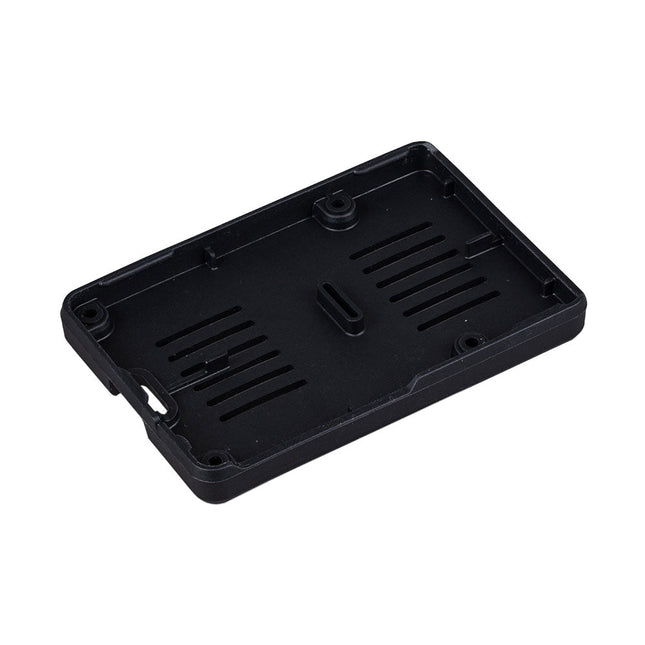
Raspberry Pi Foundation Bumper für Raspberry Pi 5
Der Raspberry Pi Bumper ist eine aufsteckbare Silikonabdeckung, die die Unterseite und die Kanten des Raspberry Pi 5 schützt. Features Einteiliger flexibler Bumper aus Silikonkautschuk Ermöglicht einfachen Zugriff auf den Power-Button Montagelöcher bleiben unter dem Bumper zugänglich Downloads Datasheet
€ 3,50€ 1,95Bestpreis
-

Elektor Digital Keine Angst vor der Medizintechnik (PDF)
Schon jeder hat erlebt, dass bei medizinischen Untersuchungen nicht ausreichend erklärt wird, was durch und mit den eingesetzten Geräte konkret vor sich geht. Dieses Buch kann hier unterstützend eingreifen und beschreibt auf verständliche Weise, wie die Medizintechnik funktioniert. Sowohl diejenigen, die nur eine oberflächliche Erklärung suchen als auch der Personenkreis, der etwas tiefer ins Details gehen will, finden in diesem Buch eine Antwort auf viele Fragen. Zunächst werden die biologischen Grundlagen soweit erklärt, wie sie für das weitere Verständnis nötig sind. Danach wird auf die biologische Messtechnik und die Messaufnehmer sowie auf die elektronische Verarbeitung eingegangen. Gerüstet mit diesem Wissen folgt dann die Beschreibung verschiedener Anwendungen (z. B. EKG, EEG, EMG, Biofeedback) anhand einfacher Schaltungen. Weitere Anwendungen, wie beispielsweise die Kernspintomografie und Bestrahlungen, runden das Buch ab. Wer sich dieser Thematik auf eine eher spielerische Art und Weise annähern möchte, findet hier ein eigenes Kapitel, in dem faszinierende parapsychologische Effekte anhand von telekinetischen Anwendungen vorgestellt werden, wie z. B. eine gedankenmanipulierte Eisenbahnsteuerung.
€ 29,80
Mitglieder: € 26,82
-

Elektor Digital Kickstart to Arduino Nano (E-book)
Get Cracking with the Arduino Nano V3, Nano Every, and Nano 33 IoT The seven chapters in this book serve as the first step for novices and microcontroller enthusiasts wishing to make a head start in Arduino programming. The first chapter introduces the Arduino platform, ecosystem, and existing varieties of Arduino Nano boards. It also teaches how to install various tools needed to get started with Arduino Programming. The second chapter kicks off with electronic circuit building and programming around your Arduino. The third chapter explores various buses and analog inputs. In the fourth chapter, you get acquainted with the concept of pulse width modulation (PWM) and working with unipolar stepper motors. In the fifth chapter, you are sure to learn about creating beautiful graphics and basic but useful animation with the aid of an external display. The sixth chapter introduces the readers to the concept of I/O devices such as sensors and the piezo buzzer, exploring their methods of interfacing and programming with the Arduino Nano. The last chapter explores another member of Arduino Nano family, Arduino Nano 33 IoT with its highly interesting capabilities. This chapter employs and deepens many concepts learned from previous chapters to create interesting applications for the vast world of the Internet of Things. The entire book follows a step-by-step approach to explain concepts and the operation of things. Each concept is invariably followed by a to-the-point circuit diagram and code examples. Next come detailed explanations of the syntax and the logic used. By closely following the concepts, you will become comfortable with circuit building, Arduino programming, the workings of the code examples, and the circuit diagrams presented. The book also has plenty of references to external resources wherever needed. An archive file (.zip) comprising the software examples and Fritzing-style circuit diagrams discussed in the book may be downloaded free of charge below.
€ 29,95
Mitglieder: € 26,96
-

Elektor Digital Raspberry Pi ontdekken in 45 Elektronica projecten (2e versie) | E-book
Met de Raspberry Pi heeft u voor slechts een paar tientjes een complete computer in handen, waar op eenvoudige wijze allerlei elektronica aangesloten kan worden. In deze 2e herziene en uitgebreide versie gaan we in op een van de sterke kanten van de Raspberry Pi: de combinatie van programmeren en elektronica. Na een korte introductie van de Raspberry Pi wordt de benodigde software geïnstalleerd. Op de SD-kaart die u bij dit boek kunt aanschaffen, is die allemaal al aanwezig voor de Raspberry Pi. Aan de (optionele) Windows PC kant gebeurt dit met gratis software die u kunt downloaden. Daarna volgt een beknopte inleiding in het besturingssysteem Linux en gaan we programmeren in Bash, Python en JavaScript. De nadruk ligt hierbij op Python, maar in alle gevallen houden we het kort. We bespreken net voldoende zodat u de projecten kunt begrijpen en aan uw wensen aanpassen, en gaan dan aan de slag met leuke projecten. Maar liefst 45 spannende en interessante projecten worden in detail besproken en uitgelegd. Van wisselknipperlicht, aansluiten van een elektromotor, het verwerken en maken van analoge signalen tot lichtmeter en temperatuurregeling. Maar ook gecompliceerdere projecten zoals een motorsnelheidsregeling, webserver met CGI, client-server applicaties en Xwindows programma‘s. U kunt dit boek gebruiken als projecten boek en de projecten nabouwen en in de praktijk inzetten. Door de duidelijke uitleg, schema‘s en foto‘s van de opstellingen op een steekbord wordt het nabouwen een erg leuke bezigheid. RPi Alle software voor de RPi is voorgeïnstalleerd op een SD-kaart die u bij dit boek kunt aanschaffen. Dat wil zeggen dat alle software en drivers voor SSH, SPI, I²C, GPIO, PWM, muziek, Python Ontwikkelversie, wxPython, IdleX en de seriële verbinding gegarandeerd werken. Tevens staan alle broncodes van de projecten uitdit boek op deze kaart. Windows-PC In het gratis download-pakket dat bij dit boek hoort, vindt u de software die in dit boek gebruikt wordt op de Windows-PC handig bij elkaar in een enkel ZIP-bestand. Alle software is gratis. Tevens bevat het pakket een filmpje van de Nutteloze Doos (Useless Machine) van project 13.4. Software download-pakket WinOscillo Putty Xming WinSCP DiskImager Notepad2 IdleX Useless Box film
€ 29,95
Mitglieder: € 26,96
-

Elektor Digital KiCad Like a Pro – Getting Started (E-book)
From Your First Design to a Finished PCB Turn your PCB ideas into real, working hardware with KiCad 10. Whether you are designing your first circuit board or looking to take your next steps with KiCad, this practical, hands-on guide walks you from schematic capture to pro-quality boards ready for manufacturing. This book teaches printed circuit board design with KiCad 10, the free, open-source and unrestricted PCB suite used by hobbyists, students, and professional engineers alike. It assumes no previous experience. By the end of it, you will be designing original boards with parts, rules and layouts of your own. Part A takes you from a blank schematic sheet to two manufactured boards: a USB-C breadboard power supply and a tiny solar power supply. Along the way you learn two 8-step workflows, one for the schematic and one for the layout, which you can apply to every board you design afterwards. Part B makes you self-sufficient. You draw the symbols and footprints that no library has for you, set up a board for the current it carries and the factory that will build it, and finish with an original capstone project: a dual H-bridge motor driver built around the DRV8833. Topics include: schematic capture, annotation, ERC and footprint assignment layout, routing, DRC and manufacturing outputs finding, importing and managing parts custom symbols and footprints net classes, custom design rules and copper zones bills of materials, design variants and DNP parts design for manufacturing design reuse on a 4×8×8 LED matrix and a four-motor driver assembly by reflow or with a soldering iron a Mini Encyclopedia of PCB terms and KiCad techniques
€ 54,95
Mitglieder: € 49,46
-

Elektor Digital Visual Basic for Electronics Engineering Applications (E-book)
The PC has long-time outgrown its function as a pure computer and has become an all-purpose machine. This book is targeted towards those people that want to control existing or self-built hardware from their computer. Using Visual Basic as Rapid Application Development tool we will take you on a journey to unlock the world beyond the connectors of the PC. After familiarising yourself with Visual Basic, its development environment and the toolset it offers, items such as serial communications, printer ports, bit-banging, protocol emulation, ISA, USB and Ethernet interfacing and the remote control of test-equipment over the GPIB bus, are covered in extent. Each topic is accompanied by clear, ready to run code, and where necessary, schematics are provided that will get your projects up to speed in no time. This book will show you advanced things like: using tools like Debug to find hardware addresses, setting up remote communication using TCP/IP and UDP sockets and even writing your own internet servers. Or how about connecting your own block of hardware over USB or Ethernet and controlling it from Visual Basic. Other things like internet-program communication, DDE and the new graphics interface of Windows XP are covered as well. All examples are ready to compile using Visual Basic 5.0, 6.0, NET or 2005. Extensive coverage is given on the differences between what could be called Visual Basic Classic and Visual basic .NET / 2005.
€ 39,95
Mitglieder: € 35,96
-

Elektor Digital Software Defined Radio (PDF) DE
Schaltungen, Software und Empfangspraxis Die Kurzwellen-Empfangstechnik entwickelt sich ständig weiter. Im Mai 2007 wurde von Elektor das "Software Defined Radio mit USB-Schnittstelle" vorgestellt. Ziel war ein möglichst einfacher Empfänger, der durch den Einsatz geeigneter Software überzeugende Empfangsergebnisse liefert. Die benötigten Programme stehen auf der Elektor-Website und im Internet gratis zur Verfügung. Schon nach wenigen Monaten hatte dieser neue Empfänger eine weite Verbreitung gefunden. Zahlreiche Software-Autoren unterstützten das Projekt. Auch Bedienungshinweise, Erweiterungen sowie Tipps und Tricks findet man im Netz. Die Vielfalt der Möglichkeiten erschwert die Orientierung. Deshalb wurde dieses Buch geschrieben. Das Ziel ist ein Überblick über Aufbau, Software und Bedienung des SDR. Außerdem werden Selbstbauprojekte vorgestellt, die es erlauben, mit geringsten Kosten eigene Empfänger zu entwerfen; denn das Thema entwickelt sich laufend weiter...
€ 29,80
Mitglieder: € 26,82
-

Elektor Publishing Le manuel officiel du Raspberry Pi
Réalisés par les créateurs du MagPi, le magazine officiel de Raspberry Pi Démarrez avec le Raspberry Pi 5, le dernier-né et le plus performant de la famille des nano-ordinateurs Raspberry Pi. Apprenez à coder et à réaliser des projets avec cet ordinateur étonnant. Dans ce manuel dédié au Raspberry Pi 5, nous vous proposons aussi de nombreuses idées de projets également réalisables avec le Raspberry Pi 4, le Raspberry Pi Zero 2 W et le Raspberry Pi Pico W. Avec des tutoriels, des projets pratiques, des essais techniques, des guides et bien plus encore, il s’agit de la ressource ultime pour le Raspberry Pi ! 228 pages sur le Raspberry Pi Tout ce que vous devez savoir sur le Raspberry Pi 5 Prise en main de tous les Raspberry Pi Amusez-vous et apprenez l’électronique avec le Pico W Des projets inspirants pour vous donner des idées de réalisations Apprenez μPython en construisant une mini-console Démarrez avec le module caméra Raspberry Pi Intelligence artificielle, codage de son propre agent ChatGP
€ 34,95
Mitglieder: € 31,46


