
Suchergebnisse für "elektor or septembre or octobre or 2023 or fr"
-
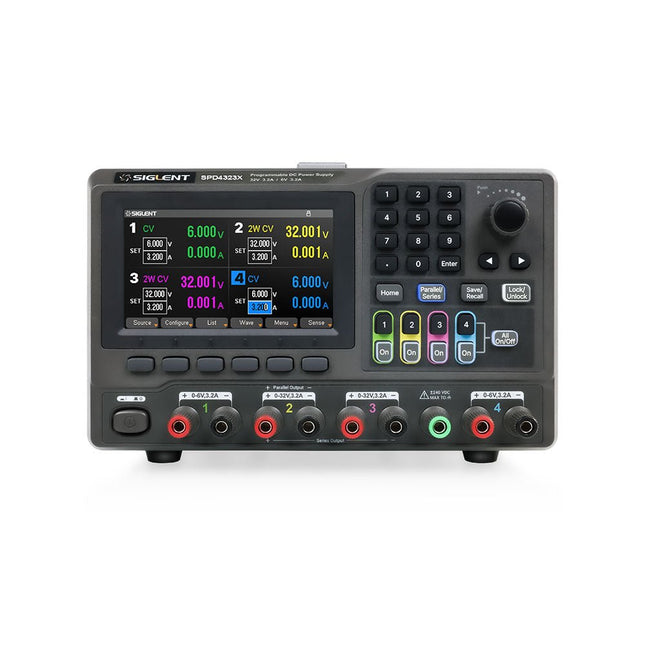
Siglent Siglent SPD4323X 4-Kanal Netzteil (240 W)
The Siglent SPD4323X is a 4-channel DC Linear Programmable Power Supply equipped with a 4.3-inch TFT-LCD display, friendly human-machine interface, and excellent performance indicators. Real-time waveform display provides engineers with an informative user interface. SPD4323X offers a total output power of 240 W with a resolution of 1 mV/1 mA. The maximum voltage and current for each channel are as follows: CH1: 6 V/3.2 A CH2: 32 V/3.2 A CH3: 32 V/3.2 A CH4: 6 V/3.2 A Features Rated output power: 240 W Rated voltage: 32 V, 12 V, 30 V Up to four high-precision power supplies with independent controllable outputs, supporting CH2 and CH3 series and parallel connections Clear graphical interface with waveform and timer display modes 5-digit voltage and current display with minimum resolution of 1 mV, 1 mA Fast output response time: <50us The high current channel support remote voltage compensation sense function. The maximum compensation voltage is 0.6 V Overvoltage protection and overcurrent protection or safe and accurate operation Equipped with a 4.3-inch TFT-LCD display (480 x 272 resolution) USB and LAN standard communication USB-GPIB module is optional Excellent channel density with up to 4 channels in a 3U half rack package Internal data storage for setups and parameters Embedded Web Server with instrument communication that doesn’t require software installation Fully SCPI programming command set support as well as a LabView driver for remote control and system automation Technische Daten SPD4323X SPD4121X SPD4306X Channel Output CH1: Voltage 0 to 6 V Current 0 to 3.2 ACH2: Voltage 0 to 32 V Current 0 to 3.2 ACH3: Voltage 0 to 32 V Current 0 to 3.2 ACH4: Voltage 0 to 6 V Current 0 to 3.2 A CH1: Voltage 0 to 15 V Current 0 to 1.5 ACH2: Voltage 0 to 12 V Current 0 to 10 ACH3: Voltage 0 to 12 V Current 0 to 10 ACH4: Voltage 0 to 15 V Current 0 to 1.5 A CH1: Voltage 0 to 15 V Current 0 to 1.5 ACH2: Voltage 0 to 30 V Current 0 to 6 ACH3: Voltage 0 to 30 V Current 0 to 6 ACH4: Voltage 0 to 15 V Current 0 to 1 A Resolution 1 mV, 1 mA 1 mV, 1 mA 1 mV, 1 mA Setting Accuracy Voltage: ±(0.03% of reading+10) mV, Current: ±(0.3% of reading+10) mA Voltage: ±(0.03% of reading+10) mV, Current: ±(0.3% of reading+10) mA Voltage: ±(0.03% of reading+10) mV, Current: ±(0.3% of reading+10) mA Readback Accuracy Voltage: ±(0.03% of reading+10) mV, Current: ±(0.3% of reading+10) mA Voltage: ±(0.03% of reading+10) mV, Current: ±(0.3% of reading+10) mA Voltage: ±(0.03% of reading+10) mV, Current: ±(0.3% of reading+10) mA Display 4.3" TFT-LCD 5-digit voltage and current display 4.3" TFT-LCD 5-digit voltage and current display 4.3" TFT-LCD 5-digit voltage and current display Output power 240 W 285 W 400 W Lieferumfang 1x Siglent SPD4323X Power Supply 1x Power cord (EU) 1x Output test cord (3 A) 1x USB cable 1x Quick start guide Downloads Datasheet Manual Quick start
€ 762,30
Bestpreis
-

Peak Peak Atlas ZEN50 Zenerdioden-Analyzer
Der Peak Atlas ZEN50 ist ideal zum Testen von Zenerdioden (einschließlich Lawinendioden), Transientenunterdrückern, LEDs und LED-Strängen. Es erzeugt konstante Stromimpulse (wählbar zwischen 2 mA, 5 mA, 10 mA und 15 mA) bei Spannungen von 0 V bis 50 V. So können sogar Hochspannungs-Zener oder Hochspannungs-LED-Stränge getestet werden. Prüfströme werden in schmalen Impulsen zugeführt, um sicherzustellen, dass die zu prüfende Komponente eine konstante Temperatur behält. Die Spannung des Teils wird auf dem Bildschirm zusammen mit dem Prüfstrom und einem Maß für den Steilheitswiderstand des Bauteils (auch als dynamische Impedanz bezeichnet) angezeigt. Technische Daten Analyzertyp Zener, LEDs, TVS usw Testströme 2mA, 5mA, 10mA, 15mA Spannungsbereich 0,00 bis 50,00 V Neigungswiderstandsbereich 0 bis 8000 Ohm Akku-Typ Einzelnes AAA (im Lieferumfang enthalten). Die Lebensdauer beträgt normalerweise 1400 Operationen Testmethode Dreifachimpuls-Burst bei 10pps (typisch) Testen Sie den aktuellen Arbeitszyklus 3% Anzeigetyp Alphanumerisches LCD (mit Hintergrundbeleuchtung) Lieferumfang Peak Atlas ZEN50 Zenerdioden-Analyzer Angepasste flexible Messleitungen mit vergoldeten Krokodilen Umfangreiche bebilderte Bedienungsanleitung AAA-Alkalibatterie Downloads Datenblatt (EN) Benutzerhandbuch (DE)
€ 84,49
-
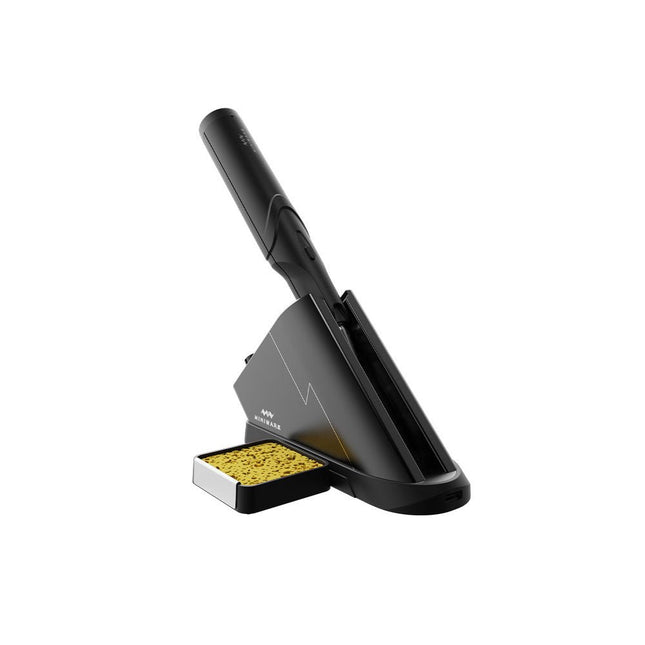
Miniware Miniware TS1C Kabellose Lötstation
Die Miniware Cordless Soldering Station TS1C (mit integriertem OLED-Bildschirm und Bluetooth) ist ein intelligentes Lötwerkzeug, das in weniger als 20 Sekunden auf bis zu 400°C erhitzt. Dank des eingebauten Akkus liegt der kabellose Lötstift gut in der Hand und lässt sich bequem bedienen. Features Neue hocheffiziente Superkondensator-Energiespeichertechnologie, 10.000 Lade- und Entladezeiten Separates Design + echtes Wireless, genießen Sie kabelloses Löterlebnis BLE4.2 Bluetooth-Kommunikationstechnologie zur Fernsteuerung und -einstellung Standard PD2 20 V, 45 W maximale Leistungsaufnahme, bis zu 36 W Lötleistung, kann kontinuierlich mehr als 180 Lötstellen (0805) mit einer einzigen vollen Ladung löten Vorheizen der Steuerstation zur Verbesserung der Heizeffizienz 3 Erweiterungssteckplätze für Zubehör Kontrollstation Standard PD2 20 V 45 W maximale Leistungsaufnahme, Überstrom-Sicherheitsschutz OLED-Bildschirm mit 128 x 64 Pixeln, Anzeige des Lötstiftstatus in Echtzeit Vorheizen der Steuerstation, Verbesserung der Heizeffizienz Fernbedienung und -einstellung: Temperaturregulierung, Menüeinstellung, Anzeige von Geräteinformationen und -status usw. Funktioniert als Lötständer und Ladestation 3 Erweiterungssteckplätze für mehrere erweiterbare Zubehörteile wie Schwammsteckplatz Lötstift Eingebauter 750F hocheffizienter Energiespeicher-Superkondensator, kann über die Kontrollstation (oder in Notfällen über die USB-Typ-C-Schnittstelle) aufgeladen werden 36 W maximale Heizleistung, kann mehr als 180 Lötstellen (0805) kontinuierlich mit einer einzigen vollen Ladung löten Kompatibel mit Miniware 3,5 mm Audio-Interface-Lötspitzen (Lötspitzenserie TS80/80P) Boost-Modus (Halten der Taste am Stift) Lieferumfang TS1C Lötstift TS1C-Kontrollstation Lötspitze (TS-B02) Silikonkabel Schwammhalter inkl. Schwamm Manual
€ 165,41
-

Uni-Trend UNI-T UT622E LCR-Meter
Das tragbare LCR-Meter UT622E zeichnet sich durch leistungsstarke Funktionen, hohe Genauigkeit, hohe Geschwindigkeit und lange Standby-Zeit aus. Mit einem klaren und intuitiven 2,8-Zoll-TFT-LCD-Display, einem wiederaufladbaren Akku mit großer Kapazität und einer Testfrequenz von 100 kHz kann das Messgerät bei jeder Gelegenheit für dauerhaft genaue und bequeme Messungen verwendet werden. Es eignet sich für die Messung und Prüfung von Induktivität, Kapazität und Widerstand in Labors, Produktionslinien, Wartungsstellen usw. Features Max. Testfrequenz: 100 kHz Genauigkeit: 0,1% Anzeigeanzahl: 99999 Max. Testrate: 20 mal/s DCR: Ja Konnektivität: Mini-USB Display: 2,8" TFT-LCD Technische Daten Testfrequenz 100 Hz, 120 Hz, 1 kHz, 10 kHz, 100 kHz Teststufe 0,1 Vrms, 0,3 Vrms, 1 Vrms Ausgangsimpedanz 100 Ω Messparameter Primär: L/C/R/Z/DCRSekundär: D/Q/Θ/ESR DSR-Geschwindigkeitstest Schnell (20 Mal/s), mittel (5 Mal/s) oder langsam (2 Mal/s) Bereich Auto/Hold Toleranzbereich 1%~20% Äquivalenter Modus Serie/Parallel Verbindung wird gelöscht Unterbrechung/Kurzschluss Sicherung der Testanschlüsse 0,1 A/250 V Kommunikationsschnittstelle Mini-USB MAX Lesewert der Primärparameter 99999 MIN-Auflösung 0,0001 Maximale Genauigkeit 0,10% L 0,00 µH~99,999 H C 0,00 pF~99,999 mF Z/R 0,0000 Ω~9,9999 MΩ ESR 0,0000 Ω~999,99 Ω D 0,0000~9,9999 Q 0,0000~99999 Θ -179,9°~179,9° DCR 0,01 mΩ~20,000 MΩ Stromversorgung 3,7 V/1800 mAh Lithium-Polymer-Akku Display 2,8-Zoll-TFT-LCD (320 x 240) Abmessungen 93 x 192 x 44 mm Gewicht 420 g Lieferumfang UT622E LCR-Meter Kurzschluss auf der Platine Kelvin-Messleitungen mit vier Anschlüssen USB-Kabel Manual Downloads Datasheet Manual Software
€ 320,11
-

Unitree Unitree G1 Humanoider Roboter
Der Unitree G1 ist ein moderner humanoider Roboter, der durch seine bemerkenswerte Flexibilität und fortschrittliche Technologie beeindruckt. Mit einer außergewöhnlich großen Bandbreite an Gelenkbewegungen und bis zu 43 Gelenkmotoren übertrifft er die Agilität eines typischen Menschen. Seine Robotersysteme werden mit Hilfe von künstlicher Intelligenz durch Imitations- und Verstärkungslernen ständig weiterentwickelt und optimiert. Eine der beeindruckendsten Eigenschaften des G1 ist seine Fähigkeit, sich selbstständig in eine Gehposition zu begeben, sobald er den Boden berührt – ohne externe Hilfe! Er kann sich sofort in Bewegung setzen und beweist damit ein hohes Maß an Unabhängigkeit und Anpassungsfähigkeit. Der G1 ist außerdem mit einer kraftgesteuerten, sehr geschickten Hand ausgestattet, die dank der Kombination aus Kraft- und Positionssteuerung sowohl sensibel als auch präzise arbeitet. Diese Hand ahmt die menschlichen Bewegungen genau nach und ermöglicht eine präzise Handhabung von Objekten. Features Intel RealSense D435 Tiefenkamera Livox MID-360 3D-LiDAR Mikrofonarray (Rausch- und Echounterdrückung) 5 W Stereolautsprecher Extra großer Schnellwechsel-Akku Einzelarm-Freiheitsgrade (Schulter 2 + Ellenbogen 2) Hohlachsverkabelung der gesamten Maschine (keine externen Kabel) Maximales Drehmoment an den Gelenken 120 Nm Einzelbein-Freiheitsgrade (Hüfte 3, Knie 1, Knöchel 2) Bewegungsgeschwindigkeit von 2 m/s Technische Daten Höhe, Breite und Tiefe (stehend) 1320 x 450 x 200 mm Höhe, Breite und Tiefe (gefaltet) 690 x 450 x 300 mm Gewicht (mit Batterie) ca. 35 kg Gesamtfreiheitsgrade (Gemeinsame Freiheit) 23 Einzelbeinige Freiheitsgrade 6 Taillenfreiheitsgrade 1 Einarmige Freiheitsgrade 5 Gelenkabtriebslager Kreuzrollenlager in Industriequalität (hohe Präzision, hohe Belastbarkeit) Gelenkmotor Hochgeschwindigkeits-Innenrotor PMSM (Permanentmagnet-Synchronmotor mit geringer Trägheit – bessere Reaktionsgeschwindigkeit und Wärmeableitung) Maximales Drehmoment des Kniegelenks 90 Nm Maximale Armlast ca. 2 kg Waden- und Oberschenkellänge 0,6 m Armspanne ca. 0,45 m Extra großer Gelenkbewegungsraum • Taillengelenk: Z ±155°• Kniegelenk: 0~165°• Hüftgelenk: P ±154°, R -30~+170°, Y ±158° Vollständige hohle elektrische Leitungsführung Ja Gelenk-Encoder Dual-Encoder Kühlsystem Lokale Luftkühlung Stromversorgung 13-Strang-Lithiumbatterie Grundlegende Rechenleistung 8-Kern-Hochleistungs-CPU Erkennungssensor Tiefenkamera + 3D-LiDAR Mikrofone 4-Mikrofon-Array Lautsprecher 5 W Stereolautsprecher Drahtlos WiFi 6, Bluetooth 5.2 Intelligente Batterie (Schnellverschluss) 9000 mAh Ladegerät 54 V/5 A Manueller Controller Ja Akkulaufzeit ca. 2 Stunden Verbessertes intelligentes OTA Ja
€ 24.999,00
Bestpreis
-

Seeed Studio Seeed Studio RF Explorer 3G Combo Spektrum-Analyzer
The Seeed Studio RF Explorer 3G Combo is a handheld digital spectrum analyzer and an affordable tool for working across a wide range of popular frequency bands. It is based on a highly integrated frequency synthesizer and a double-balanced mixer, providing high performance, compact dimensions, low power consumption, and excellent value. Designed for both indoor and outdoor use, the RF Explorer 3G Combo can also be connected to a PC via a standard Mini-USB 2.0 connector for additional functionality. This model combines a WSUB1G base unit with an RFEMWSUB3G expansion module, supplied fully assembled and tested. It features two SMA connectors and includes two antennas: a dual-band 144/430 MHz telescopic antenna for sub-GHz frequencies and a helical whip antenna for the 2.4 GHz band. Additional frequency-specific antennas may be required for optimal performance in certain supported frequency ranges. This combination provides the wide frequency coverage of the WSUB3G module together with the high sensitivity and fast response of the WSUB1G unit in the commonly used sub-1 GHz frequency range. Features Pocket size and light weight Solid aluminum metal case Includes a transport EVA carry case for RF Explorer Spectrum Analyzer mode with Peak Max and Hold, Normal, Overwrite and Averaging modes Lifetime free firmware upgrades available, open to community requested features High capacity Lipo for 16+ hours of continuous run, rechargeable by USB Windows PC client Open Source Can be extended with internal Expansion Modules for additional band and functionality Wide band coverage to all popular RF frequencies, starting at 15 MHz and going up to 2.7 GHz. This includes very interesting frequency areas such as 2 m HAM radio, all VHF and UHF, FM radio, GPS, WiFi and WiMax, Bluetooth, etc. Firmware: RF Explorer 3G Combo is delivered with upgraded firmware v1.09. Note some of the features and operation accuracy will be improved in upcoming free firmware revisions. Technische Daten Battery Lithium Cells / Batteries contained in equipment UN3481 - PI967 Frequency band 15-2700 MHz Frequency span 112 KHz - 600 MHz Graphics LCD 128 x 64 pixels, great visibility outdoors PC Windows client Supports Windows (32 and 64 bits) Backlight For great indoor visibility 2 standard SMA 50 ohms connector, One for Sub-GHz wideband Nagoya NA-773 telescopic antenna included and another 2.4 GHz one for 15-2700 MHz band with helical antenna included. Amplitude resolution 0.5 dBm Dynamic range Left SMA port (WSUB1G) -115 dBm to 0 dBm Right SMA port (WSUB3G) -110 dBm to -10 dBm Absolute Max input power Left SMA port (WSUB1G) +5 dBm Right SMA port (WSUB3G) +30 dBm Average noise level (typical) -110 dBm Frequency stability and accuracy (typical) ±10 ppm Amplitude stability and accuracy (typical) ±6 dBm Frequency resolution 1 KHz Resolution bandwidth (RBW) Automatic 3 KHz to 600 KHz Weight 185 g Dimensions 113 x 70 x 25 mm Lieferumfang Seeed Studio RF Explorer 3G Combo Spectrum Analyzer Nagoya NA-773 wideband telescopic antenna 2.4 GHz band antenna EVA Case Dokumentation For more info and to get started with your RF Explorer, visit the start page. For questions and support, please visit https://support.rf-explorer.com
€ 275,32
-

FNIRSI FNIRSI SG-003A Signalgenerator
Der FNIRSI SG-003A ist ein kleiner, hochpräziser Signalgenerator mit einem 2,4' TFT-Farbdisplay mit einem Frequenzbereich von bis zu 10 kHz und einem aktiven und passiven Stromausgang von 24 mA. Die maximale Ausgangsspannung beträgt 24 V. Die eingebaute 3000-mAh-Lithiumbatterie hat eine Laufzeit von 10 Stunden. FNIRSI SG-003A wird hauptsächlich für die Fehlersuche in industriellen SPS, Prozessinstrumenten, elektrischen Ventilen usw. verwendet. Features Genauigkeit (Spannung/Strom) 0,1% ±0,005 Auflösung (aktuell) 0,01 mA Frequenz 0-10 kHz Auflösung 5 Ziffern Ausgangsleistung 24 V Display 2,4" TFT-LCD (320 x 240) Abmessungen 92 x 72 x 30 mm Gewicht 165 g Technische Daten Signal Bereich Genauigkeit Auflösung Maximale Belastung Externe Stromversorgung Aktiver Stromausgang 0~24 mA ±(0,1% + 0,005) 0,01 mA 750 Ω Passiver Stromausgang (XMT) 0~24 mA ±(0,1% + 0,005) 0,01 mA 0~30 V Spannungsausgang 0~24 V ±(0,1% + 0,005) 0,01 V 24-V-Schleife 0~24 mA ±(0,1% + 0,005) 0,01 mA Frequenzausgang 0~9999 Hz ±2% 5 Ziffern Stromeingang 0~24 mA ±(0,1% + 0,005) 0,01 mA Spannungseingang 0~30 V ±(0,1% + 0,005) 0,01 V Lieferumfang 1x FNIRSI SG-003A Signalgenerator 4x Testclips 1x USB-Ladegerät 1x USB-C Kabel 1x Manual Downloads Manual Firmware V4.3
€ 68,79
-

Elektor Digital Raspberry Pi Pico W (E-book)
Program, build, and master 60+ projects with the Wireless RP2040 The Raspberry Pi Pico and Pico W are based on the fast, efficient, and low-cost dual-core ARM Cortex M0+ RP2040 microcontroller chip running at up to 133 MHz and sporting 264 KB of SRAM and 2 MB of Flash memory. Besides spacious memory, the Pico and Pico W offer many GPIO pins, and popular peripheral interface modules like ADC, SPI, I²C, UART, PWM, timing modules, a hardware debug interface, and an internal temperature sensor. The Raspberry Pi Pico W additionally includes an on-board Infineon CYW43439 Bluetooth and Wi-Fi chipset. At the time of writing this book, the Bluetooth firmware was not yet available. Wi-Fi is however fully supported at 2.4 GHz using the 802.11b/g/n protocols. This book is an introduction to using the Raspberry Pi Pico W in conjunction with the MicroPython programming language. The Thonny development environment (IDE) is used in all of the 60+ working and tested projects covering the following topics: Installing the MicroPython on Raspberry Pi Pico using a Raspberry Pi or a PC Timer interrupts and external interrupts Analogue-to-digital converter (ADC) projects Using the internal temperature sensor and external sensor chips Using the internal temperature sensor and external temperature sensor chips Datalogging projects PWM, UART, I²C, and SPI projects Using Bluetooth, WiFi, and apps to communicate with smartphones Digital-to-analogue converter (DAC) projects All projects are tried & tested. They can be implemented on both the Raspberry Pi Pico and Raspberry Pi Pico W, although the Wi-Fi-based subjects will run on the Pico W only. Basic programming and electronics experience are required to follow the projects. Brief descriptions, block diagrams, detailed circuit diagrams, and full MicroPython program listings are given for all projects.
€ 34,95
Mitglieder: € 31,46
-

Elektor Digital ARM Microcontrollers 2 (NL) | E-book
Dit is een ideaal boek voor hobbyisten, studenten en ingenieurs die op een leuke manier C en het gebruik van een mbed ARM microcontroller willen leren, rechtstreeks op internet zonder ingewikkelde software-installatie. De projecten in dit boek zijn bedoeld voor gevorderden op het gebied van ARM microcontrollers of de programmeertaal C. Dat wil zeggen dat de kennis uit deel 1 van deze serie bekend verondersteld wordt. Cloud technologie De in dit boek gebruikte mbed NXP LPC1768 maakt gebruik van cloud-technologie, een revolutionair concept voor software-ontwikkeling. Dit houdt in dat u geen software hoeft te installeren om de mbed te kunnen programmeren! Het enige dat u nodig heeft, is een internet-browser zoals Microsoft Internet Explorer, en een USB-poort op uw PC. U kunt vanaf elke willekeurige PC waar dan ook ter wereld toegang krijgen tot uw project en er aan verder werken. Wanneer u klaar bent, kunt u met een paar eenvoudige klikjes met uw muis het programma overzetten naar uw mbed-hardware. Uiteraard kunt u de projecten ook downloaden en op uw eigen PC opslaan wanneer u dat liever heeft. In een deel van de projecten wordt Visual Basic gebruikt; dit gratis pakket is nog niet in de cloud beschikbaar en moet wel op uw PC geïnstalleerd worden. Onderwerpen die aan de orde komen Leer het programmeren van een ARM microcontroller via cloud-technologie. Geen ARM ontwikkelsoftware-installatie op uw eigen PC. Leer hoe u een ARM microcontroller met internet kunt verbinden, hoe u via internet uw ARM kunt bedienen en hoe u vanaf de ARM microcontroller tweets kunt versturen. Leer hoe u een CMUcam camera kunt aansturen en toepassen in uw applicaties, bijvoorbeeld als alarm. Leer hoe u met behulp van de gratis PC programmeertaal Visual Basic met uw ARM microcontroller kunt communiceren met gebruik van multi-threading. Voorbeelden van projecten in dit boek: internet-server, automatisch twitteren, digitaal naar analoog conversie, USB HID, automatisch metingen in een spreadsheet plaatsen, met een camera bewegingen waarnemen, seriële communicatie met een zelfgeschreven PC-programma, gebruik van een LCD en SPI en I²C communicatie.
€ 29,95
Mitglieder: € 26,96
-

Zhongdi ZD-915 Entlötstation
Die ZD-915 ist eine digitale Entlötstation mit ESD-Schutz und LCD-Bildschirm, der sowohl den Ist- als auch des Sollwert anzeigt. Diese Entlötstation hat eine hohe Leistung in einem kompakten und robusten Gehäuse und macht das Entlöten einfach, da sie mit einer Hand bedient werden kann. Der ZD-915 verfügt über eine Lötpistole, in der sich ein Filter befindet, der angesaugtes Material auffängt, sodass Sie nur die Filter austauschen müssen, um fortzufahren. Außerdem befindet sich in der Spitze ein Temperatursensor, damit Temperaturschwankungen schnell aufgefangen werden können. Features Die Temperatur lässt sich einfach durch einfache Auf-/Ab-Tasten einstellen. 140 W temperaturgeregelte Lötstation mit einstellbarem Bereich von 160°C bis 480°C. Die Entlötstation ist speziell für das bleifreie Entlöten ausgelegt. An der Seite der Station befindet sich eine typische Halterung mit Schwamm. Ein beleuchteter Ein-/Ausschalter befindet sich ebenfalls auf der Vorderseite. Technische Daten Station Spannungsversorgung 220-240 V Leistungsaufnahme 140 W Vakuumdruck 600 mm HG Entlötpistole Leistungsaufnahme 24 V AC 80 WAufheizleistung 130 W Temperatur 160-480 °C Heizelement Keramikheizung Lieferumfang 1x ZD-915 Entlötstation 2x Ersatzlötspitze 3x Reinigungsnadel für Entlötspitzen 1x Ersatzfilter für Entlötpistole 1x Handbuch
€ 105,23
-
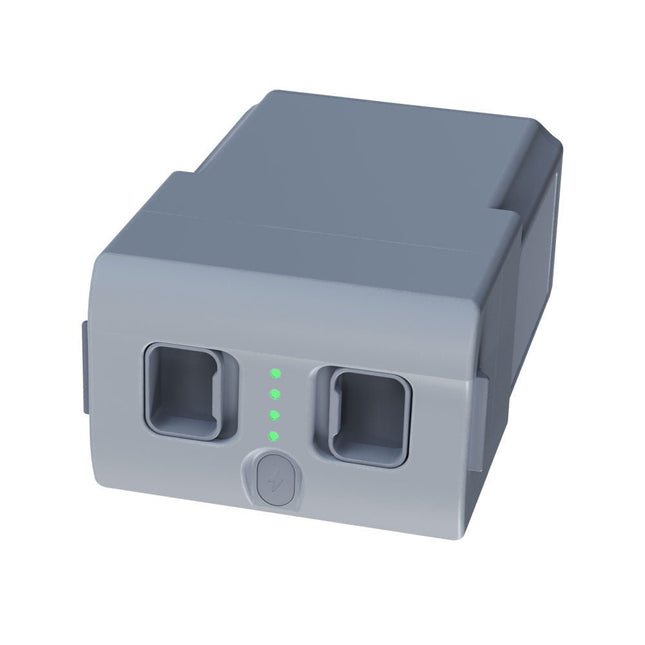
Unitree Unitree Go2 Ersatzakku (15.000 mAh)
Mit einer Kapazität von 15.000 mAh stellt der Unitree Go2-Akku eine robuste Stromquelle dar, mit der Ihr Roboter Aufgaben problemlos erledigen kann. Ob für komplexe Erkundungen, Forschungsprojekte oder lustige Ausflüge, dieser leistungsstarke Akku liefert die Energie, die Ihr Roboter braucht. Die Laufzeit des Unitree Go2-Akkus variiert je nach Anwendung und Nutzung. Abhängig von den eingesetzten Funktionen und Aktivitäten kann der Akku eine Betriebsdauer von 2 bis 4 Stunden bieten. Diese Flexibilität ermöglicht es Ihnen, den Roboter nach Bedarf anzupassen und so längere Erkundungsmissionen oder umfangreichere Projekte zu ermöglichen. Der Unitree Go2-Akku ist ein zuverlässiger Begleiter für Ihre Robotik-Abenteuer. Mit seiner beeindruckenden Kapazität und anpassbaren Laufzeit sorgt es dafür, dass Ihr Roboter kraftvoll und ausdauernd arbeitet, ohne dass er häufig aufgeladen werden muss. Ganz gleich, ob Sie den Unitree Go2-Akku als Ersatz oder Upgrade für Ihren Roboter benötigen, diese leistungsstarke Energiespeicherlösung bietet die perfekte Balance aus Leistung und Zuverlässigkeit. Technische Daten Nennspannung: DC 28,8 V Begrenzte Ladespannung: DC 33,6 V Ladestrom: 9 A Nennkapazität: 15.000 mAh, 432 Wh Standard: IS 16046 (Teil 2) / IEC 62133-2 Selbst entwickeltes Batteriemanagementsystem (BMS) Abmessungen: 120 x 80 x 182 mm Features: Stromanzeige Selbstentladungsschutz von Batteriespeichern Gleichgewichtsladungsschutz Überladeschutz Entladeschutz Kurzschlussschutz Schutz der Batterieladeerkennung
€ 795,00
Bestpreis
-

Elektor Publishing Arduino & Co – Measure, Control, and Hack
Clever Tricks with ATmega328 Pro Mini Boards With a simple Pro Mini board and a few other components, projects that 20 or 30 years ago were unthinkable (or would have cost a small fortune) are realized easily and affordably in this book: From simple LED effects to a full battery charging and testing station that will put a rechargeable through its paces, there’s something for everyone. All the projects are based on the ATmega328 microcontroller, which offers endless measuring, switching, and control options with its 20 input and output lines. For example, with a 7-segment display and a few resistors, you can build a voltmeter or an NTC-based thermometer. The Arduino platform offers the perfect development environment for programming this range of boards. Besides these very practical projects, the book also provides the necessary knowledge for you to create projects based on your own ideas. How to measure, and what? Which transistor is suitable for switching a certain load? When is it better to use an IC? How do you switch mains voltage? Even LilyPad-based battery-operated projects are discussed in detail, as well as many different motors, from simple DC motors to stepper motors. Sensors are another exciting topic: For example, a simple infrared receiver that can give disused remote controls a new lease on life controlling your home, and a tiny component that can actually measure the difference in air pressure between floor and table height!
€ 39,95
Mitglieder: € 35,96


