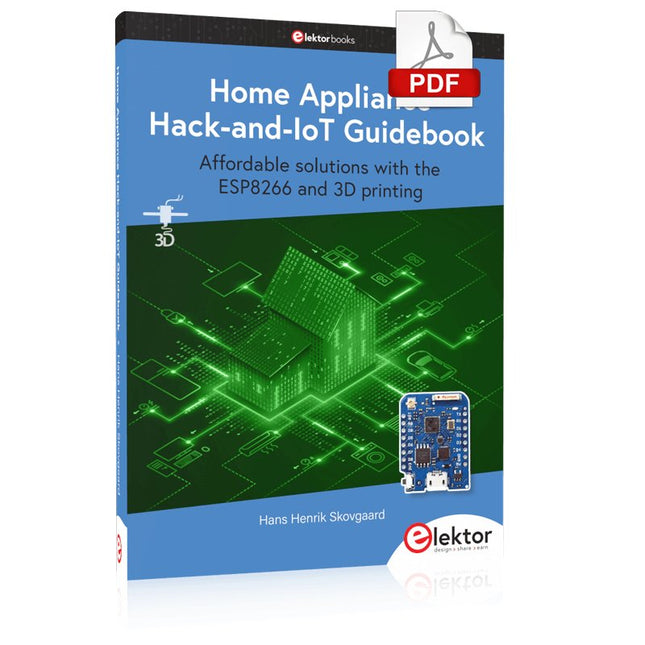
Affordable solutions with the ESP8266 and 3D printing
If you are looking for a small yet powerful IoT device, you are likely to come across the ESP8266 and compatible products on the market today. One of these, the Wemos/Lolin D1 Mini Pro board strikes a remarkable balance between cost and performance. A small and very affordable prototype board, the D1 Mini Pro stands out with its WiFi functionality and a 16-Mbytes flash memory for easy creation of a flash file system. In addition, there are sufficient input and output pins (only one analog input though) to support PWM, I²C, and One-Wire systems to mention but a few. The book describes the operation, modding, construction, and programming of home appliances including a colorful smart home accessory, a refrigerator/greenhouse controller, an AC powerline monitor, a door lock monitor, and an IKEA Trådfri controller.
As a benefit, all firmware developed for these DIY, "IoT-ized" devices can be updated over-the-air (OTA).
For most of the designs in the book, a small printed circuit board (PCB) and an enclosure are presented so readers can have a finished and attractive-looking product. Readers having – or with access to! – a 3D printer can "print" the suggested enclosures at home or in a shop.
Some of the constructions benefit from a Raspberry Pi configured as a gateway or cms server. This is also described in detail with all the necessary configuring.
You don’t need to be an expert but the prerequisites to successful replication of the projects include basic skills with PC software including the ability to surf the Internet. In terms of hardware, you should be comfortable with soldering and generally assembling the PCBs presented in the book.
All custom software written for the IoT devices, the PCB layouts, and 3D print files described in the book are available for free downloading.
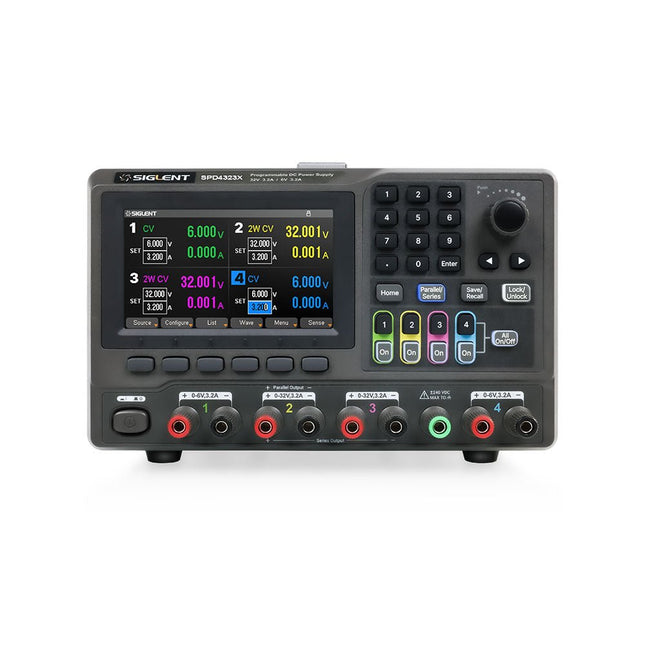
The Siglent SPD4323X is a 4-channel DC Linear Programmable Power Supply equipped with a 4.3-inch TFT-LCD display, friendly human-machine interface, and excellent performance indicators. Real-time waveform display provides engineers with an informative user interface.
SPD4323X offers a total output power of 240 W with a resolution of 1 mV/1 mA. The maximum voltage and current for each channel are as follows:
CH1: 6 V/3.2 A
CH2: 32 V/3.2 A
CH3: 32 V/3.2 A
CH4: 6 V/3.2 A
Features
Rated output power: 240 W
Rated voltage: 32 V, 12 V, 30 V
Up to four high-precision power supplies with independent controllable outputs, supporting CH2 and CH3 series and parallel connections
Clear graphical interface with waveform and timer display modes
5-digit voltage and current display with minimum resolution of 1 mV, 1 mA
Fast output response time: <50us
The high current channel support remote voltage compensation sense function. The maximum compensation voltage is 0.6 V
Overvoltage protection and overcurrent protection or safe and accurate operation
Equipped with a 4.3-inch TFT-LCD display (480 x 272 resolution)
USB and LAN standard communication
USB-GPIB module is optional
Excellent channel density with up to 4 channels in a 3U half rack package
Internal data storage for setups and parameters
Embedded Web Server with instrument communication that doesn’t require software installation
Fully SCPI programming command set support as well as a LabView driver for remote control and system automation
Technische Daten
SPD4323X
SPD4121X
SPD4306X
Channel Output
CH1: Voltage 0 to 6 V Current 0 to 3.2 ACH2: Voltage 0 to 32 V Current 0 to 3.2 ACH3: Voltage 0 to 32 V Current 0 to 3.2 ACH4: Voltage 0 to 6 V Current 0 to 3.2 A
CH1: Voltage 0 to 15 V Current 0 to 1.5 ACH2: Voltage 0 to 12 V Current 0 to 10 ACH3: Voltage 0 to 12 V Current 0 to 10 ACH4: Voltage 0 to 15 V Current 0 to 1.5 A
CH1: Voltage 0 to 15 V Current 0 to 1.5 ACH2: Voltage 0 to 30 V Current 0 to 6 ACH3: Voltage 0 to 30 V Current 0 to 6 ACH4: Voltage 0 to 15 V Current 0 to 1 A
Resolution
1 mV, 1 mA
1 mV, 1 mA
1 mV, 1 mA
Setting Accuracy
Voltage: ±(0.03% of reading+10) mV, Current: ±(0.3% of reading+10) mA
Voltage: ±(0.03% of reading+10) mV, Current: ±(0.3% of reading+10) mA
Voltage: ±(0.03% of reading+10) mV, Current: ±(0.3% of reading+10) mA
Readback Accuracy
Voltage: ±(0.03% of reading+10) mV, Current: ±(0.3% of reading+10) mA
Voltage: ±(0.03% of reading+10) mV, Current: ±(0.3% of reading+10) mA
Voltage: ±(0.03% of reading+10) mV, Current: ±(0.3% of reading+10) mA
Display
4.3" TFT-LCD 5-digit voltage and current display
4.3" TFT-LCD 5-digit voltage and current display
4.3" TFT-LCD 5-digit voltage and current display
Output power
240 W
285 W
400 W
Lieferumfang
1x Siglent SPD4323X Power Supply
1x Power cord (EU)
1x Output test cord (3 A)
1x USB cable
1x Quick start guide
Downloads
Datasheet
Manual
Quick start
Das FNIRSI GC-03 ist ein multifunktionales Strahlungsmessgerät, das für die professionelle Messung ionisierender Strahlung in alltäglichen Umgebungen – wie etwa zu Hause, im Büro, im Auto oder im Freien – konzipiert wurde. Ausgestattet mit einem hochauflösenden 2,4-Zoll-Farbdisplay, ermöglicht es die Echtzeitüberwachung von ionisierender Strahlung sowie der elektrischen und magnetischen Feldstärke. Für zusätzliche Sicherheit verfügt das Gerät über drei Alarmmodi: akustisches Signal, Vibration und optische Warnung.
Features
3-in-1-Erfassung: Überwacht elektrische, magnetische und ionisierende Strahlung mit einem einzigen Gerät.
Hochpräzises Geiger-Müller-Zählrohr: Erfasst präzise Gamma-, Röntgen- und harte Betastrahlung bei geringem Stromverbrauch.
Echtzeit-Kurvendarstellung & 50 Alarmprotokolle: Verfolgt Strahlungstrends und speichert die Alarmhistorie zur einfachen Überprüfung.
Individuelle dreifache Alarmierung: Unterstützt visuelle, akustische und Vibrationsalarme mit einstellbaren Schwellenwerten.
Lange Akkulaufzeit: 1500-mAh-Akku für einen ausdauernden und zuverlässigen Einsatz im Außendienst.
Technische Daten
Kernstrahlung
Messbereich: 0,01 μSv/h – 999,99 μSv/h
Genauigkeit: 0,01 μSv/h
Elektrisches Feld
Messbereich: 1 V/m – 1999 V/m
Genauigkeit: 1 V/m
Magnetfeld
Messbereich: 0,01 μT – 99,99 μT
Genauigkeit: 0,01 μT
Strahlungsleistung
0,2 – 1000 mW/m²
Erfasste Strahlungsart
Ionisierende Strahlung (Gammastrahlung usw.)
Detektor
Energiekompensiertes GM-Zählrohr (Geiger-Müller-Zählrohr)
Dosisleistungsrate
0,00 – 10000 μSv/h (10 mSv/h)
Kumulierte Dosis
0,00 μSv – 500,0 mSv
Energiebereich
48 keV – 1,5 MeV ≤ ±30% (für 137Cs)
Empfindlichkeit
80 CPM/μSv
Dosiseinheit
μSv/h, μGy/h, mR/h, CPS, CPM
Alarmmodus
Licht, Vibration, Ton
Display
2,4-Zoll-Farbbildschirm
Hintergrundbeleuchtung
Helligkeit einstellbar
Stromversorgung
USB-C (5 V / 1 A)
Akku
1500 mAh
Sprachen
Englisch, Chinesisch
Abmessungen
138 x 63 x 32 mm
Gewicht
141 g
Lieferumfang
1x FNIRSI GC-03 Strahlungsdetektor
1x USB-Kabel
1x Manual
Downloads
Manual
Firmware v1.0.4
Die SEQURE T55 Smart Mini-Lötplatte mit einstellbarer Temperatur ist ein kompaktes und effizientes Werkzeug für präzise Vorheiz- und Entlötarbeiten. Mit ihrem einstellbaren Temperaturbereich von 50°C bis 280°C eignet sie sich für verschiedene Anwendungen, z. B. Handyreparatur, Leiterplattenmontage usw.
Features
Einstellbarer Heiztemperaturbereich: 50°C bis 280°C
Ausgestattet mit einem hitzebeständigen Keramik-Temperatursensor für hochpräzise Datenmessungen bei dauerhaft hohen Temperaturen
Automatische Heizunterbrechung nach Erreichen der voreingestellten Betriebszeit.
Unterstützt PD, QC und DC (max. 25 V)
Intelligenter Temperaturregelungsalgorithmus zur Temperaturkompensation und Leistungsanpassung.
OLED-Display mit einer Auflösung von 128 x 32 Pixeln und integriertem Summer zur Anzeige des Betriebszustands
°C/°F-Umrechnung
Technische Daten
Heizfläche
55 x 55 mm
Betriebstemperatur
50-280°C
Maximale Spannung
25 V
Maximale Leistung
95 W
Empfohlene Spannung
19-25 V
PD-Stromversorgung
PD 20 V ≥3 A
Stromversorgungsmodi
PD, QC, DC
Schnittstelle
USB-C
Display
128 x 32 OLED
Menüsprachen
Englisch, Russisch und Chinesisch
Abmessungen
55 x 60 x 37 mm
Gewicht
92 g
Lieferumfang
1x SEQURE T55 Smart Mini-Lötplatte
1x PD 65-W-Netzteil (EU)
1x Schnellladekabel (100 W/5 A)
Vorübergehende Verzögerung bei der Lieferung von Unitree-Robotern
Wie viele andere Lieferanten erleben auch wir derzeit Verzögerungen bei der Lieferung von Unitree-Robotern. Eine Sendung unseres Lieferanten steckt derzeit im Zoll fest, was leider zu späteren Lieferungen bereits aufgegebener Bestellungen führt.
Wir arbeiten aktiv mit unserem Lieferanten daran, dieses Problem zu lösen, und erwarten in Kürze mehr Klarheit. Leider können wir derzeit jedoch keine festen Zusagen machen. Eine neue Lieferung ist bereits auf dem Weg, wird aber noch etwas Zeit in Anspruch nehmen. Da auch andere Lieferanten mit denselben Herausforderungen konfrontiert sind, ist ein Wechsel zu einem anderen Anbieter derzeit keine schnellere Lösung. Unsere oberste Priorität ist die Lieferung der bestehenden Bestellungen.
Falls Sie Fragen haben oder Ihre Bestellung aktualisieren möchten, zögern Sie bitte nicht, unseren Kundenservice zu kontaktieren. Wir halten Sie über weitere Entwicklungen auf dem Laufenden.
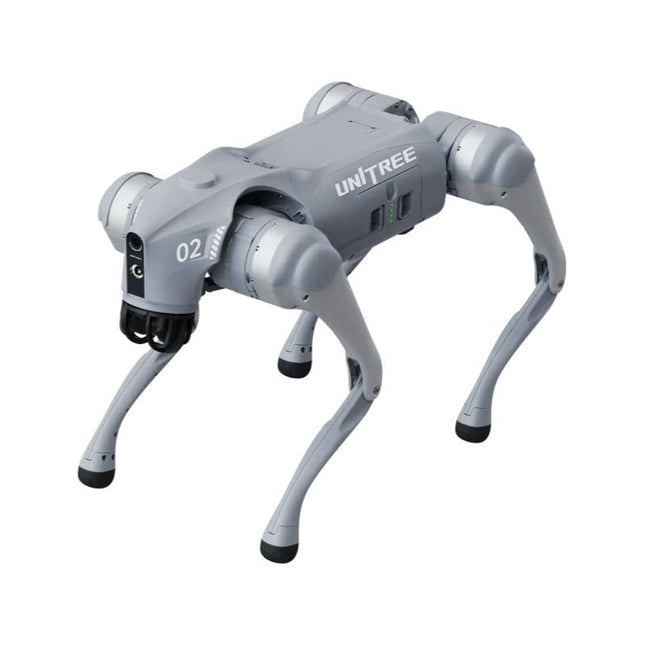
Die Unitree Go2-Serie besteht aus vierbeinigen Robotern für die Forschung und Entwicklung. Entwicklung autonomer Systeme in den Bereichen Mensch-Roboter-Interaktion (HRI), SLAM & Transport. Aufgrund der vier Beine und des 12DOF kann dieser Roboter eine Vielzahl unterschiedlicher Gelände bewältigen. Der Go2 verfügt über einen perfektionierten Antrieb & Power-Management-System, das eine Geschwindigkeit (je nach Ausführung) von bis zu 3,7 m/s oder 11,88 km/h bei einer Betriebszeit von bis zu 4 Stunden ermöglicht. Darüber hinaus verfügen die Motoren über ein Drehmoment von 45 N.m am Körper/Oberschenkel und an den Knien, was auch Sprünge oder Backflips ermöglicht.
Features
Super-Erkennungssystem: 4D LIDAR L1
Maximale Laufgeschwindigkeit: ca. 5 m/s
Spitzengelenkdrehmoment: ca. 45 Nm
Wireless-Modul: WiFi 6/Bluetooth/4G
Extrem lange Akkulaufzeit: ca. 2-4 Stunden
Intelligentes Side-Follow-System: ISS 2.0
Technische Daten
Tracking-Modul: Ferngesteuertes oder automatisches Tracking
Frontkamera: Bildübertragungsauflösung 1280 x 720, Sichtfeld 120°, Ultraweitwinkelobjektiv sorgt für satte Klarheit
Frontlampe: Erhellt den Weg vor Ihnen hell
4D LiDAR L1: 360°x90° omnidirektionales Ultraweitwinkel-Scannen ermöglicht automatisches Ausweichen mit kleinem toten Winkel und stabilen Betrieb
12 Kniegelenkmotoren: Stark und kraftvoll, schön und einfach, Brandy neues visuelles Erlebnis
Intercom-Mikrofon: Effektive Kommunikation ohne Szenario-Einschränkungen
Selbstaufrollender Gurt: Einfaches Tragen und Laden von Gegenständen
Stabiler, leistungsfähiger mit fortschrittlichen Geräten: 3D LiDAR, 4G-ESIM-Karte, WiFi 6 mit Dualband, Bluetooth 5.2 für stabile Verbindung und Fernsteuerung
Leistungsstarker Rechenkern: Motion Controller, Hochleistungs-ARM-Prozessor, verbesserter Al-Algorithmus-Prozessor, externes ORIN NX/NANO
Intelligenter Akku: Standard 8000-mAh-Akku, langlebiger 15000-mAh-Akku, Schutz vor Übertemperatur, Überladung und Kurzschluss.
Lautsprecher für die Musikwiedergabe: Hören Sie Musik nach Lust und Laune
Unitree Go2-Varianten
Der Go2 überzeugt nicht nur durch seine technischen Fähigkeiten, sondern auch durch ein modernes und schlankes Design, das ihm einen futuristischen Look verleiht und ihn zu einem echten Hingucker macht. Der Go2 Air ist speziell für Demos und Präsentationen konzipiert. Mit seinen Grundmerkmalen bietet es eine solide Grundlage, um die Bewegungsfähigkeiten und Funktionalität eines vierbeinigen Roboters zu demonstrieren. Wichtig: Der Go2 Air wird ohne Controller geliefert. Dies kann optional erworben werden.
Mit einer leistungsstarken 8-Core-Hochleistungs-CPU bieten Pro und Edu beeindruckende Rechenleistung, die für komplexe Aufgaben und anspruchsvolle Berechnungen erforderlich ist. Dies ermöglicht eine schnellere und effizientere Datenverarbeitung und macht den Pro und Edu zu einem zuverlässigen Partner für Ihre Projekte.
Ab der Edu-Version ist der Go2 programmierbar und eröffnet endlose Möglichkeiten für die Entwicklung und Erforschung eigener Robotikanwendungen. Der Go2 ist außerdem in der Lage, eine Stufenhöhe von bis zu 14 cm zu bewältigen. Dies macht es zu einem idealen Werkzeug für Forschung, Ausbildung und den Einstieg in die Welt der Robotik.
Der Go2 Edu wird mit einer Fernbedienung geliefert, die Ihnen eine einfache und intuitive Steuerung ermöglicht. Außerdem erhalten Sie eine Dockingstation mit beeindruckender Rechenleistung von 100 TOPS, die mit leistungsstarken KI-Algorithmen ausgestattet ist und Ihnen technischen Support bietet.
Go2 Edu ist mit einem leistungsstarken 15000 mAh-Akku ausgestattet, der ihm eine beeindruckende Laufzeit von bis zu 4 Stunden ermöglicht. Diese lange Betriebszeit ermöglicht es dem Roboter, längere Erkundungsmissionen durchzuführen und anspruchsvolle Aufgaben zu erledigen.
Modellvergleich
Air
Pro
Edu/Edu Plus
Abmessungen (stehend)
70 x 31 x 40 cm
70 x 31 x 40 cm
70 x 31 x 40 cm
Abmessungen (hockend)
76 x 31 x 20 cm
76 x 31 x 20 cm
76 x 31 x 20 cm
Material
Aluminiumlegierung + hochfester Kunststoff
Aluminiumlegierung + hochfester Kunststoff
Aluminiumlegierung + hochfester Kunststoff
Gewicht (mit Akku)
ca. 15 kg
ca. 15 kg
ca. 15 kg
Spannung
28~33,6 V
28~33,6 V
28~33,6 V
Spitzenleistung
ca. 3000 W
ca. 3000 W
ca. 3000 W
Nutzlast
≈7 kg (MAX ~ 10 kg)
≈8 kg (MAX ~ 10 kg)
≈8 kg (MAX ~ 12 kg)
Geschwindigkeit
0~2.5 m/s
0~3.5 m/s
0~3.7 m/s (MAX ~ 5 m/s)
Max. Steigfallhöhe
ca. 15 cm
ca. 16 cm
ca. 16 cm
Max. Steigwinkel
30°
40°
40°
Basisrechenleistung
N/A
8-Kern-Hochleistungs-CPU
8-Kern-Hochleistungs-CPU
Aluminium-Kniegelenkmotor
12 Satz
12 Satz
12 Satz
Gelenkinterne Schaltung (Knie)
✓
✓
✓
Joint Heat Pipe Kühler
✓
✓
✓
Bewegungsbereich
Körper: −48~48°
Körper: −48~48°
Körper: −48~48°
Oberschenkel: −200°~90°
Oberschenkel: −200°~90°
Oberschenkel: −200°~90°
Schaft: −156°~−48°
Schaft: −156°~−48°
Schaft: −156°~−48°
Max. Drehmoment
N/A
ca. 45 N.m
ca. 45 N.m
Super-Weitwinkel 3D-LiDAR
✓
✓
✓
Wireless Vektorpositionierungs-Tracking-Modul
N/A
✓
✓
HD-Weitwinkelkamera
✓
✓
✓
Fußende-Kraftsensor
N/A
N/A
✓
Grundlegende Aktion
✓
✓
✓
Auto-Skalierband
N/A
✓
N/A
Aktualisiertes intelligentes OTA
✓
✓
✓
RTT 2.0 Bildübertragung
✓
✓
✓
App Basic Fernsteuerung
✓
✓
✓
App-Daten anzeigen
✓
✓
✓
App Grafisches Programm
✓
✓
✓
Frontlampe (3 W)
✓
✓
✓
WiFi 6 mit Dualband
✓
✓
✓
Bluetooth 5.2/4.2/2.1
✓
✓
✓
4G-Modul
N/A
CN/GB
CN/GB
Sprachunktion
N/A
✓
✓
Musikwiedergabe
N/A
✓
✓
ISS 2.0 Intelligentes Side-Follow-System
N/A
✓
✓
Intelligente Erkennung und Vermeidung
✓
✓
✓
Sekundäre Entwicklung
N/A
N/A
✓
Manuelle Steuerung
Optional
Optional
✓
Modul mit hoher Rechenleistung
N/A
N/A
Edu: 40 TOPS Rechenleistung
Edu Plus: 100 TOPS Rechenleistung
NVIDIA Jetson Orin (optional)
Intelligente Batterie
Standard (8000 mAh)
Standard (8000 mAh)
Lange Lebensdauer (15000 mAh)
Akkulaufzeit
1-2 Stunden
1-2 Stunden
2-4 Stunden
Ladegerät
Standard (33,6 V, 3,5 A)
Standard (33,6 V, 3,5 A)
Schnellladung (33,6 V, 9 A)
Lieferumgang
1x Unitree Go2 Pro
1x Unitree Go2 Akku (8000 mAh)
Downloads
Documentation
iOS/Android apps
GitHub
The Arduino Uno is an open-source microcontroller development system encompassing hardware, an Integrated Development Environment (IDE), and a vast number of libraries. It is supported by an enormous community of programmers, electronic engineers, enthusiasts, and academics. The libraries in particular really smooth Arduino programming and reduce programming time. What’s more, the libraries greatly facilitate testing your programs since most come fully tested and working.
The Raspberry Pi 4 can be used in many applications such as audio and video media devices. It also works in industrial controllers, robotics, games, and in many domestic and commercial applications. The Raspberry Pi 4 also offers Wi-Fi and Bluetooth capability which makes it great for remote and Internet-based control and monitoring applications.
This book is about using both the Raspberry Pi 4 and the Arduino Uno in PID-based automatic control applications. The book starts with basic theory of the control systems and feedback control. Working and tested projects are given for controlling real-life systems using PID controllers. The open-loop step time response, tuning the PID parameters, and the closed-loop time response of the developed systems are discussed together with the block diagrams, circuit diagrams, PID controller algorithms, and the full program listings for both the Raspberry Pi and the Arduino Uno.
The projects given in the book aim to teach the theory and applications of PID controllers and can be modified easily as desired for other applications. The projects given for the Raspberry Pi 4 should work with all other models of Raspberry Pi family.
The book covers the following topics:
Open-loop and closed-loop control systems
Analog and digital sensors
Transfer functions and continuous-time systems
First-order and second-order system time responses
Discrete-time digital systems
Continuous-time PID controllers
Discrete-time PID controllers
ON-OFF temperature control with Raspberry Pi and Arduino Uno
PID-based temperature control with Raspberry Pi and Arduino Uno
PID-based DC motor control with Raspberry Pi and Arduino Uno
PID-based water level control with Raspberry Pi and Arduino Uno
PID-based LED-LDR brightness control with Raspberry Pi and Arduino Uno
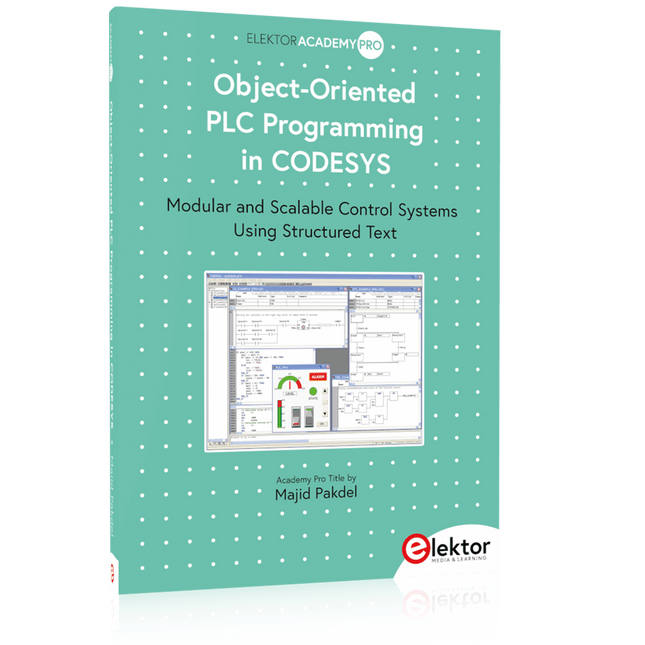
Modular and Scalable Control Systems Using Structured Text
This book offers a structured and practical approach to modern PLC development using object-oriented principles. It is a guide for engineers, programmers, and students seeking to harness the power of object-oriented programming (OOP) in the context of industrial automation with PLCs.
The content focuses on the CODESYS development environment and Structured Text (ST), both of which support modern programming techniques while maintaining compatibility with real-time automation requirements. Through step-by-step demos and instructional examples, it demonstrates how modular, reusable code can enhance development efficiency, simplify ongoing maintenance, and enable scalable and flexible control system architectures.
Key topics include:
Structured Text fundamentals: conditions, loops, arrays, and functions
Object-oriented concepts: classes, methods, and inheritance
Advanced techniques: polymorphism, interfaces, and access control
Modular design with reusable components and structured program flow
Implementation of finite state machines and scalable application design
Built around instructional demos and clear explanations, this book helps readers develop maintainable and modern control software in the CODESYS environment using proven programming techniques.
Der Peak Atlas DCA55 eignet sich hervorragend zur automatischen Identifizierung des Halbleitertyps auf den Messleitungen sowie der Pinbelegung und vieler anderer Parameter.
Unterstützt Transistoren, MOSFETs, JFETs (nur Gate-Pin kann identifiziert werden), Dioden, LEDs und vieles mehr. Identifiziert automatisch den Komponententyp, die Pinbelegung und andere wichtige Parameter. Jetzt mit Transistor-Leckstrommessung und Germanium/Silizium-Identifizierung.
Komponentenunterstützung
Bipolartransistoren (NPN/PNP inkl. Silizium/Germanium)
Darlington-Transistoren (NPN/PNP)
Anreicherungsmodus-MOSFETs (N-Kanal und P-Kanal)
Verarmungsmodus-MOSFETs (N-Ch und P-Ch)
Sperrschicht-FETs (N-Ch und P-Ch). Nur Gate-Leitung identifiziert.
Dioden und Diodennetzwerke (2- und 3-Leiter-Typen).
LEDs und zweifarbige LEDs (2-Leiter- und 3-Leiter-Typen).
Niedrigstromempfindliche Triacs und Thyristoren (<5 mA Trigger und Halten)
Messungen
Identifizierung des Teiletyps
Identifizierung der Pinbelegung
BJT-Stromverstärkung (hFE)
BJT-Basis-Emitter-Spannung (Vbe)
Leckstrom des BJT-Kollektors
MOSFET-Gate-Schwellenspannung
Dioden-Vorwärtsspannungsabfall (Vf)
Technische Daten
Analyzertyp
Transistoren, Dioden, LEDs, MOSFETs, JFETs
Pinout-Erkennung
Vollständige Pinbelegung (nur Gate bei JFETs)
Pinbelegungskonfiguration
Beliebig anschließen
Transistormessungen
Vbe, hFE, Iceo
MOSFET-Messungen
Vgs(ein)
Diodenmessungen
Vf
Sondentyp
Universeller Greifertyp
Batterie
Einzelne AAA-Zelle (im Lieferumfang enthalten). Die Lebensdauer beträgt normalerweise 1300 Operationen
Test-Bedingungen
Typischerweise 5 mA, 5 V Spitze
Anzeigetyp
Alphanumerisches LCD (mit Hintergrundbeleuchtung)
Lieferumfang
Peak Atlas DCA55 Halbleiter-Analyzer
Umfangreiche bebilderte Bedienungsanleitung
Ausgestattet mit universellen Hakensonden
AAA-Alkalibatterie
Downloads
Datasheet (EN)
User Guide (DE)
Der Andonstar AD409 Max-ES verfügt über eine hochwertige Metalllinse und ein einzigartiges UV-Filterdesign. Er besteht aus erstklassigen Materialien in Industriequalität und bietet unübertroffene Präzision und Haltbarkeit und sorgt so für ein zuverlässiges Produkterlebnis. Der vor der Metalllinse positionierte UV-Filter blockiert Löthitze, Rauch und Staub, schützt die Linse und macht sie perfekt für Löt- und Wartungsprofis.
Der AD409 Max-ES verfügt über eine übergroße Max-Station (46 x 37 x 47,5 cm) und ein fortschrittliches Werkzeugset, wodurch die Lötstationsfläche um 370% erweitert wird. Dieses Upgrade erfüllt die Anforderungen professioneller Lötaufgaben und bietet ausreichend Arbeitsfläche für größere Projekte.
Der benutzerfreundliche Werkzeughalter hält Werkzeuge griffbereit und sorgt dafür, dass sie immer zugänglich sind. Darüber hinaus vereinfachen die Löthilfshände mit drehbaren Klemmen Löt- und Reparaturarbeiten und steigern so die Effizienz und den Komfort.
Das Endoskop bietet eine 360°-Rundumsicht. Dies ermöglicht eine klare Beobachtung der Komponenten von allen Seiten und im Rohrinneren, wodurch tote Winkel vermieden und gründliche Inspektionen gewährleistet werden.
Features
Hochwertige Metalllinse und einzigartiges UV-Filterdesign
Neue Max-Station
Benutzerfreundlicher Werkzeughalter und helfende Hände beim Löten
Mikroskop mit Endoskop-Rundumblick 360°
Professionelles HDMI-Digitalmikroskop unterstützt mehrere Ausgabemethoden
In 8 Stufen einstellbare LEDs
Praktische kabellose Fernbedienung
Technische Daten
Bildschirmgröße
10,1 Zoll (1280x800)
Bildsensor
4 MP
Videoausgang
UHD 2880x2160 (24fps)FHD 1920x1080 (60fps/30fps)HD 1280x720 (120fps)
Videoformat
MP4
Vergrößerung
Bis zu 300-fach (27" HDMI-Monitor)
Bildauflösung
Max. 24 MP (5600x4200)
Bildformat
JPG
Fokusbereich
Min. 5 cm
Bildrate
Max. 120fps
Videoschnittstelle
HDMI
Speichermedium
microSD-Karte (bis zu 64 GB)
PC-Unterstützung
Windows, PC-Software mit Messung
Unterstützung von Mobiltelefonen, Tablet-Terminals
Unterstützung von WiFi-Verbindung und Messung
Stromversorgung
5 V DC
Beleuchtung
2 LEDs mit Standfuß
Endoskop
Ja
Abmessungen
46 x 37 x 47,5 cm
Lieferumfang
1x Andonstar AD409 Max-ES Digital-Mikroskop
1x Endoskop
1x Metallstativ mit 2 LEDs
1x UV-Filter (bereits im Objektiv montiert)
1x Lötmatte
1x Träger
1x Säule
1x Werkzeughalter
1x Helfende Hand beim Löten
1x Netzteil
1x Stromkabel
1x HDMI-Kabel
1x USB-Kabel
1x IR-Fernbedienung
1x Manual
Downloads
Manual
Software
Modular and Scalable Control Systems Using Structured Text
This book offers a structured and practical approach to modern PLC development using object-oriented principles. It is a guide for engineers, programmers, and students seeking to harness the power of object-oriented programming (OOP) in the context of industrial automation with PLCs.
The content focuses on the CODESYS development environment and Structured Text (ST), both of which support modern programming techniques while maintaining compatibility with real-time automation requirements. Through step-by-step demos and instructional examples, it demonstrates how modular, reusable code can enhance development efficiency, simplify ongoing maintenance, and enable scalable and flexible control system architectures.
Key topics include:
Structured Text fundamentals: conditions, loops, arrays, and functions
Object-oriented concepts: classes, methods, and inheritance
Advanced techniques: polymorphism, interfaces, and access control
Modular design with reusable components and structured program flow
Implementation of finite state machines and scalable application design
Built around instructional demos and clear explanations, this book helps readers develop maintainable and modern control software in the CODESYS environment using proven programming techniques.