
Suchergebnisse für "dspic OR control OR board OR 090073 OR 91"
-
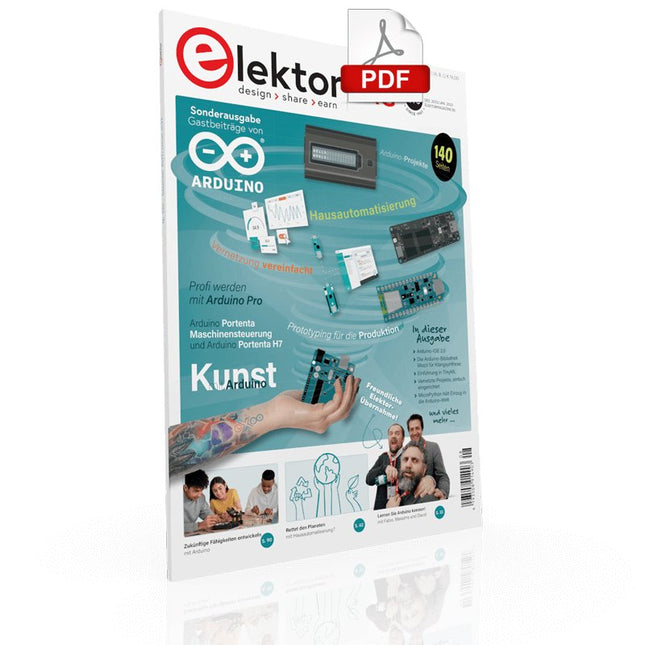
Elektor Digital Elektor-Special: Gastausgabe von Arduino 2022 (PDF)
Diese Ausgabe steht allen GOLD- und GREEN-Mitgliedern auf der ElektorMagazine-Website zum Download bereit! Sind Sie noch kein Mitglied? Hier klicken! Arduino Portenta Machine Control und Arduino Potenta H7 Ein CAN-zu-MQTT Gateway Demo Projekt Ausgepackt: Der Elektor-LCR-Meter-Bausatz von Elektor MicroPython hält Einzug in die Arduino-Welt Vernetzte Projekte, einfach eingerichtet Ihr Weg in die Arduino-Cloud Einführung in TinyML Groß ist nicht immer besser Arduino K-Weg Komfortableres Schreiben von Arduino-Sketches Lernen Sie Arduino kennen! Erste Schritte mit Portenta X8 Sichere Softwareverwaltung mit Containern Skalierbare, sichere Anwendungen erstellen, in Betrieb nehmen und pflegen Arduino Portenta X8 mit dem i.MX 8M Mini-Anwendungsprozessor von NXP und dem EdgeLock Secure Element SE050 Wie ich mein Haus automatisiert habe Arduino-CEO Fabio Violante entwickelt und teilt Lösungen Altair-8800-Emulator Hardware-Simulation eines alten Computers MS-DOS auf dem Portenta-H7-Board Alte Software auf moderner Hardware ausführen Bauen Sie es selbst an Eine digital gesteuerte Anzuchtbox für Indoor-Farming Kann Hausautomatisierung den Planeten retten? MQTT auf dem Arduino Nano RP2040 Connect Professionelle Anwendungen mit Arduino Pro Intelligente Backöfen der nächsten Generation Tagvance sorgt mit Arduino für sicherere Baustellen Santagostino ist da! mit einer Fernüberwachung, die KI für vorausschauende Wartung nutzt Höchste Sicherheit mit der MKR-basierten Lösung von RIoT Secure Eine neue Generation des Wassermanagements mit Open-Source Senso Abholzung mit Schallanalyse aufspüren Die Arduino-Bibliothek Mozzi für Klangsynthese Einblicke von Tim Barrass Das neue Portenta-X8-Board (mit Linux!) und Max Carrier machen es möglich! Wie Arduino Schülern hilft, zukünftige Fähigkeiten zu entwickeln Must-Haves für Ihren Elektronik-Arbeitsplatz Die Bedeutung der Robotik in der Ausbildung Ein zuverlässiges IoT auf Basis von LoRa Ausgepackt: die Portenta-Maschinensteuerung 8-Bit-Gaming mit Arduboy Reduzierung des Wasserverbrauchs auf der Pferderennbahn Ein IoT zur ständigen Überwachung von Bodenfeuchtigkeit und Temperatur Das Panettone-Projekt Ein Robotsystem zur Verwaltung von Sauerteigstartern Unterstützung durch Arduino-Reseller Space Invaders mit Arduino Kunst mit Arduino Inspirierende Einblicke von Künstlern und Designern Arduino-Produktkatalog Die Zukunft von Arduino David und Fabio orakeln
€ 11,90
-

Elektor Digital CAN et CAN FD (E-book)
Tout sur les protocoles et leur mise en œuvre avec Arduino Initialement destiné aux véhicules routiers, le réseau CAN (« Controller Area Network ») et son successeur le réseau CAN FD (« Flexible Data ») ont vu leurs champs d’application s’élargir à de nouveaux domaines. L’industrie propose de nombreux modules microcontrôleurs dotés d’une interface CAN et/ou CAN FD. L’environnement de développement Arduino a démocratisé la programmation de ces modules et il existe des bibliothèques qui implémentent un pilote CAN et/ou un pilote CAN FD. La première partie dresse un rapide historique des réseaux CAN et CAN FD et expose la problématique des lignes de transmission en abordant succinctement leur théorie et présentant des résultats de simulation Spice. La deuxième partie est consacrée au réseau CAN, en détaillant successivement la fonction logique du réseau, les transcepteurs, les contrôleurs, la topologie la plus classique (le bus) et d’autres moins courantes, les répéteurs et les passerelles. Les aspects particuliers du protocole, tels que le bit stuffing, l’arbitrage, les trames d’erreur, la détection des erreurs sont exposés. La discussion de la fiabilité du protocole est illustrée par des exemples mettant en évidence ses faiblesses. La troisième partie présente le protocole CAN FD, ses deux variantes CAN FD ISO et CAN FD non ISO, leurs fiabilités, leurs faiblesses, mises en évidence par des exemples. Différents transcepteurs et contrôleurs CAN FD sont décrits. La quatrième partie est dédiée aux applications : comment utiliser les services d’un pilote, concevoir une messagerie, utiliser un analyseur logique. Deux exemples d’application terminent cette partie. Ce livre s’adresse aux amateurs et aux ingénieurs non spécialistes pour comprendre les possibilités qu’offre un réseau CAN et comment on le met en œuvre. Un enseignant trouvera des informations pour approfondir ses connaissances et pour concevoir des travaux pratiques. Une connaissance des microcontrôleurs, de leur programmation, de l’électronique numérique aidera à la lecture des schémas. La connaissance du langage C++ et du langage de simulation électronique Spice facilitera la compréhension des programmes qui sont décrits dans le livre. Tous les codes source sont disponibles sur le dépôt GitHub de l’auteur. Téléchargements GitHub
€ 34,95
Mitglieder: € 31,46
-
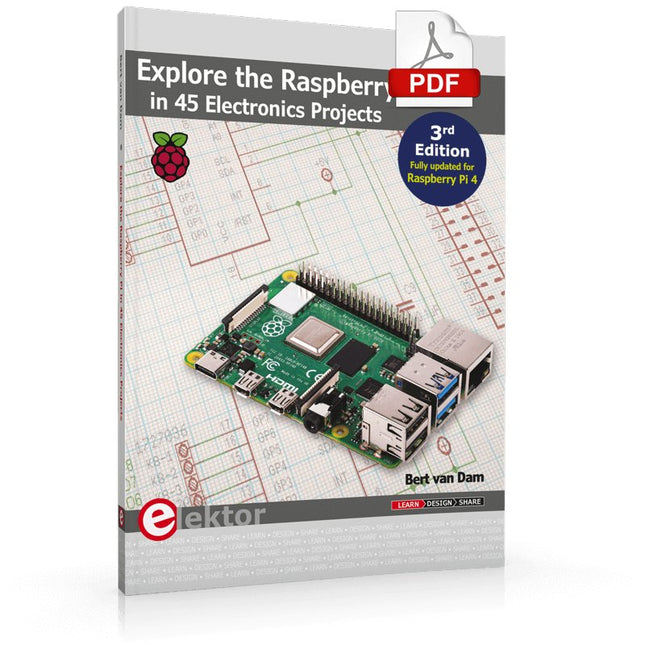
Elektor Digital Explore the Raspberry Pi in 45 Electronics Projects (3rd Edition | E-book)
3rd Edition – Fully updated for Raspberry Pi 4 The Raspberry Pi is a very cheap but complete computer system that allows all sorts of electronics parts and extensions to be connected. This book addresses one of the strongest aspects of the Raspberry Pi: the ability to combine hands-on electronics and programming. Combine hands-on electronics and programming After a short introduction to the Raspberry Pi you proceed with installing the required software. The SD card that can be purchased in conjunction with this book contains everything to get started with the Raspberry Pi. At the side of the (optional) Windows PC, software is used which is free for downloading. The book continues with a concise introduction to the Linux operating system, after which you start programming in Bash, Python 3 and Javascript. Although the emphasis is on Python, the coverage is brief and to the point in all cases – just enabling you to grasp the essence of all projects and start adapting them to your requirements. All set, you can carry on with fun projects. The book is ideal for self-study No fewer than 45 exciting and compelling projects are discussed and elaborated in detail. From a flashing lights to driving an electromotor; from processing and generating analog signals to a lux meter and a temperature control. We also move to more complex projects like a motor speed controller, a web server with CGI, client-server applications and Xwindows programs. Each project has details of the way it got designed that way The process of reading, building, and programming not only provides insight into the Raspberry Pi, Python, and the electronic parts used, but also enables you to modify or extend the projects any way you like. Also, feel free to combine several projects into a larger design.
€ 32,95
Mitglieder: € 29,66
-

Elektor Digital Elektor May/June 2020 (PDF) EN
Open-Network Weather Station Mk.2Part 1: Introduction and hardware elements Artificial Intelligence for Beginners (1)Object recognition using the Maixduino board Universal Triac Control Module with ATmegaSwitch and dim a variety of loads GitHub For DummiesHow to download something from GitHub My IoT Button: A Button for the WebPart 2: Prototyping with board and cloud TMS0280 Speech SynthesizerPeculiar Parts, the series InteractiveCorrections & Updates || Questions & Answers BASIC for the ESP32/ESP8266 (2)An hourglass with the ESP8266 and Annex WiFi RDS Developer's ZoneTips & Tricks, Best Practices and Other Useful Information BalBot: a Self-Balancing RobotModern acceleration sensors ease the construction process Starting Out in Electronics (3)Easier than imagined! Small Circuits RevivalCapita Selecta from the Elektor Project Suggestions Box Tamper-Evident BoxSend data securely through postal services Elektor New Precise Nixie Clock RevisitedAn engineering bulletin for enthusiastic users new and old Practical ESP32 Multitasking (3)Software timers SigFox and the IoT (4)Setting up a dashboard Start-Up Update: The Elektor Investment Program Review: Joy-IT HD35 Electronic USB LoadTest & verify USB power performance CAN Bus + Arduino for Solar PV Cell MonitoringDetect and locate serviceable panels in large arrays Analogue Electronics Design (3)Case Study #1 — Section 3: Preamplifier response optimization and trade-offs Inexpensive E-ScooterHow does Lidl's "road approved" 300 euro E-scooter perform? Steeped in ElectronicsLead-free soldering and EU regulatory zeal Lab, Sweet LabA glimpse of The Holy Place — no unauthorized entry. Review: The PeakTech 6080 A Lab Power SupplyA neat lab PSU for not much money A Big ChallengeSafe products in the IoT era Elektor 1.2 GHz Multifunction Frequency Meter (1992/93)Crossing the magic 1 GHz border Hexadoku
€ 7,50
-

OWON OWON SPS3081 Lüfterloses DC-Netzteil (120 W)
Das lüfterlose programmierbare DC-Netzteil OWON SPS3081 (120 W) bietet extrem leise, hochpräzise Leistung mit einer Genauigkeit von 10 mV/1 mA und fortschrittlicher Wärmeableitung für langfristige Zuverlässigkeit. Mit umfassendem Schutz, einer USB-Schnittstelle mit SCPI-Unterstützung für die Fernbedienung und einem 2,8-Zoll-TFT-LCD-Bildschirm ist es die perfekte Wahl für Labore, Elektroniktests und Forschung. Features Lüfterloses Design: Extrem leiser Betrieb, reduziert Vibrationsgeräusche und minimiert die potenziellen Ausfallrisiken, die mit herkömmlichen Kühlventilatoren verbunden sind. Hervorragendes Wärmeableitungsdesign: Gewährleistet einen kontrollierten Temperaturanstieg, ermöglicht einen langfristigen Betrieb unter Volllastbedingungen und verlängert die Lebensdauer der internen Komponenten. Leichtes und ultradünnes Design. Ausgabegenauigkeit bis zu 10 mV/1 mA Unterstützt die Bearbeitung und Ausgabe von Listenwellenformen mit vier Speicherverknüpfungsparametern für schnellen und bequemen Zugriff. Zu den integrierten Schutzfunktionen gehören Überspannungs-, Überstrom-, Übertemperatur- und Eingangsunterspannungsschutz für mehr Sicherheit. Eingebauter Entladekreis verhindert Restrisiken durch Hochspannung, wenn der Strom ausgeschaltet ist. USB-Kommunikationsschnittstelle mit SCPI-Protokollunterstützung, die PC-Programmierung und Fernsteuerung für eine vereinfachte Benutzerverwaltung ermöglicht. 2,8-Zoll-TFT-LCD-Bildschirm Technische Daten Modell SPS6051 SPS3081 Nennleistung (0°C-40°C) Spannung 0-61 V 0-31 V Strom 0-5,1 A 0-8,1 A Leistung 150 W 120 W Lastregulierung Spannung ≤30 mV Strom ≤20 mA Leistungsregulierung Spannung ≤30 mV Strom ≤20 mA Auflösung festlegen Spannung 10 mV Strom 1 mA Readback-Auflösung Spannung 10 mV Strom 1 mA Einstellgenauigkeit (25°C ±5°C) Spannung ≤0,05% ±20 mV ≤0,1% ±20 mV Strom ≤0,05% ±20 mA ≤0,2% ±20 mA Readback-Genauigkeit (25°C ±5°C) Strom ≤0,05% ±20 mV ≤0,1% ±20 mV Spannung ≤0,05% ±20 mV ≤0,2% ±20 mA Welligkeit/Rauschen Spannung ≤30 mVp-p ≤30 mVp-p Spannung ≤4 mVrms ≤5 mVrms Strom ≤10 mAP-p ≤30 mAP-p Ausgangstemperaturkoeffizient (0°C-40°C) Spannung 100 ppm/°C Strom 200 ppm/°C Readback-Temperaturkoeffizient Spannung 100 ppm/°C Strom 200 ppm/°C Reaktionszeit (50-100% Nennlast) ≤1,0 ms Speicher 4 Datengruppen Betriebsstemperatur 0-40°C Display 2,8" Farb-LCD-Display Schnittstelle USB Abmessungen (B x H x T) 82 x 142 x 226 mm Gewicht 1,8 kg Lieferumfang 1x OWON SPS3081 Netzteil 2x Messleitungen 1x Netzkabel 1x Manual Downloads Datasheet User Manual (German) Programming Manual PC Software
€ 135,66
-

UFactory UFactory xArm 5 Lite
Dieser mehrachsige Roboter bringt Leistung und Größe perfekt in Einklang. Features 5 Achsen Nutzlast: 3 kg Reichweite: 700 mm Wiederholgenauigkeit: 0,1 mm Maximale Geschwindigkeit 1000 mm/s Anwendungen Maschinenwartung Bin Picking Mobile Plattform Laborautomatisierung Roboterforschung Langlebige kollaborative Roboter für Ihre Automatisierung Harmonische Antriebe und Servomotoren in Industriequalität garantieren einen ununterbrochenen Betrieb rund um die Uhr. Hergestellt aus Kohlefaser, 15 kg Gewicht ermöglichen einen einfacheren Einsatz. Flexible Bereitstellung mit sicherer Funktion Handprogrammierung, leicht, platzsparend und einfach für mehrere Anwendungen einsetzbar, ohne Ihr Produktionslayout zu ändern. Perfekt für wiederkehrende Aufgaben. Kollisionserkennung ist für alle unsere Cobots verfügbar. Ihre Sicherheit hat immer oberste Priorität. Grafische Oberfläche für einsteigerfreundliche Programmierung Kompatibel mit verschiedenen Betriebssystemen, einschließlich macOS und Windows. Webbasierte Technologie, kompatibel mit allen gängigen Browsern. Drag & Drop, um Ihren Code in wenigen Minuten zu erstellen. Leistungsstarkes und Open-Source-SDK immer zur Hand Das voll funktionsfähige Open-Source-Python/C++-SDK bietet eine flexiblere Programmierung. ROS/ROS2-Pakete sind einsatzbereit. Beispielcodes helfen Ihnen, den Roboterarm reibungslos einzusetzen. Technische Daten UFactory 850 xArm 5 xArm 6 xArm 7 Nutzlast 5 kg 3 kg 5 kg 3,5 kg Reichweite 850 mm 700 mm 700 mm 700 mm Freiheitsgrade 6 5 6 7 Wiederholbarkeit ±0,02 mm ±0,1 mm ±0,1 mm ±0,1 mm Maximale Geschwindigkeit 1 m/s 1 m/s 1 m/s 1 m/s Gewicht (nur Roboterarm) 20 kg 11,2 kg 12,2 kg 13,7 kg Maximale Geschwindigkeit 180°/s 180°/s 180°/s 180°/s Joint 1 ±360° ±360° ±360° ±360° Joint 2 -132°~132° -118°~120° -118°~120° -118°~120° Joint 3 -242°~3.5° -225°~11° -225°~11° ±360° Joint 4 ±360° -97°~180° ±360° -11°~225° Joint 5 -124°~124° ±360° -97°~180° ±360° Joint 6 ±360° ±360° -97°~180° Joint 7 ±360° Hardware Umgebungstemperaturbereich 0-50°C Stromverbrauch Min. 8,4 W, typisch 200 W, max. 400 W Eingangsstromversorgung 24 V DC, 16,5 A Fußabdruck Ø 126 mm Materialien Aluminium, Kohlefaser Basis-Connector-Typ M5x5 Reinraum der ISO-Klasse 5 Robotermontage Alle Endeffektor-Kommunikationsprotokoll Modbus RTU(rs485) Endeffektor-E/A 2x DI/2x DO/2x AI/1x RS485 Kommunikationsmodus Ethernet Lieferumfang 1x xArm 5 Roboterarm 1x AC-Steuerbox 1x Roboterarm-Stromkabel 1x Roboterarm-Endeffektor-Adapterkabel 1x Roboterarm-Signalkabel 1x Steuerbox-Stromkabel 1x Netzwerkkabel 1x Montagewerkzeug 1x Kurzanleitung
€ 7.285,00
Bestpreis
-

Uni-Trend UNI-T UDP3305S-E DC-Netzteil (328 W)
Das UDP3305S-E ist ein leistungsstarkes programmierbares lineares DC-Netzteil. Es verfügt über eine übersichtliche LCD-Benutzeroberfläche, hervorragende Leistungsindikatoren, eine Vielzahl von Analysefunktionen und Kommunikationsschnittstellen. Es kann den vielfältigen Testanforderungen der Benutzer gerecht werden. Ziel ist es, kostengünstige programmierbare DC-Stromversorgungsgeräte für Lehre, wissenschaftliche Forschung, Industrie und andere Bereiche bereitzustellen. Interaktive LCD-Schnittstelle Mit einem hochauflösenden 4,3-Zoll-Bildschirm bietet es Benutzern eine Mensch-Maschine-Schnittstelle mit umfangreichen Funktionen und einfacher Bedienung, die die aktuell eingestellte Ausgangsspannung/-stromstärke, die tatsächliche Ausgangsspannung/-stromstärke und die Schutzausgangsspannung anzeigen kann /aktueller Wert der Stromversorgung in Echtzeit. Die funktionale Schnittstelle ist einfach und umfassend, leicht zu bedienen. Ein-Tasten-Einstellung für Serie und Parallel Die seriell-parallele Verbindung zwischen CH1 und CH2 des Hauptkanals kann ohne externe Verbindung realisiert werden, was den Anschluss vereinfacht und den Test erleichtert. Listen-/Verzögerungsfunktion Mit Listen- und Verzögerungseinstellungsfunktionen können je nach Testanforderungen bis zu 2048 Datensätze eingerichtet werden, und die Anzahl der Zyklen kann 99999 erreichen. Es wird mit Wellenformvorlagen verwendet, was für Zyklustests und Alterung sehr praktisch ist testen. Umfangreiche Fernbedienungsschnittstelle Standardmäßige RS232-Kommunikationsschnittstelle, Ethernet-Schnittstelle, digitale I/O sowie Master- und Slave-USB-Schnittstellen, können über eine Fernverbindung zu Ethernet oder über RS232 und USB mit der Host-Computersoftware gesteuert werden, um eine Softwaresteuerung zu erreichen. Technische Daten Typ Lineare Gleichstromversorgung Kanäle 4 Gesamtleistung 328 W Ausgangsspannung CH1/CH2: 0~30 VCH3: 0~6 VCH4: 5 V Ausgangsstrom CH1/CH2: 0–5 ACH3: 0–3 ACH4: 2 A Auflösung 10 mV, 1 mA Einstellungsgenauigkeit 0,3 % +20 mV<0,2 % +5 mA Konnektivität USB-Gerät, RS-232, LAN, USB-Host, digitale I/O Lieferumfang 1x UDP3305S-E DC-Netzteil 1x Netzkabel 1x USB-Kabel Downloads Datasheet User manual Programming manual Software V1.0 Firmware V1.10
€ 389,99
-

Elektor Digital IoT GET-U-GOING (E-book)
In 35 Projects with the Raspberry Pi and Arduino The Internet of Things (IoT) is a trend with a strong technological impulse. At home, we want to do everything on our tablets, from browsing Facebook to watching TV, from operating lights to keeping an eye on the temperature. In 35 fun projects, this book will show you how to build your own Internet of Things system. We'll cover the hardware (primarily the Raspberry Pi and Arduino) and the software that makes control via Internet possible. We employ Wi-Fi and radio links so no requirement any longer to install cabling crisscross through your home. Assuming the projects in the book are finished, you have a complete Internet of Things system that allows you to control and view of everything in your home. For example, if there's something in the mail box or the car is securely in the garage. Also, you can switch on the lights and the alarm from your couch. The crisp explanations allow the projects to be customized with ease, for example, to turn on your coffee machine or TV remotely. The index gives easy access to creative projects that can serve as an example, enabling you to do all the connecting to the IoT independently. All project software can be downloaded free of charge from the Elektor website. In this unique book, Raspberry Pi, Arduino and HTML webpages with stylesheets and JavaScript come together in clearly-described, easy-to-build projects. This special book is an essential part of your collection!
€ 34,95
Mitglieder: € 31,46
-
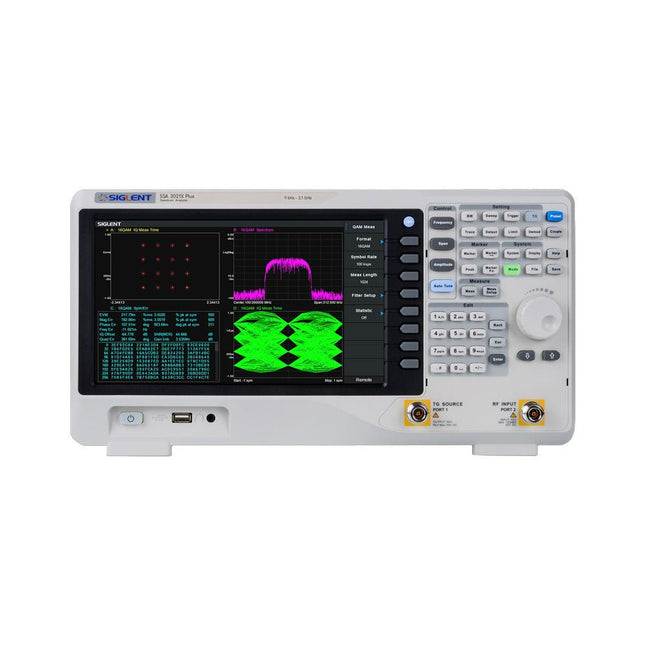
Siglent Siglent SSA3021X Plus Spektrum-Analyzer (9 kHz - 2,1 GHz)
Der Siglent SSA3021X Plus Spektrum-Analyzer ist ein leistungsstarkes und flexibles Werkzeug für die HF-Signal- und Netzwerkanalyse. Mit einem Frequenzbereich von 2,1 GHz bietet der Analysator zuverlässige automatische Messungen und mehrere Betriebsarten: Spektrum-Analyzer als Basis, optionale Funktionen umfassen HF-Leistungsmessung, Vektorsignal-Modulationsanalyse, Reflexionsmessung und EMI-Test. Zu den Anwendungsbereichen gehören die Überwachung/Bewertung von Sendungen, Standortvermessung, S-Parameter-Messung, analoge/digitale Modulationsanalyse, EMI-Vorprüfung, Forschung und Entwicklung, Ausbildung, Produktion und Wartung. Features Frequenzbereich des Spektrum-Analyzer von 9 kHz bis 2,1 GHz –161 dBm/Hz Angezeigter durchschnittlicher Geräuschpegel (typisch) –98 dBc/Hz. @ 10 kHz Offset-Phasenrauschen (1 GHz, typ.) Pegelmessunsicherheit <0,7 dB (typ.) 1 Hz Mindestauflösungsbandbreite (RBW) Vorverstärker (Std.) Tracking Generator (kostenlos inkl.) Analysemodus für analoge und digitale Signalmodulation (opt.) Reflexionsmesskit (opt.) EMI-Filter und Quasi-Peak-Detektor-Kit (opt.) Erweitertes Messkit (opt.) 10,1-Zoll-Multi-Touch-Bildschirm, Maus und Tastatur werden unterstützt Webbrowser-Fernsteuerung auf PCs und mobilen Endgeräten sowie Dateibetrieb Technische Daten SSA3015X Plus SSA3021X Plus SSA3032X Plus SSA3075X Plus Frequenzbereich 9 kHz ~ 1,5 GHz 9 kHz ~ 2,1 GHz 9 kHz ~ 3,2 GHz 9 kHz ~ 7,5 GHz Auflösung Bandbreite 1 Hz ~ 1 MHz 1 Hz ~ 1 MHz 1 Hz ~ 1 MHz 1 Hz ~ 3 MHz Phasenrauschen <–99 dBc/Hz <–98 dBc/Hz <–98 dBc/Hz <–98 dBc/Hz Genauigkeit der Gesamtamplitude <1,2 dB <0,7 dB <0,7 dB <0,7 dB Anzeige des durchschnittlichen Geräuschpegels –156 dBm/Hz –161 dBm/Hz –161 dBm/Hz –165 dBm/Hz Lieferumfang Siglent SSA3021X Plus Spektrumanalysator USB-Kabel Netzkabel Kurzanleitung Downloads Datasheet Manual Documentation Firmware
€ 1.777,49
Bestpreis
-

Elektor Digital Elektor Summer Circuits 2022 PDF (EN)
Over 50 Circuits & Projects US-Style Siren Two Rotary Encoders on One Analog Input How to Build a Digital 220-V AC Dimmer with Arduino Current Source for LEDs Detect Four Switches with 1 Pin Tiny On/Off Switch with Battery Level Check DIY Hand Sanitizer Dispenser A Simple Electronic Organ Ultra-Simple Stereo Amplifier Sound Activated Switch for Amplifiers Balanced/Unbalanced Converter External Mains Filter Button-Free Door Control DI Box for a Smartphone Fun With Running Lights One-Button Thyristor Control Quasi-Analog Exposure Timer for the Dark Room Circuits Galore From the Hackster.io Community Analog Tanning Timer Yet Another Single-Wire LCD Interface Simple AVR ATtiny13-Based PWM Generator Second Life for Batteries Touch Switch for LED Lights Tester for LEDs and DIP Switches Go/No-Go IR Control Tester Power Semiconductor Tester SPI for WS2812(B) LEDs Measuring Power Inductors One Plug for Raspberry Pi and Audio DAC DIY Test Fixture for the LCR Meter Arduino Ammeter Two-Finger Organ Low Noise ADC Calibrator DC/DC Boost Converter Two Potentiometers on One Digital Input Acoustic Proximity Sensor Battery-Free Radiator Sensor A Circuit for Detecting Bugs and Wireless Cameras Car Interior Light Timer Candle Simulator Digital Kitchen Timer Milliohm Meter Hot Water Production Delay Timer Simple Charger for 2S 18650 Cells Tiny Frequency Reference Low-Power IR Switch Recycle Your Car’s Telephone Charger Microphone Pre-Amp for Arduino DIY EMI Filters Electronic Dice Without an MCU Finger Capacitor A Self-Charging LED Flasher Also in this edition KiCad 6 – Five Features to Consider Flashback – The Elektor SC/MP Computer Interview – Making Art with Electricity My First PCB – Going Head First Into KiCad Minimizing Hardware with Smart Software Infographics – Facts and Figures New Devices from Analog Flashback – The Elektor Metal Detector Hexadoku – The Original Elektorized Sudoku
€ 7,50
-
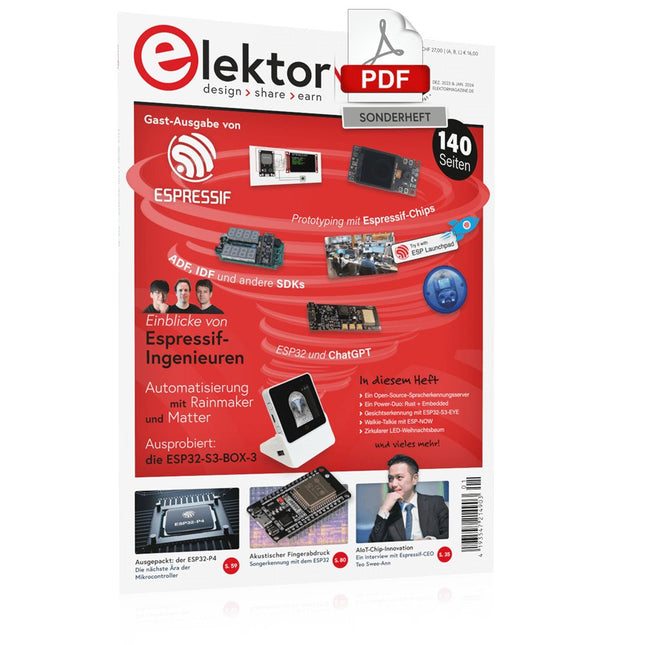
Elektor Digital Elektor Espressif Gastausgabe 2023 (PDF)
Diese Ausgabe steht allen GOLD- und GREEN-Mitgliedern auf der ElektorMagazine-Website zum Download bereit! Sind Sie noch kein Mitglied? Hier klicken! Beschleunigung der IoT-Innovation Ein WLAN-Bilderrahmen mit farbigem E-Ink-Display Anleitung ESP-Launchpad Von Null auf Flash in wenigen Minuten ESP32 und ChatGPT Auf dem Weg zu einem selbstprogrammierenden System Walkie-Talkie mit ESP-NOW Nicht ganz WLAN, nicht ganz Bluetooth, aber... Von der Idee zur Schaltung mit dem ESP32-S3 Ein Leitfaden für die Prototypenentwicklung mit Espressif-Chips AIoT-Chip-Innovation Ein Interview mit Espressif-CEO Teo Swee-Ann ESP32 mit Wokwi simulieren Der virtuelle Zwilling Ihres Projekts Ausprobiert: die ESP32-S3-BOX-3 Eine umfassende AIoT-Entwicklungsplattform Mein Elektronik-Arbeitsplatz Einblicke und Tipps von Espressif-Ingenieuren Die ESP-RainMaker-Story Wie wir „Ihre“ IoT-Cloud entwickeln Zusammenbau des Elektor-Kits Cloc 2.0 Ein Elektor-Produkt, getestet von Espressif Ausgepackt: der ESP32-P4 Die nächste Ära der Mikrocontroller Rost + Eingebettet Ein Power-Duo für die Entwicklung Wer sind die von Rust begeisterten Embedded-Entwickler? Wie Espressif Embedded Rust für den ESP32 kultiviert Zeitleiste der SoC-Reihe von Espressif Aufbau spezieller SPS mit Espressif-Lösungen Mit den Techniken und Funktionen des ISOBUS-Protokolls Das ESP32-S3-VGA-Board Bitlunis aufregende Reise in die Produktentwicklung Akustischer Fingerabdruck mit ESP32 Songerkennung mit dem Open-Source-Projekt Olaf Zirkularer Weihnachtsbaum 2023 Weihnachtszeit, eine High-Tech-Annäherung Für ein einfacheres und komfortableres Leben Ein Amateurprojekt basierend auf dem ESP8266-Modul von Espressif Wie man IoT-Apps ohne Software-Expertise erstellt Mit der Blynk IoT-Plattform und Espressif-Hardware Erstellung einer intelligenten Benutzeroberfläche auf ESP32 Schnelle und einfache IoT-Entwicklung mit M5Stack Prototyping eines Energiezählers mit ESP32 Ein Distributor für IoT und mehr – mit Mehrwert Tiefe Einblicke: Ein Interview mit Arduino über den Nano ESP32 Alessandro Ranellucci und Martino Facchin diskutieren über die Zusammenarbeit mit Expressif IoT-Chip-Innovationen Einblicke von und in Espressif Rationelle MCU-Programmierung dank ESP Privilege Separation Ein Open-Source-Spracherkennungsserver ...und die ESP-BOX Das mitdenkende Auge Gesichtserkennung und mehr mit ESP32-S3-EYE Knopfzellen-Sender mit ESP32-C2 Entwurf und Leistungsbewertung Matter – ein Meilenstein für das Smart Home So schalten Sie das IoT-Potenzial von Smart Home frei Tech the Future: Wohin steuert Smart Home IoT?
€ 11,90
-

Elektor Digital Elektor September/October 2024 (PDF)
Elektor GREEN and GOLD members can download their digital edition here. Not a member yet? Click here. An Autonomous Sensor NodeLoRa-Based Data Transmission and Power by Solar Cells Elektor eXpansion Board v1.0For ESP32-S3 and other XIAO controller boards Model Railroad with CameraInstalling an ESP32 CAM Module Broadband Magnetic Antenna for Long WaveMultiple Channels Without Tuning TensorFlow Lite on Small MicrocontrollersA (Very) Beginner’s Point of View A Hub for RS-422 and RS-485 DevicesWire Your Bus Like a Star RF ProbeWith LED Bar Graph Starting Out in Electronics……Reviews More Opamp Circuits Open VarioThe Open-Source Multifunction Variometer for Paragliding From Life’s ExperienceAbout Taking Things for Granted AI-Based Water Meter Reading (Part 2)Get Your Old Meter Onto the IoT! ML-Based Pest DetectionSmart Agriculture Device With IoT Connectivity Why Anybus CompactCom Is the Ideal Choice for Embedded Industrial Communication IQRF Communication StandardReliability for Lossy, Low-Rate Wireless Mesh Networks How to Build a Smart Agricultural RobotEssential Technical Considerations and Challenges Audio Notch Filter with Adjustable FrequencyUniversal Solution for Suppressing Frequencies in Audio Applications The LeoINAGPS SystemGets Useful Insights on Your Electric Vehicle Solar-Powered LoRa NodeA Modular, Compact, and Versatile IoT Solution AWS for Arduino and Co. (2)Sending Data Using AWS IoT ExpressLink Err-lectronicsCorrections, Updates, and Readers’ Letters 2024: An AI OdysseyDesktop Versus Embedded Accelerators: A Look at Some Options ESP32 Range ExtenderA Simple Antenna Modification
€ 7,50


