
Suchergebnisse für "rf OR circuit OR design OR 2nd OR edition"
-
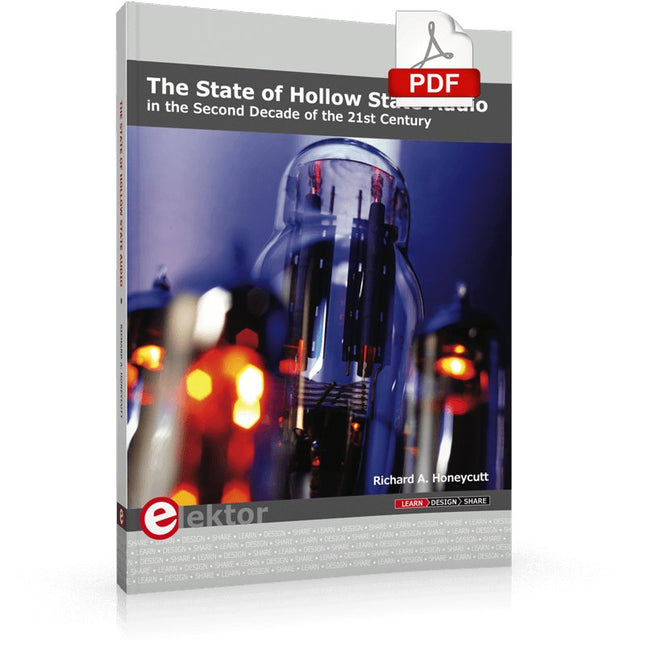
Elektor Digital The State of Hollow State Audio (E-book)
The State of Hollow State Audio in the Second Decade of the 21st Century Vacuum-tube (or valve, depending upon which side of the pond you live on) technology spawned the Age of Electronics early in the 20th Century. Until the advent of solid-state electronics near mid-century, hollow-state devices were the only choice. But following the invention of the transistor (after their process fell to reasonable levels), within a couple of decades, the death of vacuum tubes was widely heralded. Yet here we are some five decades later, and hollow-state equipment is enjoying something of a comeback, especially in the music and high-end audio industries. Many issues surround hollow-state audio: Does it produce—as some claim—better sound? If so, is there science to back up these claims? How do hollow-state circuits work? How do you design hollow-state audio circuits? If hollow-state equipment fails, how do you go about troubleshooting and repairing it? Can we recreate some of the classic hollow-state audio devices for modern listening rooms and recording studios? How can we intelligently modify hollow-state amplifiers to our taste? These and other topics are covered in The State of Hollow State Audio.
€ 32,95
Mitglieder: € 29,66
-

Elektor Digital Elektor Mai/Juni 2023 (PDF)
Der vollständige Download dieser Nummer ist für unsere GOLD- und GREEN-Mitglieder auf der Elektor Magazine- Site verfügbar! Nicht noch einmal Mitglied? Klicken Sie hier . Super Servo Tester Testen Sie nur vier Servos, isoliert oder vor Ort analoge Signale und Mikrocontroller CA/N, CN/A, aktuelle Maße und mehr Messe München 2023 die praktische Sub-Nyquist-Verzauberung zuverlässige Erfassung hoher Frequenzen mithilfe der Unterstimme Ein Android-Smartphone mit einem ESP32 verbinden? Praktisches Projekt mit der WLAN-API von Android 1 kHz aktiver Filter zur Messung der Verzerrung Durch die Optimierung des Messsignals verbesserte Maßnahmen elektronisch starten ... Multivibrationen Projekt 2.0 Korrekturen, Aktualisierungen und Lesernachrichten das neue I3C-Protokoll Wirkung von Ankündigung oder echtem Fortschritt BlueRC: IR-Fernsteuerung mit Smartphone und ESP32 adaptiv und universell die Dokumentation der Mikrocontroller ohne Stift (2) Register und Grundschemata Automatisierung von Tests und Messungen Programmierung der Testausrüstung, um herauszufinden, was Sie möchten Infografik: Test und Messung Immunität gegen Überspannungen Schutz für CC/CC Leistungsmodule nicht isoliert Maßgerät Wiha Tester und Computer zur Installation auf diesen Geräten, damit Sie sie installieren können Automatisierung der Tests und Weitergabe der Ergebnisse auf der Lebendigkeit der elektronischen Blöcke Registriergerät für Energiedaten Energieverbrauch messen und registrieren Montage des Rover MARS-Bausatzes von 4tronix Stationäre Diskette mit E-Papier-Anzeige eine innovative Informationsversion eCO? Telegramm-Bot Messung der Luftqualität mit Benachrichtigung durch Telegram die Kulissen des Top-Audio-Sortiments von Home Ton Giesberts von Elektor im Interview zur Kunst des Analogkonzepts Besuch zu Hause neue Cible Einführung in RFID-Etiketten und RFID-Türverriegelung Beispiele für ausgereifte Projekte aus dem Experimentierhandbuch für Arduino von Elektor HF-Stromsonden für Oszilloskope Die RF-Laufzeitmessung ohne Stift pas pour les mauviettes - Roboter-BH-Set mit Raspberry Pi Pico und MicroPython Generative IA Aber was ist passiert? Hexadoku
€ 10,95
-

Elektor Digital Acoustics in Performance (E-book)
All you need to know about good acoustics and sound systems in performance and worship spaces! Everyone knows that the ability to hear music in balance and to understand speech is essential in any space used for performance or worship. Unfortunately, in the early 21st century, we find that buildings with good acoustics are the exception rather than the rule. Much of the fault leading to this result can be traced to the widespread perception that acoustics is a black art. In fact, scientific acoustics as developed in the last century is a well-defined engineering practice that can lead to predictable excellent results. A basic, non-engineering understanding of acoustics will help building owners, theater managers, ministers and teachers of music, performers, and other professionals to achieve their goals of excellent acoustics in venues with which they work. Performers having a basic understanding of acoustics will be able to make the most of the acoustics of the venue in which they perform. This book helps those responsible for providing good acoustics in performance and worship spaces to understand the variables and choices entailed in proper acoustic design for performance and worship. Practicing acoustical consultants will find the book a useful reference as well. The level of presentation is comfortable and straightforward without being simplistic. If correct acoustical principles are incorporated into the design, renovation, and maintenance of performance and worship venues, good acoustics will be the result.
€ 24,95
Mitglieder: € 22,46
-

Elektor Digital Arduino Uno – 45 Projects for Beginners and Experts (E-book)
This book covers a series of exciting and fun projects for the Arduino, such as a silent alarm, people sensor, light sensor, motor control, internet and wireless control (using a radio link). Contrary to many free projects on the internet all projects in this book have been extensively tested and are guaranteed to work! You can use it as a projects book and build more than 45 projects for your own use. The clear explanations, schematics, and pictures of each project make this a fun activity. The pictures are taken of a working project, so you know for sure that they are correct. You can combine the projects in this book to make your own projects. To facilitate this, clear explanations are provided on how the project works and why it has been designed the way it has That way you will learn a lot about the project and the parts used, knowledge that you can use in your own projects. Apart from that, the book can be used as a reference guide. Using the index, you can easily locate projects that serve as examples for the C++ commands and Arduino functionality. Even after you’ve built all the projects in this book, it will still be a valuable reference guide to keep next to your PC.
€ 29,95
Mitglieder: € 26,96
-

Elektor September/October 2025 (EN)
Elektor GREEN and GOLD members can download their digital edition here. Not a member yet? Click here. ESP32 Audio Transceiver Board (Part 2)Wireless Audio Transmission Inductive AM TransmitterUses Pico’s PIO in an Arduino Sketch Navigating Wireless ProtocolsA Technical Guide Satellite Tracking Using LoRaThe TinyGS Network Bringing Space Data to Earth 4G-Compatible SMS Remote ControlRemotely Control Your Equipment High-Speed ProbeHigh-Impedance Inputs for Signals up to 200 MHz From Life’s ExperienceKafka KrakenSDR Performance Tests with the RP2350Is an Upgrade from Raspberry Pi Pico 1 to Pico 2 Worthwhile? Contact-Free E-Field Measurements (2)A Laser Vibrometer for Assessing the Membrane's Vibrations Crystals and OscillatorsImproving Crystal Accuracy Through Capacitor Selection Starting Out in ElectronicsSpecial Audio ICs Getting Started with Coding a DIY Project SPECTRAN® V6 MobileModular, Configurable Real-Time Spectrum Analyzer for Reliable Measurements Across All Frequency Ranges The Future of AI Is Forged in SiliconAn Interview with Anastasiia Nosova Autonomous Sensor Node v2.0 (System Architecture)Solar-Powered Sensing Platform with Integrated GPS, LoRaWAN, and More Precise PositioningBluetooth Channel Sounding Tested Powering the Future of Wireless CommunicationBTRY’s Ultra-Thin Solid-State Batteries Test-Driven Development in Firmware Writing Phone-Controlled Model CarWi-Fi + ESP32 + Smartphone = Remote Control 2025: An AI OdysseyAI Reasoning Models: The Chain-of-Thought Revolution Solar Charge Controller with MPP Tracking (3)Software and Commissioning Raspberry Pi Zero Web Streaming CameraUsing the ZeroTier VPN
€ 14,90
-

Elektor Digital Elektor May/June 2026 (PDF) EN
Elektor GREEN and GOLD members can download their digital edition here. Not a member yet? Click here. PbMonitor v2.0 UpdateBattery Monitoring with Improved Analog Design Audio Latency MeasurementA Standalone Tool for Evaluating Errors and Latency in Audio Transmission Square Wave vs. Bode PlotChecking the Performances of an Audio Device embedded world 2026 Clever Coding with AIAI in Software Development for Electronics Engineers QA403 Audio AnalyzerAffordable Precision for Audio Professionals and Hobbyists EasyGimbalAutonomous Camera Tracking with AI, Stepper and Servo Motors Sigfox Breakout Board (2)Sending Messages Circuit ProtectionControlling Overvoltages with TVS Diodes Emerging Battery Testing ApproachesA New Era of Diagnostics AudiotronicsA First Preamplifier CANopenTermAn Open-Source Tool That Brings CAN to Makers and Engineers Alike Stabilization of Operational AmplifiersAvoiding Feedback Instability Err-lectronicsCorrections, Updates, and Readers’ Letters Signal ConditioningTips and Tricks to Fit Voltage Ranges TDR Attachment for OscilloscopesLength, Short Circuit, Mismatch: Measure Cables Using Reflections! From Life's ExperienceLED It Be Speaker Oscillator and Resonance TesterA Fully Experimental Project for Your Speakers Elektor Community Perspectives on Test and Measurement ESP32 Audio Transceiver Board (Part 5)Audio Processing and Remote Control 2026: An AI OdysseyAI Has a Context Problem Battery Storage for Balcony Power PlantsSmall Batteries, Big Impact
€ 9,50
-

Elektor Digital Elektor September/Oktober 2022 (PDF)
electronica Fast Forward Start- & Scale-Up AwardsLes préparatifs s'accélèrent !Bluetooth Low Energy avec ESP32-C3 et ESP32Vous n'avez pas toujours besoin de choisir le wifi !Renifleur BLEReconfiguration du dongle USB nRF52840 MDK de makerdiaryCube magique de LED RGBcircuit avec un RP2040Marche/arrêt automatique pour le compresseur de pâte à souderContenu vidéo d'ElektorLivestreams, webinaires et cours pour les ingénieurs et les fabricants professionnelsÉlectrification d'un véloUtilisation d'un kit de modification de vélo électriqueDémarer en électroniqueMultiplication de tensionsSur le vifTransmutationsTeensy 4.0 – comment cette carte peut-elle être aussi rapide ?Ou: La vitesse, ce n'est pas sorcier !Simulation d'amplificateur de puissance audio avec TINA« simuler avant de construire »Développer et utiliser vos nœuds LoRaWAN pour l'Internet des Objets (IdO)Exemple de chapitre : Modules LoRaWAN Dragino LHT65, LDS01 et LDS02Projet 2.0Corrections, mises à jour et courriers des lecteurs5G pour mon propre exploitMaîtrise totale du déploiement de la 5G avec les réseaux cellulaires privésInfographicsLes meilleurs conseils pour développer une interface WiFiComment mon appareil apprend-il à transmettre ?Horloge Tour du Rhin Mod 2Analyseur de spectre audio avec dekatronsUne nouvelle façon d'utiliser les tubes rétroEnvoi de données à TelegramAvec un ESP32 et quelques composantsFiltre coupe-bande de Fliege pour les mesures audioFaites de meilleures mesures avec un filtre coupe-bandeDémontage d'un CO2-mètrePeut-on le bidouiller pour vos projets ?Tout mis ensembleLe transistor unijonction programmable expliquéÉcran tactile rond pour Raspberry PiL'HyperPixel 2.1 Round de PimoroniTélémesure avec détection des pertes de connexionGrâce aux modules nRF24L01+Récepteur FM numérique avec Arduino et TEA5767Restez à l'écoute avec un Arduino NanoConvertir une interface OLED de SPI vers I²CHomeLab ToursUn passe-temps ne prend pas sa retraiteUne décennie d'éthique en électroniqueLe regard de Tessel Renzenbrink sur la société numérique.HexadokuThe Original Elektorized Sudoku
€ 10,95
-
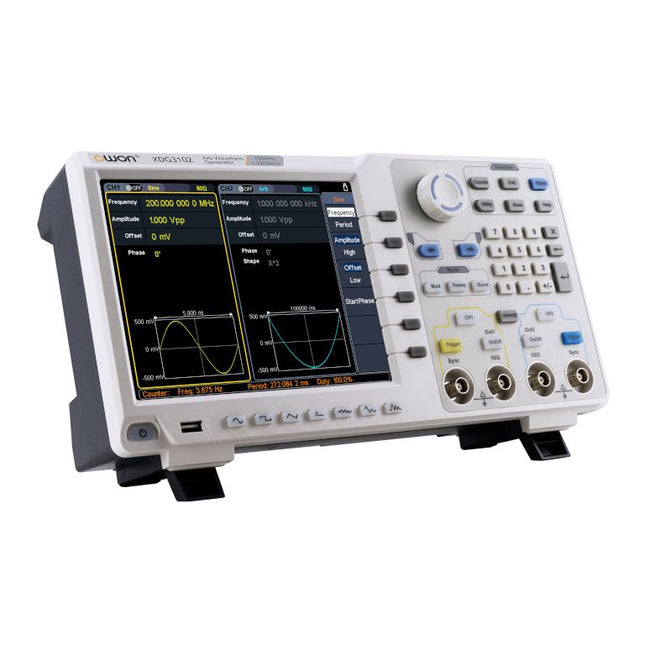
OWON OWON XDG3102 2-Kanal Arbiträrwellenformgenerator (100 MHz)
Features Fortschrittliche DDS-Technologie, bis zu 250 MHz Frequenzausgang 1,25 GS/s Abtastrate und 1 μHz Frequenzauflösung Bis zu 1M beliebige Wellenformlänge Vertikale Auflösung: 14 Bit Umfassende Wellenformausgabe: 6 Gruppenwellenformen und 152 Gruppen integrierter beliebiger Wellenformen Umfassende Modulationsmöglichkeiten: AM, FM, PM, FSK, 3FSK, 4FSK, PSK, OSK, ASK, BPSK, PWM, Sweep und Burst Hochpräziser Frequenzzähler integriert, im Bereich von 100 MHz bis 200 MHz SCPI und LabVIEW werden unterstützt 8-Zoll-LCD-Touchscreen mit 800 x 600 Pixeln Technische Daten XDG3102 Kanal 2 Frequenzausgang 100 MHz Beispielrate 1,25 GSa/s Vertikale Auflösung 14 Bit Wellenform Standardwellenform Sinus, Rechteck, Puls, Rampe, Rauschen und Harmonische Beliebige Wellenform exponentieller Anstieg, exponentieller Abfall, sin(x)/x, Stufenwelle und andere,insgesamt 150 integrierte Wellenformen und benutzerdefinierte beliebige Wellenformen Frequenz (Auflösung 1μHz) Sinus 1 μHz bis 100 MHz Quadrat 1 μHz – 40 MHz Impuls 1 μHz – 25 MHz Rampe 1 μHz bis 5 MHz Harmonisch 1 μHz – 50 MHz Lärm 120 MHz (-3 dB, typisch) Beliebige Wellenform integrierte Wellenform: 1 uHz – 15 MHzbenutzerdefinierte Wellenform: 1 uHz – 50 MHz Genauigkeit ±1 ppm, 0 °C bis 40 °C Amplitude Amplitude (50Ω) 1 mVpp – 10 Vpp (≤ 40 MHz); 1 mVpp – 5 Vpp (≤ 80 MHz)1 mVpp – 2,5 Vpp (≤ 120 MHz); 1 mVpp – 1 Vpp (≤ 250 MHz) Amplitude (hohe Impedanz) 2 mVpp – 20 Vpp (≤ 40 MHz); 2 mVpp – 10 Vpp (≤ 80 MHz);2 mVpp – 5 Vpp (≤ 120 MHz); 2 mVpp – 2 Vpp (≤ 250 MHz) Auflösung 1 mV oder 4 Ziffern DC-Offset Bereich (50Ω) ±(5 Vpk – Amplitude Vpp/2) Reichweite (High-Z, offener Stromkreis) ±(10 Vpk – Amplitude Vpp/2) Genauigkeit ±(1 % der |Einstellung| + 1 mV + Amplitude Vpp x 0,5 %) Auflösung 1 mV oder 4 Ziffern Lastimpedanz 50 Ω (typisch) Genauigkeit ±(1 % der Einstellung + 1 mVpp) (typisch, 1 kHz Sinus, 0 V Offset) Reinheit des Sinuswellenspektrums Harmonische VerzerrungTypisch (0 dB) DC – 1 MHz: <-65 dBc1 MHz – 10 MHz: <-60 dBc10 MHz - 120 MHz: <-50 dBc120 MHz - 200 MHz: <-45 dBc Totale harmonische Verzerrung <0,05 %, 10 Hz bis 20 kHz, 1 Vpp Unecht (nicht harmonisch),Typisch (0 dB) ≤10MHz: <-70dBc>10MHz: <-70dBc + 6dB/ Oktave PhasenrauschenTypisch (0 dBm, 10 kHz Abweichung) 10 MHz: ≤-110 dBc/Hz Quadrat Anstiegs-/Abfallzeit <5 ns Überschwingen <3 % Auslastungsgrad 50,0 % (fest) Jitter (rms) 300 ps + 100 ppm Impuls Impulsbreite 12 ns – 996.875 s Vorder-/Rückflankenzeit ≧7ns Überschwingen <3 % Jitter (rms) 300 ps + 100 ppm Rampe Linearität ≤1 % der Spitzenleistung (typisch, 1 kHz, 1 Vpp, 50 % Symmetrie) Symmetrie 0 % bis 100 % Harmonisch Harmonische Ordnung ≤16 Harmonischer Typ gerade, ungerade, alle, Benutzer Harmonische Amplitude könnte für alle Harmonischen eingestellt werden Harmonische Phase Willkürlich Wellenformlänge 2 Punkte – 1 Million Punkte Vertikale Auflösung 14 Bit Minimale Anstiegs-/Abfallzeit <7 ns Jitter (rms) 3 ns Modulation Typ AM, FM, PM, PWM, FSK, 3FSK, 4FSK, PSK, OSK, ASK, BPSK, Sweep und Burst BIN Trägerwellenform Sinus, Rechteck, Rampe und beliebig (außer DC) Quelle intern extern Modulierende Wellenform Sinus, Quadrat, Rampe, Rauschen und beliebig Tiefe 0,0 % – 100,0 % Modulationsfrequenz 2 MHz – 100 kHz FM Trägerwellenform Sinus, Rechteck, Rampe und beliebig (außer DC) Quelle intern extern Modulierende Wellenform Sinus, Quadrat, Rampe, Rauschen und beliebig Modulationsfrequenz 2 MHz – 100 kHz PM Trägerwellenform Sinus, Rechteck, Rampe und beliebig (außer DC) Quelle intern extern Modulierende Wellenform Sinus, Quadrat, Rampe, Rauschen und beliebig Phasenabweichung 0° - 180° Modulationsfrequenz 2 MHz – 100 kHz PWM Trägerwellenform Impuls Quelle intern extern Modulierende Wellenform Sinus, Quadrat, Rampe, Rauschen und beliebig Breitenabweichung 0 ~ Minimum (Puls-Tastverhältnis, 100 % - Puls-Tastverhältnis) Modulationsfrequenz 2 MHz – 100 kHz FSK / 3FSK / 4FSK Trägerwellenform Sinus, Rechteck, Rampe und beliebig (außer DC) Quelle intern extern Modulierende Wellenform Quadrat mit 50% Einschaltdauer Schlüsselfrequenz 2 MHz – 1 MHz PSK Trägerwellenform Sinus, Rechteck, Rampe und beliebig (außer DC) Quelle intern extern Modulierende Wellenform Quadrat mit 50% Einschaltdauer Schlüsselfrequenz 2 MHz – 1 MHz OSK Trägerwellenform Sinus, Rechteck, Rampe und beliebig (außer DC) Quelle intern Schwingungsdauer Quadrat mit 50% Einschaltdauer Schlüsselfrequenz 2 MHz – 1 MHz FRAGEN Trägerwellenform Sinus, Rechteck, Rampe und beliebig (außer DC) Quelle intern extern Modulierende Wellenform Quadrat mit 50% Einschaltdauer Schlüsselfrequenz 2 MHz – 1 MHz BPSK Trägerwellenform Sinus, Rechteck, Rampe und beliebig (außer DC) Quelle intern Modulierende Wellenform Quadrat mit 50% Einschaltdauer Schlüsselfrequenz 2 MHz – 1 MHz Fegen Trägerwellenform Sinus, Rechteck, Rampe und beliebig (außer DC) Typ linear und log Richtung auf und ab Sweep-Zeit 1 ms bis 500 s, ± 0,1 % Triggerquelle intern, extern und manuell Platzen Trägerwellenform Sinus, Rechteck, Rampe, Puls und beliebig (außer DC) Burst-Anzahl 1 bis 50.000 Periode, unendlich, Gating Interner Zeitraum 10 ns - 500 s Gegatete Quelle Externer Auslöser Frequenzzähler Funktion Frequenzperiode, +Breite, -Breite, +Tastverhältnis und -Tastverhältnis Frequenzbereich 100 MHz – 200 MHz Frequenzauflösung 7 Ziffern Input-Output Anzeige 8-Zoll-LCD-Touchscreen mit 800 x 600 Pixeln Typ Frequenzzähler, externer Modulationseingang,externer Trigger-Eingang,externer Referenztakt Eingang / Ausgang Kommunikationsinterface USB-Host, USB-Gerät und LAN Abmessungen 340 x 177 x 90 mm Gewicht 2,50 kg
€ 639,26
-

Elektor Digital Elektor January/February 2020 (PDF) EN
GUI with Touch — for ESP32, RPi & Co.Graphical user interfaces with the LittlevGL library "Not Just Any Guy's Project”Interview with Gábor Kiss-Vámosi, the developer of LittlevGL Capaci-Meterwith two-digit Dekatron-style LED display How To: Debounce a Mechanical Contact or SwitchA switch is either open or closed, isn't It? Developer's ZoneTips & Tricks, Best Practices and Other Useful Information Extendable Environmental Monitoring Systempublishes data on IoT platforms Practical ESP32 MultitaskingTask programming with FreeRTOS and the Arduino IDE InteractiveCorrections & Updates || Questions & Answers Automotive Headlight TuningLegal, illegal — it matters! Review: Toolcraft Digital Soldering Station Arduino Pro IDE - First Impressions Two Thermal Imaging Cameras ComparedSeek ShotPro and Seek Compact Steeped in ElectronicsOutfitting the e-lab and e-workshop Monsanto MAN1 LED DisplayPeculiar Parts, the series Thermoelectric Tea TimerFirst dealings with energy harvesting Single-Phase 1-Kilowatt AC Motor DriveThree-mode design: integral-cycle switching, phase-cut trailing, or phase-cut leading edge. RPi Gets a Fast 3.5" Touch DisplayMore power at no extra charge Lab, Sweet LabA glimpse of The Holy Place — no unauthorized entry. First Steps with RISC-VTrying out the LoFive Board Elektor Labs Challenged: a DIY LoRa Tracker Glitches and results in electronics development Sigfox and the IoT (2)Registration in the Sigfox network Starting Out in ElectronicsEasier than imagined! Analogue Electronics Design Case Study #1 — Section 1: MEMS Microphone… Testing 1-2-3 Small Circuits RevivalCapita Selecta from the Elektor Project Suggestions Box In a Nutshell: Text for MicrocontrollersUsing compression to save memory Focus On: Autonomous DrivingState of the art at a glance Start-Up Leaders and Innovators Talk “Innovation 4.0” in Munich Lego Electronic Train Set from 196850 years on, electronic toys still fascinate Beyond ElectronicsThe MX3D Bridge Senses the City
€ 7,50
-

Siglent Siglent SDL1020X-E Elektronische DC-Last (200 W)
Der Siglent SDL1020X-E DC-Lastwiderstand verfügt über eine Messauflösung von 0,1 mV/0,1 mA, während die Basisserie SDL1000X-E eine Auflösung von 1 mV/1 mA bietet. Es sind einstellbare Stromanstiegszeiten von 0,001 A/μs bis 2,5 A/μs möglich. Für eine Fernkommunikation und Steuerung verfügt die SDL-Serie über Schnittstellentypen wie RS232/USB/LAN. Der SDL1020X-E bietet Stabilität für eine breite Palette von Anwendungen und erfüllt alle Arten von Testanforderungen, einschließlich: Stromversorgung, Batterie-/Handheld-Geräte-Design, Industrie, LED-Beleuchtung, Automobil-Elektronik und Luft- und Raumfahrt. Features SDL1020X-E (ein Kanal): DC 150 V/30 A, Gesamtleistung 200 W 4 statische Modi / dynamischer Modus: CC/CV/CR/CP CC-Dynamik-Modus: Kontinuierlich, gepulst, getoggelt CC-Dynamik-Modus: 25 kHz, CP-Dynamik-Modus: 12,5 kHz, CV-Dynamik-Modus: 0,5 Hz Messgeschwindigkeit von Spannung und Strom: bis zu 500 kHz Einstellbarer Stromanstiegszeitbereich: 0,001 A/μs bis 2,5 A/μs Minimale Ablesungsauflösung: 0,1 mV, 0,1 mA Funktionen für Kurzschluss-, Batterietest-, CR-LED-Modus und Werkstest 4-Draht-SENSE-Kompensationsmodus-Funktion List-Funktion unterstützt das Bearbeiten von bis zu 100 Schritten Programmfunktion unterstützt 50 Gruppen von Schritten OCP, OVP, OPP, OTP und LRV-Schutz Externe analoge Steuerung Spannungs-, Stromüberwachung über 0-10 V 3,5-Zoll-TFT-LCD-Display, das gleichzeitig mehrere Parameter und Zustände anzeigen kann Eingebauter RS232/USB/LAN-Kommunikationsschnittstelle, optional USB-GPIB-Modul Wellenform-Trenddiagramm und benutzerfreundliche Dateispeicherungs- und Abruffunktionen Enthält PC-Software: Unterstützt SCPI, LabView-Treiber Lieferumfang 1x Siglent SDL1020X-E Gleichstromprogrammierbare Last 1x Schnellstartanleitung 1x Garantiekarte 1x Netzkabel 1x USB-Kabel Downloads Datasheet Manual Programming Guide PC Software
€ 522,41
-

Elektor Digital Elektor March/April 2024 (PDF)
Elektor GREEN and GOLD members can download their digital edition here. Not a member yet? Click here. CaptureCountAn Object Detector and Counter on the Raspberry Pi 5 Voltage Reference With Arduino Pro MiniLinearize and Calibrate Your Analog Inputs FPGAs for BeginnersThe Path From MCU to FPGA Programming Update: STM32 Wireless Innovation Design Contest 2024 Bluetooth LE With MAUIControl Apps for Android & Co. Port-Expanding Breakout BoardIncrease the Number of I/Os on Your Dev Board AI SpecialistMachine Learning with the Jetson Nano 2024: An AI OdysseyFirst Forays Into TensorFlow 262,144 Ways to Play The Game of LifeA Reader’s Project in Brief From Life’s ExperienceThe Chinese Dragon Get Your (Brushed DC) Motor Running!Sample Projects from the Elektor Motor Control Development Bundle ESP32-RS-232 AdapterA Wireless Link for Classic Test Equipment Starting Out in Electronics……More About Opamps ESP Library Recommendations Piezoelectric DevicesPeculiar Parts, the Series A Smart Object CounterImage Recognition Made Easy with Edge Impulse Resolve Your Trickiest Embedded Development Challenges ESP32 TerminalA Handheld Device with a Touch-Capable Display Getting Started With the Zephyr RTOSAs Powerful as It Is Hard to Master Award-Winning EthicsA Dialog with CTO Alexander Gerfer of Würth Elektronik eiSos on Enabling Innovation and Mindful Behavior Err-lectronicsCorrections, Updates, and Readers’ Letters Infographics: Embedded and AI Square Wave Generation BenchmarksExploring ESP32, Pico, and Other Microcontrollers
€ 7,50
-

Elektor Digital Elektor Espressif Guest Edition (PDF)
Elektor GREEN and GOLD members can download their digital edition here. Not a member yet? Click here. Accelerating IoT Innovation A Color E-Ink Wi-Fi Picture Frame ESP-Launchpad TutorialFrom Zero to Flashing in Minutes ESP32 and ChatGPTOn the Way to a Self-Programming System… Walkie-Talkie with ESP-NOWNot Quite Wi-Fi, Not Quite Bluetooth! From Idea to Circuit with the ESP32-S3A Guide to Prototyping with Espressif Chips AIoT Chip InnovationAn Interview With Espressif CEO Teo Swee-Ann Simulate ESP32 with WokwiYour Project’s Virtual Twin Trying Out the ESP32-S3-BOX-3A Comprehensive AIoT Development Platform Electronics Workspace EssentialsInsights and Tips From Espressif Engineers The ESP RainMaker StoryHow We Built “Your” IoT Cloud Assembling the Elektor Cloc 2.0 KitAn Elektor Product Unboxed by Espressif Unleashing the ESP32-P4The Next Era of Microcontrollers Rust + EmbeddedA Development Power Duo Who Are the Rust-Dacious Embedded Developers?How Espressif is Cultivating Embedded Rust for the ESP32 Espressif’s Series of SoCs Building a PLC with Espressif SolutionsWith the Capabilities and Functionality of the ISOBUS Protocol The ESP32-S3 VGA BoardBitluni’s Exciting Journey Into Product Design Acoustic Fingerprinting on ESP32Song Recognition With Open-Source Project Olaf Circular Christmas Tree 2023A High-Tech Way to Celebrate the Holiday Season A Simpler and More Convenient LifeAn Amateur Project Based on the Espressif ESP8266 Module How to Build IoT Apps without Software ExpertiseWith Blynk IoT Platform and Espressif Hardware Building a Smart User Interface on ESP32 Quick & Easy IoT Development with M5Stack Prototyping an ESP32-Based Energy Meter A Value-Added Distributor for IoT and More In-Depth Insights: Interview With Arduino on the Nano ESP32Alessandro Ranellucci and Martino Facchin Discuss Espressif Collaboration Your AIoT Solution ProviderInsights From Espressif Streamlining MCU Development With ESP-IDF Privilege Separation An Open-Source Speech Recognition Server……and the ESP BOX The Thinking EyeFacial Recognition and More Using the ESP32-S3-EYE ESP32-C2-Based Coin Cell SwitchDesign and Performance Evaluation The Smart Home Leaps Forward with MatterUnlocking Smart Home IoT Potential Tech the Future: Where Is Smart Home IoT Headed?
€ 7,50


