Mikrocontroller haben sich in den letzten Jahren in praktisch allen Bereichen der modernen Technik etabliert. In zunehmendem Maße dringen sie auch in die Gebiete der Künstlichen Intelligenz und der Robotertechnik vor. Das vorliegende Buch gibt eine umfassende Einführung in die Welt der Controller-Technik mit all ihren Facetten, von der einfachen Steuerung über die Sensor-Technik bis hin zur Datenübertragung in das Internet.
Als Basis dafür dient das von Elektor entwickelte AVR-Playground-Board. Das Board kann mit Controllern der ATmega-Familie bestückt werden und ist mit dem bekannten Arduino-System kompatibel, so dass auch die verschiedenen Arduino-Hardware-Erweiterungen verwendet werden können.
Für die Programmierung kommt die Sprache „C“ zum Einsatz. Auch hier wird im Buch auf das Arduino-System zurückgegriffen. Die frei verfügbare Arduino-Entwicklungsumgebung erlaubt den leichten Einstieg, ohne dass später Einschränkungen in Kauf genommen werden müssen. Die Hardware-nahe Programmierung steht dabei besonders im Fokus. Nach der Erläuterung von grundlegenden Anwendungen wird auf die anspruchsvolleren Themen wie Interrupts, Timer und Counter, Pulsweitenmodulation und Analog-Digital-Wandlung eingegangen.
Praktische Anwendungen können sowohl mit einem Arduino als auch mit dem AVR-Playground-Board durchgeführt werden. Da das AVR-Playground-Board bereits über eine Vielzahl von Peripherie-Einheiten verfügt, sind nur noch wenige externe Bauteile erforderlich. Das Board kann im Elektor-Shop hier bezogen werden.
Contents
Projects
PicoVoiceVoice alienation and sound effects with the Raspberry Pi Pico
Navigation with Vibration Feedback
POV Display
Pulse Width Modulation (PWM) with the Raspberry Pi Pico
Wi-Fi with the Raspberry Pi Pico
'Hello World' from the Raspberry Pi Pico and RP2040A look at the Raspberry Pi Foundation’s first microcontroller
Simple On-Off Temperature Controller with Raspberry Pi HAT
Multitasking with the Raspberry PiShowcase: a traffic lights controller
The Raspberry Pi Ruler GadgetFun with a time-of-flight sensor
Raspberry Pi Buffer Board (Mk. 1)Never blow up the I/O again
FM radio with RDSA top HAT project for the Raspberry Pi
LoRa with the Raspberry Pi PicoFun with MicroPython!
Tutorials
Qt for the Raspberry Pi
Raspberry Pi Pico Programmingwith MicroPython and Thonny
Raspberry Pi Full StackRPi and RF24 at the heart of a sensor network
Raspberry Pi Bash Command Cheat Sheet
Community
Java on the Raspberry PiAn interview with Frank Delporte
Reviews
Introducing the New Raspberry Pi Pico W, H, and WH
Secure Boot Solution for Raspberry PiRetrofit security at a reasonable price
Review: SmartPi – Smart Meter Extension for Raspberry Pi
Review: The Enviro+ Raspberry Pi HATMeasuring environmental data with Raspberry Pi and the HAT Enviro+
Review: Meet the Raspberry Pi 4All new but still good?
Raspberry Pi Gets a Fast 3.5' Touch DisplayMore power at no extra charge
Book Launch: Raspberry Pi for Radio Amateurs
Le téléchargement intégral de ce numéro est disponible pour nos membres GOLD et GREEN sur le site Elektor Magazine !
Pas encore membre ? Cliquez ici.
L'architecture de processeur open-source RISC-V16 cartes et MCU à connaître
un lecteur audio avec égaliseur basé sur un FPGAMixage audio numérique avec un Arduino MKR Vidor 4000
tête laser pour l’horloge de sable basé sur Raspberry Pi PicoDessiner avec la lumière
participez au concours STM32 Edge AI
système de contrôle environnemental multi-capteurs pour les plantesMesure sans fil de l'approvisionnement en eau et de la luminosité
porte automatique contrôlée par l'IA et MaixduinoReconnaissance faciale avec une caméra
l’électronique embarquée en 2024L’IA va redéfinir l’industrie
Calcul en mémoire basé sur la charge chez EnCharge AI
des opérations d'IA avec 10 fois moins d'énergie et des coûts divisés par 20
Une carte pour le développement et l’entraînement des modèles ML d’analyse des vibrations
Elektor Mini-WheelieKit robot gyropode (robot autostabilisé)
MCUViewerMCUViewer outil de débogage open source multiplateforme
isolateur USB 2.0Isolation éléctrique pour les périphériques USB
anticipation et actionApplication pratique de la maintenance prédictive
SPoE – compatibilité électromagnétiquePaire unique avec Power-over-Ethernet à travers les yeux d'EMC
rétro-techCréer un monde nouveau avec la télévision couleur
surveillance ECGavec des modules Hexabitz et STM32CubeMonitor
la bataille pour l’IA en périphérie
HaLow atteint une distance Wifi record de 16 km à 900 MHz
première puce embarquée CHERI RISC-V et programme d'accès anticipé
la détection des incendies de forêt de troisième génération utilise des liaisons satellites
sur le vifDélices et supplices du choix
démarrer en électronique......Filtrage et contrôle de la tonalité
Kit d'horloge quasi-analogiqueNouvelle version d'un classique d'Elektor
une approche modulaire de test des capteursCarte de test de capteurs basée sur l'ESP32-S3
2025 : une odyssée de l'IAL'essor des modèles de fondation et leur impact sur l'accessibilité de l'IA
Synthétiseur MIDI autonome Raspberry Pi (1)Préparation d'une plateforme pour des expériences d’IA en périphérie
projet 2.0Corrections, mises à jour et courrier des lecteurs
Le RISC-V AI, un processeur à tout faire : CPU, GPU, DSP, FPGA
paroles de PDG : fraîcheur, silence et finesse
programmation Dual-Core avec le Raspberry Pi PicoLe monde de la programmation parallèle
Le téléchargement intégral de ce numéro est disponible pour nos membres GOLD et GREEN sur le site Elektor Magazine !
Pas encore membre ? Cliquez ici.
source de courant pour tester les diodes ZTest des diodes Z de 1 à 54 V sous 1 à 50 mA
testeur de bracelet antistatiqueUn testeur de référence à trois états : réussite, limite ou échec
testeur de réponse transitoire pour alimentationGénérateur d'échelon de charge répétable pour alimentations de labo
séquenceur euclidien sans microcontrôleurMotifs de déclenchement et séquences CV avec une simple logique CMOS
lampe clignotante à LED pour portails avec alerte sonore
Besoin de circuits imprimés ? Le service PCB d'Elektor est fait pour vous.
minuterie pour brosse à dentsAvec un petit PIC
verrou combiné magnétique sans contactAvec le capteur de position angulaire AS5600
préampli à faible bruit sur pilePour micros dynamiques
Arduino Nano TestLabMesure, contrôle et régulation
effet lumineux au rythme des bassesAccentuez le rythme musical
filtre coupe-basAucun risque d'effet larsen dans votre système audio
générateur précis d’ondes carrées à 1 Hz pour plaque d’essaiA Reliable CMOS-Based Clock Source
555 à l’enversRapports cycliques jusqu’à zéro
Du Halfgeleidergids aux Circuit Specials65 ans d'innovation en électronique
isolation électriqueInterface CAN avec isolateur numérique et module d’alimentation isolé
spongillatorUn oscillateur à éponge
True Random Number GeneratorAvec test du khi carré intégré
visionneuse 3D pour pages HTMLSimple, et presque sans programmation
programmation avec TLScriptUn langage de script pour la mesure, les tests et le contrôle
conception de circuits : conseils d'experts
rétroactionqu'est-ce que c'est et pourquoi est-ce important ?
une carte, des idées infinies : Arduino UNO QDu jeu rétro à la surveillance environnementale en temps réel
réparation d'une antenne « donut »
Standby KillerUn vrai interrupteur marche/arrêt pour votre téléviseur
test d'accusMesurer les capacités de batteries avec l'Arduino Nano
alimentation pour ampli audio de puissanceSans bruit secteur
cartes de prototypage RFMontages rapides avec des cartes de prototypage pour RF
protection contre les surtensions T3Un parafoudre de type 3 pour vos équipements sensibles
thermostat d'ambiance IdO
Avec le module MCU Xiao basé sur ESP32-C3/S3
du rigide au smartÉlectronique flexible et imprimée : entre vision et réalité industrielle
Le téléchargement intégral de ce numéro est disponible pour nos membres GOLD et GREEN sur le site Elektor Magazine !
Pas encore membre ? Cliquez ici.
alimentation de labo à très faible bruit (1)Une source silencieuse pour les circuits sensibles
STM32 Edge AI Contest 2025 : les gagnants
les batteries aujourd’huiTechnologies et différences entre les batteries au lithium
charge électronique réglableCharge CC statique et dynamique
convertisseur abaisseur de 48 V à 5 Vune réalisation pratique
nœud de capteurs autonome v2.0Partie 2 : validation matérielle et optimisations énergétiques
varistancesDrôles de composants, la série
compteur graphique de fréquence du réseauSurveillance de la qualité du réseau
démarrer en électronique…Touche à sa fin
ferrites CMS à charge de courant de crêteplus résistantes aux pics de courant
Elektor Live! Expert Day 2025
la récupération d’énergie propulse l’IoT et l’IIoT vers une nouvelle èreLa récupération d’énergie affranchit l’IoT de la dépendance au réseau
Fnirsi DPS-150Alimentation portable compacte et convertisseur
source d’alimentation USB-C réglableTransformez votre chargeur USB-C en alimentation réglable
chargeur simple et testeur de capacitéAvec deux modules économiques « prêts à l’emploi »
détecteur de couleurs intelligent avec synthèse vocale et lecture audio basées sur l’IA
PbMonitor v2.0Présentation du système de surveillance de batteries mis à jour
un ventilateur pour la mini-plaque de refusionDes modifications astucieuses pour des résultats optimisés
sur le vifL’excès d’indulgence
projet 2.0Corrections, mises à jour et courriel des lecteurs
2026 : une odyssée de l’IAQuand les modèles commencent à orienter le matériel
picoampèremètre de précision (2)Assemblage, étalonnage et test
alimentation sans fil des appareilsavec technologie inductive
conduite autonome basée sur l’IALe Self Driving Challenge 2024 du RDW
carte son comme générateur de signauxUn PC utilisé comme émetteur de test DCF77
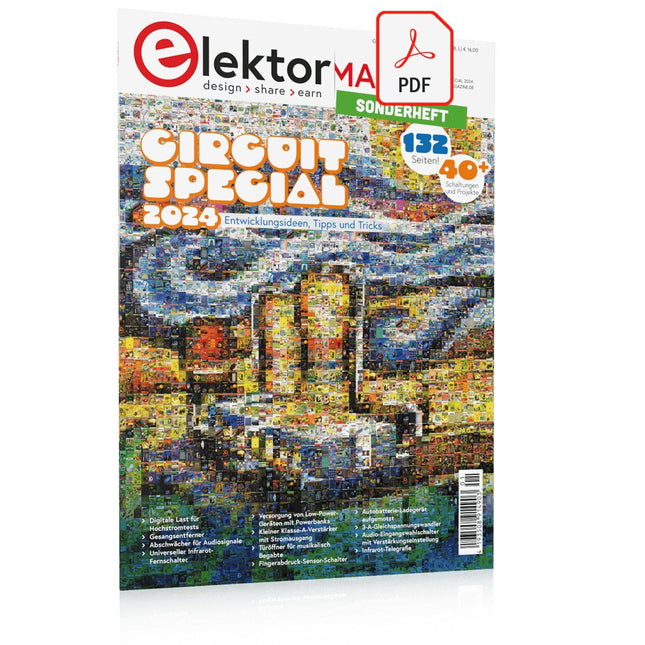
Diese Ausgabe steht allen GOLD- und GREEN-Mitgliedern auf der ElektorMagazine-Website zum Download bereit!
Sie sind noch kein Mitglied? Hier klicken!
Digitale Last für HochstromtestsVon der Notwendigkeit zur Innovation
GesangsentfernerInstant-Karaoke-Schaltung
Audio-Eingangswahlschalter mit VerstärkungseinstellungSchaltet von Mikrofon- auf Line-Eingänge um
Ladeschaltung für LIR2032Optimierte Ladung = längere Haltbarkeit
Touch-Sensing leicht gemachtEin DIY-Leitfaden für jeden Mikrocontroller
Universeller Infrarot-FernschalterEin neues Leben für alte Fernbedienungen
Mikrocontroller-gesteuerte MuhdoseBovine Klänge mit einem Mikrocontroller erzeugen
USB-Batterieschnittstelle
Stromversorgung von Low-Power-Geräten mit PowerbanksEine Stay-Alive-Lösung
Kleiner Klasse-A-Audioverstärker mit StromausgangLautsprecher mit Strom statt mit Spannung ansteuern
Pseudosymmetrisches ModulHohes Gleichtaktunterdrückungsverhältnis trotz asymmetrischen Audioverbindungen
Automatisches Ladegerät für Ni-MH-ZellenFüllen Sie alle Ihre Akkupacks in einem Rutsch auf!
Sicherheit durch thyristor-basierte Strombegrenzung
Fingerabdruck-Sensor-SchalterEin nützliches Gerät zum Identitätsnachweis
3-A-GleichspannungswandlerBessere Nutzung Ihrer Festspannungsquellen
Innovationen aus dem Arduino-Project-HubNeue Projekte aus der Community
Fernkontrolle eines BoilersSpannungs- und Stromdetektion für Netzspannungsleitungen
Abschwächer für AudiosignaleTeil 1. Einstellbar über Jumper
Autobatterie-Ladegerät aufgemotztTeil 1. Wiederverwenden statt wegwerfen!
Eine Platine für „The Blue One“Platine für Alps-Motorpotentiometer mit Rückmeldung
50-Hz-Referenz aus 60-Hz-NetzspannungWie man 50-Hz-Elektronik in 60-Hz-Umgebungen verwendet
Digitale IsolatorenGalvanische Trennung einfach realisieren
Kompakter 12-W-Hi-Fi-MonoverstärkerKlein, aber leistungsstark
LM386-Rampengenerator
DrehstromgeneratorMit Raspberry Pi Pico
Türöffner für musikalisch Begabte
Elektor-Klassiker: Surf-SynthesizerMeereswassersporthintergrundgeräuschgenerator (Mwsh3g)
Autobatterie-Ladegerät aufgemotztTeil 2. Ladesteuerung analog und digital
LampenstromüberwachungMit Raspberry Pi Pico
Infrarot-Telegraphie
Fnirsi SWM-10Reparatur von Batteriepacks mit tragbarem intelligentem Punktschweißgerät
Stereo-Audio-Codec für ESP32 und Co.Keine Angst vor Audio-Messtechnik
Die Kunst des LötensLötzinn-Techniken für einwandfreie Verbindungen
Abschwächer für AudiosignaleTeil 2. Umschalten per Relais
USB-C-PowerStrom aus USB-C-Netzteilen beziehen
Drei Schaltungen mit zwei und drei Zähler-ICs4017-ICs im Zusammenspiel
Aktive Bauelemente – Die Diode
Timer für extrem lange VerzögerungenEinstellen und vergessen!
Klinke rein, Klinke rausEine nützlicher Anschluss für Audioschaltungen
ESP32 mit nur einer Lithium-Zelle versorgen
Hexadoku
Elektor GREEN and GOLD members can download their digital edition here.
Not a member yet? Click here.
USB Measurement AdapterTesting Current and Signal Quality of USB Ports
4...20 mA Current Output for Arduino UnoA Reliable, EMI-Insensitive Current Loop Interface
Vacuum Cleaner Automatic ControlKeep Your Tools’ Work Area Clean
DDS Generator with ATtiny
Opamp-Tester V2New PCB – Now Also Suitable for SMDs
550-mW “Lamp” Audio AmplifierGet the Warm Sound of Vacuum Tubes With Ease
Fuse GuardMonitoring a Fuse with a Flashing LED
HQ RIAA PreamplifierGet the Most Out of Your Vinyl Records!
Turntable Speed CalibratorAn Arduino-Based 100–120 Hz Strobe Light Generator
Elektor Classics: video buffer/repeater
Infrared Remote-Controlled DimmerControl Your Halogen or LED Floor Lamp Effortlessly and With Style
How to Use switch…case on Strings in C++/Arduino IDE
Magnet FinderWith a Simple Hall-Effect Sensor
Raspberry Pi Smart Power ButtonA Solution for Raspberry Pi Up to Model 4
Essential Maker TipsProfessional Insights for Everyday Making
Practical Projects with the 555 TimerDC Motor Control and Fast Reaction Challenges
Basic AC-Load-On MonitorSave Energy with a Simple Device
Power Banks in ParallelA Three-Day Continuous Power Solution
VFO Up to 15 MHzAn Implementation With Raspberry Pi Pico
Violin Tuner with ATtiny202
Elektor Classics: video amplifier for B/W television sets
Capacitance Meter20 pF to 600 nF
Quasi-Analog Clockwork Mk IITwo LED Rings for Hours and Minutes
You Can Do Anything You Want(with the Arduino Ecosystem at Your Side)
Neon Lamp Dice
Elektor Classics: RTTY calibrator indicator
Inspiring Hardware Designs for Your ESPs
Elektor Classics: variable 3 A power supply
RGB LEDs with Integrated Control CircuitLight with Precision: ICLEDs Set Standards
Experiment: Towards a Mixed-Signal Theremin?Blending Modern Time-of-Flight Sensors With the Timeless XR2206 Analog Generator
ESP32 Audio Transceiver Board (Part 1)SD Card WAV File Player Demo
Infographics: Circuits and Circuit Design 2025
Small Audio MixerA Simple and Versatile Scalable Design
Smart Staircase Light TimerSave More Money on the Energy Bill!
Smarten Up Your ShuttersControlling Velux Hardware With an ESP32 and MQTT
Solid-State Foot WarmerEnergy-Efficient Comfort
Is the M5Stamp Fly Quadcopter the Next Tello?
Boosting Wi-Fi Range of the ESP32-C3 SuperMiniA Simple and Effective Antenna Mod
ZD-8968 Hot-Air Soldering StationA Budget-Friendly Workhorse or Just Hot Air?
Parking Sensor TesterFinding Defects in the PDC System of a Car
Elektor GREEN en GOLD leden kunnen deze uitgave hier downloaden.
Nog geen lid? Klik hier om een lidmaatschap af te sluiten.
Digitale belasting voor grote stromenvan noodzaak tot innovatie
Stemmenroverinstant karaoke-schakeling
Audio A/B-keuzeschakelaar met versterkingsregelingschakelt tussen microfoon- en lijningangen
Beter laden voor de LIR2032wees lief voor uw knoopcellen
Simpele aanraaksensorenmaak ze zelf – voor elke microcontroller
Universele infraroodschakelaartweede leven voor oude afstandsbedieningen
Microcontroller-gestuurde loeidoosspeelse geluiden met een microcontroller
USB-accu-interface
Low-power apparaten voeden met een powerbankanti-afschakel-schakeling
Kleine klasse-A audioversterker met stroomuitgangstuur luidsprekers aan met stroom in plaats van spanning
Pseudo-symmetrische modulehoge CMRR met asymmetrische audioverbindingen
Automatische NiMH-laderlaad al uw accu’s in één keer!
Thyristorgebaseerde voedingsbeveiliging
Schakelaar met vingerafdruk-sensornuttige identiteitscontrole
DC/DC-converter voor 3 Aeen upgrade voor vaste-spanningsbronnen
Bewaking voor een boilerspannings- en stroomdetectie voor AC-kabels
Verzwakkers voor audiosignalen (1)instelbaar met jumpers
Poets uw acculader op (1)niet weggooien maar ombouwen!
Een print voor ‘de Blauwe’print voor Alps-motorpotmeter met terugkoppeling
50Hz-referentie uit 60Hz-netspanningzo gebruikt u 50Hz-elektronica in 60Hz-landen
Digitale isolatoreneenvoudige realisatie van galvanische isolatie
Compacte 12W-hifi-monoversterkerklein maar krachtig
Zaagtandgenerator met LM386
Driefasen-generatormet Raspberry Pi Pico
Deuropener voor muzikaal getalenteerden
Elektor-klassieker: Surf Synthesizerzeewatersportachtergrondgeluidgenerator (zwsaggg)
Poets uw acculader op (2)niet weggooien maar ombouwen!
Lampstroom-monitormet Raspberry Pi Pico
Infrarood-telegrafie
Fnirsi SWM-10repareer zelf uw accupacks met dit intelligent draagbaar puntlasapparaat
Stereo audio-codec voor ESP32 en co.geen angst voor audio-meettechnologie
Soldeertechniekendoe het meteen goed!
Verzwakkers voor audiosignalen (2)geschakeld met relais
USB-C voedingstroom uit USB-C voedingsadapters
Drie schakelingen met twee en drie teller-IC’s4017’s werken samen
Actieve componenten – de diode
Timer voor extreem lange tijdeninstellen en vergeten!
Jack in en jack uiteen handige insert-optie voor audioschakelingen
ESP32 met één Li-ion-cel
Hexadoku
Elektor GREEN en GOLD leden kunnen deze uitgave hier downloaden.
Nog geen lid? Klik hier om een lidmaatschap af te sluiten.
PIO programmeren op de Raspberry Pi PicoNegen instructies, veel mogelijkheden
AI buiten de browser brengenAI-CLI's gebruiken voor het coderen, compileren en valideren van embedded projecten
De Scrutiny DebuggerDebuggen, visualiseren en testen van code in Embedded C/C++
Sigfox breakout board (1)Een zelfgebouwde radio BoB
Low-Noise voeding (2)Constructie, montage en praktische implementatie
Eenvoudige signaalgenerator met de RP2040Analoge en digitale signalen voor ongeveer €10
De toekomst van slimme huizen verkennen met Matter en Edge AIBieden de nieuwste updates van Matter en de opkomst van Edge AI technici eindelijk de tools om de intelligente, slimme huizen te bouwen die gebruikers zijn beloofd?
Differentiële druksensorenVoorspellend onderhoud in HVAC-systemen
Security by designTechnische basisprincipes beperken storingen
Embedded security is niet langer optioneel
CRA en PQC herzien prioriteiten voor embedded securityWaarom zelfs kleine IoT- en industriële bedrijven een upgradeplan nodig hebben
embedded world 2026Een interview met Benedikt Weyerer, Executive Director embedded world
Praktijkervaring met I3CGebruik van hardware van ST en Microchip
Het BLEnky-projectSnelle prototyping voor Bluetooth Low Energy toepassingen
Pulsbreedtemodulatievan een eenvoudige aan/uit-thermostaat naar een rimpelloos DC-signaal
AudiotronicaOorstrelende elektronica voor zelfbouw
Uit het leven gegrepenRead the f...ing manual!
ESP32 audio transceiver board (Deel 4)Afstemmen van de kloksignalen en een bekabelde versie
2026: An AI OdysseyDe kater van Vibe-Coding in 2025
Symmetrische DC-belastingStatische of dynamische en symmetrische gelijkstroombelasting
Gezichten tellen met MaixCAMEen eenvoudige methode om de omvang van het publiek vast te leggen
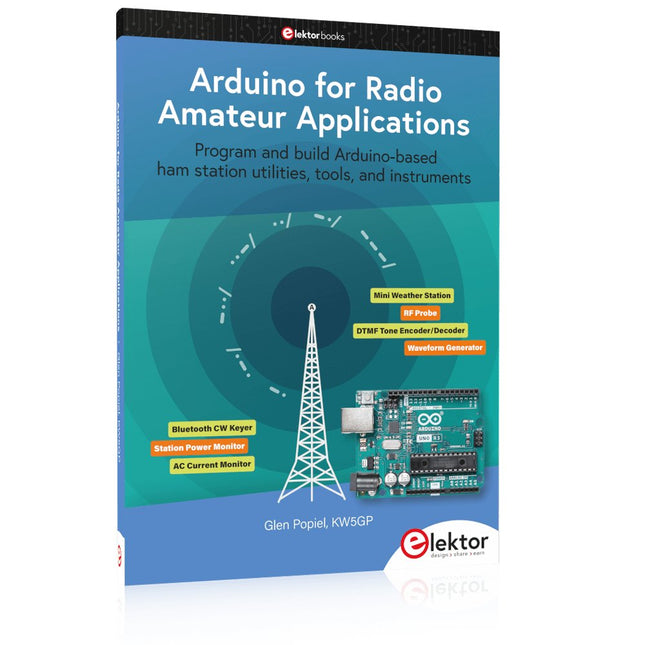
Program and build Arduino-based ham station utilities, tools, and instruments
In addition to a detailed introduction to the exciting world of the Arduino microcontroller and its many variants, this book introduces you to the shields, modules, and components you can connect to the Arduino. Many of these components are discussed in detail and used in the projects included in this book to help you understand how these components can be incorporated into your own Arduino projects. Emphasis has been placed on designing and creating a wide range of amateur radio-related projects that can easily be built in just a few days.
This book is written for ham radio operators and Arduino enthusiasts of all skill levels, and includes discussions about the tools, construction methods, and troubleshooting techniques used in creating amateur radio-related Arduino projects. The book teaches you how to create feature-rich Arduino-based projects, with the goal of helping you to advance beyond this book, and design and build your own ham radio Arduino projects.
In addition, this book describes in detail the design, construction, programming, and operation of the following projects:
CW Beacon and Foxhunt Keyer
Mini Weather Station
RF Probe with LED Bar Graph
DTMF Tone Encoder
DTMF Tone Decoder
Waveform Generator
Auto Power On/Off
Bluetooth CW Keyer
Station Power Monitor
AC Current Monitor
This book assumes a basic knowledge of electronics and circuit construction. Basic knowledge of how to program the Arduino using its IDE will also be beneficial.
DIY LiPo Supercharger BundleGreatScott and Elektor's LiPo Charger, Booster, and Protector
MTheCamA Simple Mini Thermal Camera
Weller WE 1010Soldering Station
electronica Fast Forward 2020 Winners
I2S Test Signal Generator with AVR Microcontroller32-Bit 1-kHz Digital Sine, fs 192 kHz, Level Adjustable from 0 to -110 dB
Control Your Home with Raspberry PiRPi snoops on 433.92 MHz
Simulate Circuits Online
From Life's ExperienceThe Fine Line Between Order and Chaos
Starting Out in ElectronicsEasier Than imagined!
Homebrew CPUsThe Discrete Microcontroller
Connect Your Thermostat with ESPHomeAn Attempt at Doing Home Automation the Right Way
Developer’s ZoneTips & Tricks, Best Practices and Other Useful Information
Small Circuits RevivalFrom the Elektor suggestions box
Raspberry Pi Full StackRPi and RF24 at the heart of a sensor network
Practical ESP32 Multitasking (6)Event Groups
Multi-Channel Power Analyzer: Up to 3 Channels, with Graphic and Alphanumeric Display
Analogue Filter Design (Part 3)Passive Filters
JOY-iT VAX-1030Wireless Measurement Module
New LCR Meter 50 Hz - 2 MHz Part 2Operation, Calibration, and Firmware Programming
Error AnalysisTips on Voltage Regular Circuits, PCB Design, and More
The Open Hardware ObservatoryCommunity-Based Open Source Hardware Assessment
Java on the Raspberry PiAn Interview with Frank Delporte
Data Analysis and Artificial Intelligence in PythonInterpreting Real Data with NumPy, pandas and scikit-learn
Project 2.0Corrections, Updates and Readers’ letters
Getting to Know the Parallax Propeller 2 (Part 1)An Introduction
Hexadoku