
Suchergebnisse für "voltera OR drill OR bit OR set"
-

Elektor Digital Elektor September/Oktober 2020 (PDF)
USB-S/PDIF-INTERFACEdigitale audio-uitgang voor computer, laptop, tablet of smartphone MULTITASKING MET DE ESP32 (4)binaire semaforen TIMER VOOR HOOFDTELEFOONVERSTERKER DRAADLOZE TEMPERATUURSENSOR VOOR NIXIE BARGRAPH THERMOMETERmultifunctionele oplossing met ontwerptruc MULTITASKING MET DE RASPBERRY PIvoorbeeld: controller voor verkeerslichten OPEN-NETWERK WEERSTATION MK2deel 2: software DOMOTICA HELEMAAL NIET MOEILIJKmet ESPHome, Home Assistant & MySensors DE GEHEUGEN-BEELDBUISvreemde onderdelen AI VOOR BEGINNERS (3)een eigen neuraal netwerk PIC’S PROGRAMMEREN: VAN DE GROND AFeen sinus in assembler IKEA-HACKeen goedkope IKEA-lamp ‘tunen’ met NeoPixel-LED’s en WLAN LAAT JE HOBBYPROJECT NIET IN EEN HOEKJE VERSTOFFENaanbodzijde-tijdmanagement en spiraalontwikkeling ALLE BEGIN......hoeft niet zo moeilijk te zijn OOST WEST LAB BESTeen blik in het allerheiligste, waar interessante projecten worden geboren DE 8-BIT MICROCONTROLLER – EN DAARNAvraaggesprek met Tam Hanna WIE HET KLEINE NIET EERTuit de ideeënbus van Elektor REVIEW: OWON OW18E BLUETOOTH-MULTIMETER INTERACTIEFcorrecties & updates || vragen & antwoorden UIT HET LEVEN GEGREPENloodvrij solderen en Europese regelneverij VEELBELOVEND PROJECT: NIEUWE LCR-METER 50 HZ...2 MHZprecisie en gebruiksgemak ERROR ANALYSIStips en trucs: FMEA, grote stromen en meer DEVELOPER’S ZONEtips & trucs, vakkunstigheden en andere nuttige informatie REVIEW: SIGLENT SDL1020X-E ELEKTRONISCHE BELASTING HOOGSPANNINGSVOEDING MET KARAKTERISTIEKENSCHRIJVERspanningen tot 400 V instellen en karakteristieken van buizen en transistoren meten HEXADOKU SEPTEMBER/OKTOBER 2020 ANALOGE ELEKTRONICA ONTWERPENcase-study #2 – deel 1: theorie van analoge filters SCHEMA’S TEKENEN
€ 9,95
-

Elektor March/April 2025 (EN)
Elektor GREEN and GOLD members can download their digital edition here. Not a member yet? Click here. The RISC-V Open-Source Processor Architecture16 Boards and MCUs You Should Know An FPGA-Based Audio Player with Equalizer (1)Mixing Digital Audio with an Arduino MKR Vidor 4000 Laser Head for Pico-Based Sand ClockDrawing with Light Enter the STM32 Edge AI Contest A Multi-Sensor Environmental Monitoring System for PlantsWireless Measurement of Water Supply and Light Conditions Maixduino AI-Powered Automatic DoormanFace Detection with a Camera Embedded Electronics 2024AI Is Set to Redefine the Industry Charge-Based In-Memory Compute at EnCharge AI AI Inferencing at 10 Times Lower Power and 20 Fold Lower Cost Click Board Helps Develop and Train ML Models for Vibration Analysis The Elektor Mini-WheelieA Self-Balancing Robot Kit MCU, I See YouMCUViewer Open-Source Multiplatform Debugging Tool USB 2.0 IsolatorElectrically Isolated Connections for USB Devices Intervention Before DamagePredictive Maintenance in Practice SPoE – Electromagnetic CompatibilitySingle-Pair with Power-Over-Ethernet Through the Eyes of EMC Color TV: A Wonder of Its TimeCreating a New World ECG Graph MonitoringAn Implementation with Hexabitz Modules and an STM32CubeMonitor The Battle for AI at the Edge HaLow Hits Record 16-km Wi-Fi Distance at 900 MHz First CHERI RISC-V Embedded Chip and Early Access Programme Third-Generation Wildfire Detection Uses Satellite Links From Life’s ExperienceChoice Overload Starting Out in Electronics……Continues Filtering and Controls Tone Quasi-Analog ClockworkA Remake of an Elektor Classic A Modular Approach to Sensor TestingThe ESP32-S3-Based Sensor Evaluation Board 2025: An AI OdysseyThe Rise of Foundation Models and Their Role in Democratizing AI Raspberry Pi Standalone MIDI Synthesizer (1)Preparing a Platform for Some Edge AI Experiments Err-lectronicsCorrections, Updates, and Readers’ Letters Universal AI RISC-V Processor Does It All — CPU, GPU, DSP, FPGA CEO Interview: Ventiva’s Thin and Cool Tech Dual-Core Programming with a Raspberry Pi PicoVenture Into the World of Parallel Programming
€ 10,95
-

Elektor Digital Elektor July/August 2024 (PDF)
Elektor GREEN and GOLD members can download their digital edition here. Not a member yet? Click here. Small Thermal Imaging CameraAn Arduino UNO-Based DIY Solution Project Update #3: ESP32-Based Energy MeterIntegration and Testing with Home Assistant 2024: An AI OdysseyEnhancing Object Detection: Integrating Refined Techniques Raspberry Pi Goes AINew Kit Incorporates M.2 HAT+ With AI Accelerator Weather Station SensorsWhich One Should You Choose? AI-Based Water Meter Reading (1)Get Your Old Meter Onto the IoT! A GSM AlarmHarnessing GSM Technology for Remote Garage Safety Low-Power Thread Devices Optimized and ScrutinizedLow Power … Low Effort? From Life’s ExperienceThe Gender Gap DIY Cloud ChamberMaking Invisible Radiation Visible SparkFun Thing Plus MatterA Versatile Matter-Based IoT Development Board IoT RetrofittingMaking RS-232 Devices Fit for Industry 4.0 Enabling IoT with 8-Bit MCUs Technology Drives SustainabilityAdvances Lead to More Efficient Use of Energy in Many Applications AWS for Arduino and Co. (1)Using AWS IoT ExpressLink in Real Life Airflow Detector Using Arduino OnlyNo External Sensors Needed! Water Leak DetectorConnected to Arduino Cloud CrystalsPeculiar Parts, the Series Universal Garden LoggerA Step Towards AI Gardening Analog 1 kHz GeneratorSine Waves with Low Distortion Miletus: Using Web Apps OfflineSystem and Device Access Included! From 4G to 5GIs It Such an Easy Step? Starting Out in Electronics……Balances Out
€ 7,50
-
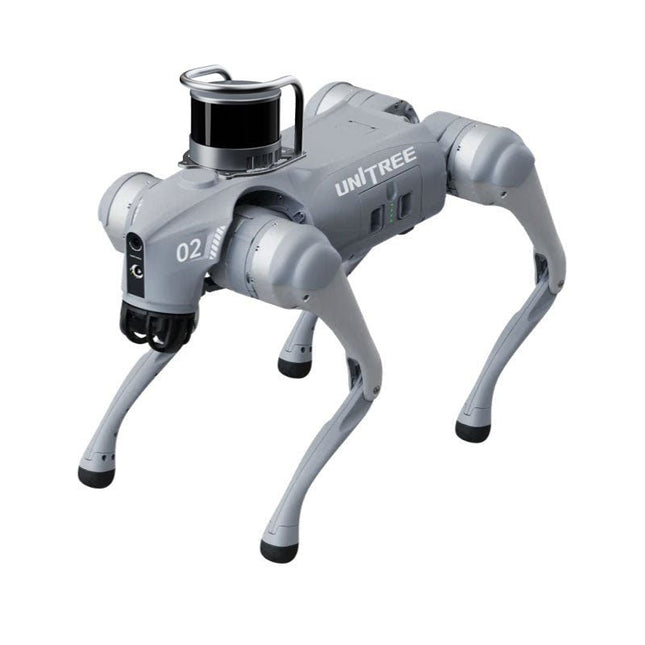
Unitree Unitree Go2 Edu Plus 3D LiDAR Vierbeiniger Roboter
Vorübergehende Verzögerung bei der Lieferung von Unitree-Robotern Wie viele andere Lieferanten erleben auch wir derzeit Verzögerungen bei der Lieferung von Unitree-Robotern. Eine Sendung unseres Lieferanten steckt derzeit im Zoll fest, was leider zu späteren Lieferungen bereits aufgegebener Bestellungen führt. Wir arbeiten aktiv mit unserem Lieferanten daran, dieses Problem zu lösen, und erwarten in Kürze mehr Klarheit. Leider können wir derzeit jedoch keine festen Zusagen machen. Eine neue Lieferung ist bereits auf dem Weg, wird aber noch etwas Zeit in Anspruch nehmen. Da auch andere Lieferanten mit denselben Herausforderungen konfrontiert sind, ist ein Wechsel zu einem anderen Anbieter derzeit keine schnellere Lösung. Unsere oberste Priorität ist die Lieferung der bestehenden Bestellungen. Falls Sie Fragen haben oder Ihre Bestellung aktualisieren möchten, zögern Sie bitte nicht, unseren Kundenservice zu kontaktieren. Wir halten Sie über weitere Entwicklungen auf dem Laufenden. Die Unitree Go2-Serie besteht aus vierbeinigen Robotern für die Forschung und Entwicklung. Entwicklung autonomer Systeme in den Bereichen Mensch-Roboter-Interaktion (HRI), SLAM & Transport. Aufgrund der vier Beine und des 12DOF kann dieser Roboter eine Vielzahl unterschiedlicher Gelände bewältigen. Der Go2 verfügt über einen perfektionierten Antrieb & Power-Management-System, das eine Geschwindigkeit (je nach Ausführung) von bis zu 3,7 m/s oder 11,88 km/h bei einer Betriebszeit von bis zu 4 Stunden ermöglicht. Darüber hinaus verfügen die Motoren über ein Drehmoment von 45 N.m am Körper/Oberschenkel und an den Knien, was auch Sprünge oder Backflips ermöglicht. Features Super-Erkennungssystem: 4D LIDAR L1 Maximale Laufgeschwindigkeit: ca. 5 m/s Spitzengelenkdrehmoment: ca. 45 Nm Wireless-Modul: WiFi 6/Bluetooth/4G Extrem lange Akkulaufzeit: ca. 2-4 Stunden Intelligentes Side-Follow-System: ISS 2.0 Technische Daten Tracking-Modul: Ferngesteuertes oder automatisches Tracking Frontkamera: Bildübertragungsauflösung 1280 x 720, Sichtfeld 120°, Ultraweitwinkelobjektiv sorgt für satte Klarheit Frontlampe: Erhellt den Weg vor Ihnen hell 4D LiDAR L1: 360°x90° omnidirektionales Ultraweitwinkel-Scannen ermöglicht automatisches Ausweichen mit kleinem toten Winkel und stabilen Betrieb 12 Kniegelenkmotoren: Stark und kraftvoll, schön und einfach, Brandy neues visuelles Erlebnis Intercom-Mikrofon: Effektive Kommunikation ohne Szenario-Einschränkungen Selbstaufrollender Gurt: Einfaches Tragen und Laden von Gegenständen Stabiler, leistungsfähiger mit fortschrittlichen Geräten: 3D LiDAR, 4G-ESIM-Karte, WiFi 6 mit Dualband, Bluetooth 5.2 für stabile Verbindung und Fernsteuerung Leistungsstarker Rechenkern: Motion Controller, Hochleistungs-ARM-Prozessor, verbesserter Al-Algorithmus-Prozessor, externes ORIN NX/NANO Intelligenter Akku: Standard 8000-mAh-Akku, langlebiger 15000-mAh-Akku, Schutz vor Übertemperatur, Überladung und Kurzschluss. Lautsprecher für die Musikwiedergabe: Hören Sie Musik nach Lust und Laune Unitree Go2-Varianten Der Go2 überzeugt nicht nur durch seine technischen Fähigkeiten, sondern auch durch ein modernes und schlankes Design, das ihm einen futuristischen Look verleiht und ihn zu einem echten Hingucker macht. Der Go2 Air ist speziell für Demos und Präsentationen konzipiert. Mit seinen Grundmerkmalen bietet es eine solide Grundlage, um die Bewegungsfähigkeiten und Funktionalität eines vierbeinigen Roboters zu demonstrieren. Wichtig: Der Go2 Air wird ohne Controller geliefert. Dies kann optional erworben werden. Mit einer leistungsstarken 8-Core-Hochleistungs-CPU bieten Pro und Edu beeindruckende Rechenleistung, die für komplexe Aufgaben und anspruchsvolle Berechnungen erforderlich ist. Dies ermöglicht eine schnellere und effizientere Datenverarbeitung und macht den Pro und Edu zu einem zuverlässigen Partner für Ihre Projekte. Ab der Edu-Version ist der Go2 programmierbar und eröffnet endlose Möglichkeiten für die Entwicklung und Erforschung eigener Robotikanwendungen. Der Go2 ist außerdem in der Lage, eine Stufenhöhe von bis zu 14 cm zu bewältigen. Dies macht es zu einem idealen Werkzeug für Forschung, Ausbildung und den Einstieg in die Welt der Robotik. Der Go2 Edu wird mit einer Fernbedienung geliefert, die Ihnen eine einfache und intuitive Steuerung ermöglicht. Außerdem erhalten Sie eine Dockingstation mit beeindruckender Rechenleistung von 100 TOPS, die mit leistungsstarken KI-Algorithmen ausgestattet ist und Ihnen technischen Support bietet. Go2 Edu ist mit einem leistungsstarken 15000 mAh-Akku ausgestattet, der ihm eine beeindruckende Laufzeit von bis zu 4 Stunden ermöglicht. Diese lange Betriebszeit ermöglicht es dem Roboter, längere Erkundungsmissionen durchzuführen und anspruchsvolle Aufgaben zu erledigen. Go2 Edu Plus 3D LiDAR wird mit einem leistungsstarken Hesai XT16 3D LiDAR ausgeliefert. Dieser LiDAR-Sensor ermöglicht dem Roboter eine präzise dreidimensionale Wahrnehmung seiner Umgebung und ermöglicht so eine reibungslose Navigation und intelligente Hindernisvermeidung. Modellvergleich Air Pro Edu/Edu Plus Abmessungen (stehend) 70 x 31 x 40 cm 70 x 31 x 40 cm 70 x 31 x 40 cm Abmessungen (hockend) 76 x 31 x 20 cm 76 x 31 x 20 cm 76 x 31 x 20 cm Material Aluminiumlegierung + hochfester Kunststoff Aluminiumlegierung + hochfester Kunststoff Aluminiumlegierung + hochfester Kunststoff Gewicht (mit Akku) ca. 15 kg ca. 15 kg ca. 15 kg Spannung 28~33,6 V 28~33,6 V 28~33,6 V Spitzenleistung ca. 3000 W ca. 3000 W ca. 3000 W Nutzlast ≈7 kg (MAX ~ 10 kg) ≈8 kg (MAX ~ 10 kg) ≈8 kg (MAX ~ 12 kg) Geschwindigkeit 0~2.5 m/s 0~3.5 m/s 0~3.7 m/s (MAX ~ 5 m/s) Max. Steigfallhöhe ca. 15 cm ca. 16 cm ca. 16 cm Max. Steigwinkel 30° 40° 40° Basisrechenleistung N/A 8-Kern-Hochleistungs-CPU 8-Kern-Hochleistungs-CPU Aluminium-Kniegelenkmotor 12 Satz 12 Satz 12 Satz Gelenkinterne Schaltung (Knie) ✓ ✓ ✓ Joint Heat Pipe Kühler ✓ ✓ ✓ Bewegungsbereich Körper: −48~48° Körper: −48~48° Körper: −48~48° Oberschenkel: −200°~90° Oberschenkel: −200°~90° Oberschenkel: −200°~90° Schaft: −156°~−48° Schaft: −156°~−48° Schaft: −156°~−48° Max. Drehmoment N/A ca. 45 N.m ca. 45 N.m Super-Weitwinkel 3D-LiDAR ✓ ✓ ✓ Wireless Vektorpositionierungs-Tracking-Modul N/A ✓ ✓ HD-Weitwinkelkamera ✓ ✓ ✓ Fußende-Kraftsensor N/A N/A ✓ Grundlegende Aktion ✓ ✓ ✓ Auto-Skalierband N/A ✓ N/A Aktualisiertes intelligentes OTA ✓ ✓ ✓ RTT 2.0 Bildübertragung ✓ ✓ ✓ App Basic Fernsteuerung ✓ ✓ ✓ App-Daten anzeigen ✓ ✓ ✓ App Grafisches Programm ✓ ✓ ✓ Frontlampe (3 W) ✓ ✓ ✓ WiFi 6 mit Dualband ✓ ✓ ✓ Bluetooth 5.2/4.2/2.1 ✓ ✓ ✓ 4G-Modul N/A CN/GB CN/GB Sprachunktion N/A ✓ ✓ Musikwiedergabe N/A ✓ ✓ ISS 2.0 Intelligentes Side-Follow-System N/A ✓ ✓ Intelligente Erkennung und Vermeidung ✓ ✓ ✓ Sekundäre Entwicklung N/A N/A ✓ Manuelle Steuerung Optional Optional ✓ Modul mit hoher Rechenleistung N/A N/A Edu: 40 TOPS Rechenleistung Edu Plus: 100 TOPS Rechenleistung NVIDIA Jetson Orin (optional) Intelligente Batterie Standard (8000 mAh) Standard (8000 mAh) Lange Lebensdauer (15000 mAh) Akkulaufzeit 1-2 Stunden 1-2 Stunden 2-4 Stunden Ladegerät Standard (33,6 V, 3,5 A) Standard (33,6 V, 3,5 A) Schnellladung (33,6 V, 9 A) Lieferumgang 1x Unitree Go2 Edu Plus 1x Hesai XT16 3D LiDAR 1x Unitree Go2 Fernbedienung 1x Unitree Go2 Akku (15000 mAh) 1x Unitree Dockingstation mit 100 TOPS Rechenleistung Downloads Documentation iOS/Android apps GitHub
€ 20.599,00
Bestpreis
-
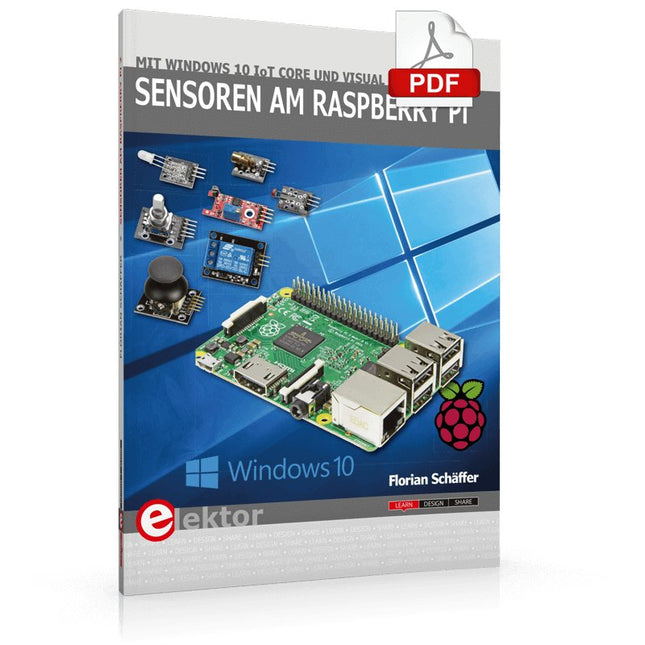
Elektor Digital Sensoren am Raspberry Pi (PDF)
Dieses Buch richtet sich an jeden, der seinen Raspberry Pi mit dem Windows 10 IoT Core betreiben will. Wie das geht, zeigt der Autor mit dem Entwicklungssystem Visual Studio und Visual Basic als Programmiersprache. Inzwischen gibt es eine große Auswahl an kleinen Sensor-Modulen, die problemlos an den Raspberry Pi angeschlossen werden können – auch wenn sie mitunter für andere Systeme beworben werden, wie etwa für den Arduino. Nicht ohne Grund: Einplatinencomputer sind ohne zusätzliche Peripherie für Elektroniker ziemlich nutzlos. Sie stellen zwar die Rechenleistung und ein Betriebssystem bereit, können aber so gut wie gar nicht mit ihrer Umgebung kommunizieren. Damit ein Computer auch Einfluss auf seine Umwelt nehmen kann, sind Sensoren und Aktoren erforderlich, die von einer Software gesteuert werden, die man selber erstellen kann. Als Einstieg in die Materie wird in diesem Buch auf das auch bei Elektor erhältliche 37 Module umfassende Sensor-Kit zurückgegriffen. In diesem populären Set sind die Sensoren auf einer kleinen Platine montiert und mit Steckverbindern ausgestattet, was den Anschluss via Breadboard oder Drahtbrücken vereinfacht. Mit den auch für Einsteiger einfach anzuwendenden Sensor-Modulen lassen sich schnell erste Erfolge erzielen, ohne dass man groß in die Materie der Elektronik einsteigen muss. Die Funktionsweise und Beschaltung der einzelnen Sensoren wird ausführlich erklärt und ihre Verwendung durch die gut dokumentierten Visual Basic-Beispielprogramme leicht nachvollziehbar gemacht.
€ 29,80
Mitglieder: € 26,82
-

Elektor Digital Elektor May/June 2020 (PDF) EN
Open-Network Weather Station Mk.2Part 1: Introduction and hardware elements Artificial Intelligence for Beginners (1)Object recognition using the Maixduino board Universal Triac Control Module with ATmegaSwitch and dim a variety of loads GitHub For DummiesHow to download something from GitHub My IoT Button: A Button for the WebPart 2: Prototyping with board and cloud TMS0280 Speech SynthesizerPeculiar Parts, the series InteractiveCorrections & Updates || Questions & Answers BASIC for the ESP32/ESP8266 (2)An hourglass with the ESP8266 and Annex WiFi RDS Developer's ZoneTips & Tricks, Best Practices and Other Useful Information BalBot: a Self-Balancing RobotModern acceleration sensors ease the construction process Starting Out in Electronics (3)Easier than imagined! Small Circuits RevivalCapita Selecta from the Elektor Project Suggestions Box Tamper-Evident BoxSend data securely through postal services Elektor New Precise Nixie Clock RevisitedAn engineering bulletin for enthusiastic users new and old Practical ESP32 Multitasking (3)Software timers SigFox and the IoT (4)Setting up a dashboard Start-Up Update: The Elektor Investment Program Review: Joy-IT HD35 Electronic USB LoadTest & verify USB power performance CAN Bus + Arduino for Solar PV Cell MonitoringDetect and locate serviceable panels in large arrays Analogue Electronics Design (3)Case Study #1 — Section 3: Preamplifier response optimization and trade-offs Inexpensive E-ScooterHow does Lidl's "road approved" 300 euro E-scooter perform? Steeped in ElectronicsLead-free soldering and EU regulatory zeal Lab, Sweet LabA glimpse of The Holy Place — no unauthorized entry. Review: The PeakTech 6080 A Lab Power SupplyA neat lab PSU for not much money A Big ChallengeSafe products in the IoT era Elektor 1.2 GHz Multifunction Frequency Meter (1992/93)Crossing the magic 1 GHz border Hexadoku
€ 7,50
-

SDRplay SDRplay RSPdx-R2 Single-Tuner 14-Bit SDR-Empfänger (1 kHz bis 2 GHz)
Der SDRplay RSPdx-R2 ist ein breitbandiger, voll ausgestatteter Single-Tuner 14-Bit-SDR-Empfänger, der das gesamte HF-Spektrum von 1 kHz bis 2 GHz abdeckt und bis zu 10 MHz Spektrumssichtbarkeit bietet. Er verfügt über drei Antennenanschlüsse, von denen zwei mit SMA-Steckern den gesamten Bereich von 1 kHz bis 2 GHz abdecken und der dritte mit einem BNC-Stecker bis 200 MHz arbeitet. Der RSPdx-R2 ist eine verbesserte Version des RSPdx mit weiteren Designverbesserungen für den Einsatz bei Frequenzen unter 2 MHz. In einem robusten Stahlgehäuse untergebracht, bietet der RSPdx-R2 zusätzlich zur Funktionalität des RSP1B drei softwareseitig wählbare Antenneneingänge und einen externen Takteingang. Er bietet hervorragende Leistung im HF- und VHF-Bereich bis 2 GHz. Der RSPdx-R2 unterstützt außerdem einen "HDR-Modus", der für die anspruchsvollen Empfangsbedingungen unter 2 MHz optimiert ist. In Verbindung mit der SDRplay-Software bietet der RSPdx-R2 einen speziellen HDR-Modus (High Dynamic Range) für den Empfang in ausgewählten Bändern unter 2 MHz. Der HDR-Modus bietet eine verbesserte Intermodulationsleistung und weniger Störsignale für diese anspruchsvollen Bänder. Features Deckt alle Frequenzen von 1 kHz über VLF, LF, MW, HF, VHF, UHF und L-Band bis 2 GHz lückenlos ab Empfang, Überwachung und Aufzeichnung von bis zu 10 MHz Spektrum auf einmal Wesentlich verbesserte Leistung unterhalb von 2 MHz – verbesserter Dynamikbereich und Selektivität Per Software wählbare Auswahl von 3 Antennenanschlüssen Verbesserte Fähigkeit, mit extrem starken Signalen umzugehen Externer Takteingang für Synchronisationszwecke oder Anschluss an GPS-Referenztakt für zusätzliche Frequenzgenauigkeit Hervorragender Dynamikbereich für schwierige Empfangsbedingungen Kostenlose Nutzung der Windows-basierten SDRuno-Software, die eine ständig wachsende Anzahl von Funktionen bietet. Starkes und wachsendes Software-Support-Netzwerk Kalibrierte S-Meter/HF-Leistungs- und SNR-Messung mit SDRuno (einschließlich Datenprotokollierung in CSV-Dateien) Dokumentierte API, die die Entwicklung von Demodulatoren oder Anwendungen auf mehreren Plattformen ermöglicht. Anwendungen (Amateur) Hören von Kurzwellenradio Rundfunk-DXing (AM/FM/TV) Panadaptor Flugzeuge (ADS-B und ATC) Slow Scan TV Multi-Amateur-Bandüberwachung WSPR & digitale Modi Wetterfax (HF und Satellit) Satellitenüberwachung Geostationäre Umweltsatelliten Bündelfunk Versorgungs- und Notdienstüberwachung Schneller und effektiver Antennenvergleich Anwendungen (Industrie) Spektrumanalysator Überwachung Drahtlose Mikrofonüberwachung HF-Vermessung IoT-Empfängerkette Signalprotokollierung RFI/EMV-Erkennung Überwachung der Broadcast-Integrität Spektrumüberwachung Leistungsmessung Anwendungen (Bildung/Wissenschaft) Lehre Empfängerdesign Radioastronomie Passives Radar Ionosonde Spektrumanalysator Empfänger für IoT-Sensorprojekte Antennenforschung Technische Daten Frequenzbereich 1 kHz – 2 GHz Antennenanschluss SMA Antennenimpedanz 50 Ohm Stromverbrauch (typisch) 190 mA @ >60 MHz (ohne Bias-T)120 mA @ <60 MHz (ohne Bias-T) USB-Anschluss USB-B Maximale Eingangsleistung +0 dBm kontinuierlich+10 dBm kurzzeitig ADC Abtastraten 2-10,66 MSPS ADC Anzahl der Bits 14 bit 2-6,048 MSPS12 bit 6,048-8,064 MSPS10 bit 8,064-9,216 MSPS8 bit >9,216 MSPS Bias-T 4,7 V100 mA garantiert Referenz 0,5ppm 24 MHz TCXO.Frequenzfehler auf 0,01ppm im Feld trimmbar. Betriebstemperatur −10˚C bis +60˚C Abmessungen 113 x 94 x 35 mm Gewicht 315 g Downloads Datasheet Software RSPdx-R2 vs RSPduo RSPdx-R2 RSPduo Kontinuierlicher Bereich von 1 kHz bis 2 GHz ✓ ✓ Bis zu 10 MHz sichtbare Bandbreite ✓ ✓ 14-Bit-ADC-Siliziumtechnologie plus mehrere Hochleistungs-Eingangsfilter ✓ ✓ Per Software wählbare AM/FM- und DAB-Rundfunkband-Sperrfilter ✓ ✓ 4,7 V Bias-T für die Versorgung eines externen Antennenverstärkers ✓ ✓ Stromversorgung über das USB-Kabel mit einer einfachen Typ-B-Buchse ✓ ✓ 50Ω SMA-Antenneneingang(e) für 1 kHz bis 2 GHz Betrieb (per Software wählbar) 2 2 Zusätzlicher per Software wählbarer Hi-Z-Eingang für bis zu 30 Mhz-Betrieb ✓ Zusätzlicher per Software wählbarer 50-Ω-BNC-Eingang für den Betrieb mit bis zu 200 MHz ✓ Zusätzlicher LF/VLF-Filter für unter 500 kHz ✓ 24 MHz Referenztakt-Eingang (+ Ausgang auf RSPduo) ✓ ✓ Duale Tuner ermöglichen den Empfang auf 2 völlig unabhängigen 2-MHz-Bereichen ✓ Zwei Tuner ermöglichen Diversity-Empfang mit SDRuno ✓ Robustes schwarz lackiertes Stahlgehäuse ✓ ✓ Gesamtleistung unter 2 MHz für MW und LF ++ + Mehrere gleichzeitige Anwendungen + ++ Leistung unter schwierigen Fading-Bedingungen (*mit Diversity-Abstimmung) + *++
€ 258,65
-

Paggen Werkzeugtechnik SMD Starter I – Fertigungslinie für Prototypen
Die Prototypen-Fertigungslinie SMD Starter I besteht aus dem Schablonendrucker TSD240, dem SMD-Bestückungsgerät PlaceMAN und dem Reflow-Ofen 3LHR10. Schablonendrucker SD240 (+ Metallrakel 155 mm) Schablonengröße: max. 175 x 255 mm Platinengröße: max. 180 x 240 mm Gerätegröße: 410 x 270 x 110 mm Gewicht: 6,7 kg inkl. Metallrakel 155 mm inkl. 8 Magnete zum Halten der Leiterplatte, 6 davon mit M3-Madenschraube inkl. transparente Platzierhilfe und Faserschreiber Manuelles SMD-Bestückungsgerät PlaceMAN für Standardbauteile inkl. Vakuumpumpe (ohne Zuführungen, Kamera, Monitor und Dispenser) Ausgestattet mit leichtgängigem Bestückungsarm, Bestückungskopf mit Einhandbedienung, Rotation der Z-Achse und automatischer Vakuumabschaltung, inkl. Leiterplattenhalterung, Vakuumeinheit und 2 Bestückungsnadeln mit Gummisaugern. Kapazität an Feeder (nicht im Lieferumfang enthalten) 2x Feederkassette für 10 x 8 mm Rollen links 4x Feederkassette für Stangenfeeder für jeweils 5 Stangen weiter Zuführsysteme sind innerhalb des Bestückungsbereiches möglich, z. B. Strip-Feeder Stecksystem Abmessungen Grundgerät (LxBxH): 765 x 390 x 210 mm Mit Feederkassette für 10 x 8 mm Rollen (LxBxH): 765 x 390 x 210 mm Mit Feederkassette für 10 x 8 mm Rollen und Feederkassette für Stangenfeeder (LxBxH): 765 x 430 x 210 mm (Höhe kann durch die Stangenlänge variieren) Mit Feederkassette für 10 x 8 mm Rollen inkl. Halter für 10 Rollen und Feederkassette für Stangenfeeder (LxBxH): 765 x 430 x 210 mm (Höhe kann durch die Stangenlänge variieren) Technische Daten Gewicht Grundgerät: ca. 6 kg Verfahrweg der Achsen (x,y,z): 470 x 230 x 15 mm Max. Arbeitsbereich: 380 x 240 mm Max. PCB-Größe: 230 x 360 mm Stromversorgung Netzteil: 230/12 V, 800 mA Stromversorgung Vakuumpumpe: 230 V, 6 W 3LHR10 Reflow-Ofen (programmierbar für bleifreie Lötungen mit manueller Schublade und Tablet-Steuerung) Reflow-Ofen mit IR und Konvektionsheizung. Die erzwungene Heißluftkonvektion sorgt für ein gleichmäßiges Temperaturprofil in der gesamten Kammer. Nach dem manuellen Öffnen der Tür werden die Lüfter eingeschaltet und die gelötete Leiterplatte schnell abgekühlt. Kleiner Reflow-Ofen mit manueller Türöffnung Industrie 4.0 bereit, Bluetooth-Kommunikation + Tablet IR + Konvektionsheizung. Android-Anwendung zur Verbindung mit Tablet oder Smartphone 100 verschiedene Benutzerprogramme Lieferumfang: 3LHR10, Tablet mit App, Schutzhülle für Tablet, 4 Leiterplattenhalter, externes Thermoelement, Handbuch im Tablet Anwendung Schließen Sie den Ofen an die Stromversorgung an und schließen Sie die optional erhältliche Absaugung (3LFE10S) an den Abluftstutzen an. Nach dem ersten Einschalten sucht der Ofen nach einem Tablet oder Smartphone. Wenn beide in der Android-App verbunden sind, wählen Sie die Programmierung des Ofens. Hier sind programmierbare Temperatur und Vorheizzeit sowie Temperatur und andere Daten einzustellen. Registrieren Sie sich mit dem Tablet, um den vollen Umfang der Software nutzen zu können. Wenn der Ofen bereits programmiert ist, kann der Benutzer den Vorgang mit Tasten und Anzeige auf der Vorderseite steuern. Nach Abschluss des Reflow-Vorgangs ertönt ein akustisches Signal. Ein Signal wird auch auf dem Tablet/Smartphone angezeigt. Die Schublade muss nun manuell geöffnet werden. Die Android-Anwendung zeigt Prozessstatus, Zeit und Temperatur oder andere Informationen an. Technische Daten Netzanschluss: 230 V, 50 Hz Maximale Leistung: 3100 W Temperaturen: 50-260°C Abmessungen: 510 x 370 x 340 mm Maximales Gewicht: 16 kg Gitterabmessungen: 350 x 220 mm Maximale Abmessungen der Leiterplatte: 300 x 200 mm Maximale Komponentenhöhe auf der Leiterplatte: 50 mm oben, 30 mm unten Lieferumfang Schablonendrucker TSD240 SMD-Bestückungsgerät PlaceMAN Reflow-Ofen 3LHR10
€ 6.549,00
Bestpreis
-

Elektor Digital The BeagleY-AI Handbook (E-book)
A Practical Guide to AI, Python, and Hardware Projects Welcome to your BeagleY-AI journey! This compact, powerful, and affordable single-board computer is perfect for developers and hobbyists. With its dedicated 4 TOPS AI co-processor and a 1.4 GHz Quad-core Cortex-A53 CPU, the BeagleY-AI is equipped to handle both AI applications and real-time I/O tasks. Powered by the Texas Instruments AM67A processor, it offers DSPs, a 3D graphics unit, and video accelerators. Inside this handbook, you‘ll find over 50 hands-on projects that cover a wide range of topics—from basic circuits with LEDs and sensors to an AI-driven project. Each project is written in Python 3 and includes detailed explanations and full program listings to guide you. Whether you‘re a beginner or more advanced, you can follow these projects as they are or modify them to fit your own creative ideas. Here’s a glimpse of some exciting projects included in this handbook: Morse Code Exerciser with LED or BuzzerType a message and watch it come to life as an LED or buzzer translates your text into Morse code. Ultrasonic Distance MeasurementUse an ultrasonic sensor to measure distances and display the result in real time. Environmental Data Display & VisualizationCollect temperature, pressure, and humidity readings from the BME280 sensor, and display or plot them on a graphical interface. SPI – Voltmeter with ADCLearn how to measure voltage using an external ADC and display the results on your BeagleY-AI. GPS Coordinates DisplayTrack your location with a GPS module and view geographic coordinates on your screen. BeagleY-AI and Raspberry Pi 4 CommunicationDiscover how to make your BeagleY-AI and Raspberry Pi communicate over a serial link and exchange data. AI-Driven Object Detection with TensorFlow LiteSet up and run an object detection model using TensorFlow Lite on the BeagleY-AI platform, with complete hardware and software details provided.
€ 34,95
Mitglieder: € 31,46
-
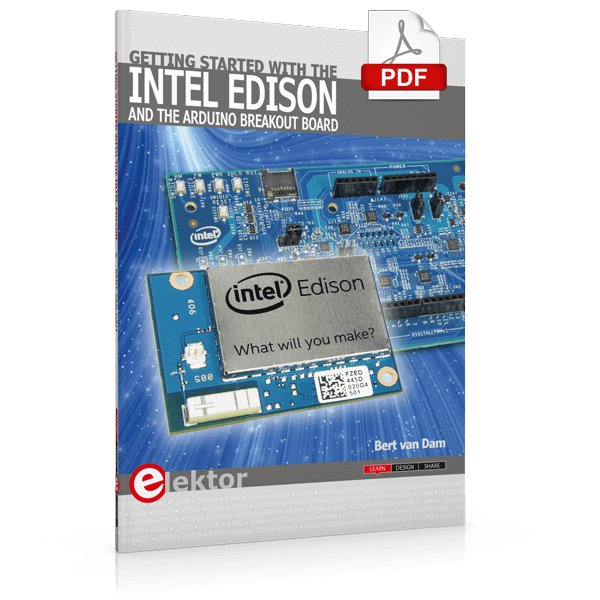
Elektor Digital Getting Started with the Intel Edison (E-book)
The Internet of Things is rapidly gaining interest, and that has fueled the development of the Edison. A tiny computer, the size of a postage stamp, with a lot of power and built-in wireless communication capabilities. In this eBook we will help you get up-to-speed with the Edison, by installing the software both on the Edison as well as on your Windows PC. We will use the Edison Arduino break-out board because it is easy to work with. We will discuss Linux, Arduino C++ and Python, and show examples of how the Edison can interface with other hardware. We will use Wi-Fi and Bluetooth to set up wireless connections, and show you a trick to program sketches over Wi-Fi. Once you have completed this book your Edison will be up and running with the latest software version, and you will have sufficient knowledge of both hardware and software to start making your own applications. You will even be able to program the Edison over USB and wireless both in Arduino C++ and Python. This is not a projects eBook, but a toolbox that will allow you to explore the wonderful world of the Intel Edison!
€ 24,95
Mitglieder: € 22,46
-
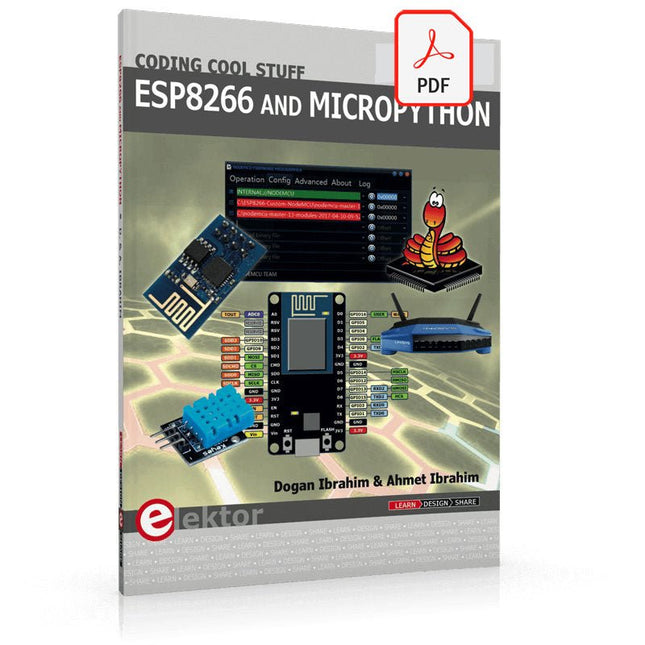
Elektor Digital ESP8266 and MicroPython (E-book)
Recently, the development of a tiny chip called the ESP8266 has made it possible to interface any type of microcontroller to a Wi-Fi AP. The ESP8266 is a low-cost tiny Wi-Fi chip having fully built-in TCP/IP stack and a 32-bit microcontroller unit. This chip, produced by Shanghai based Chinese manufacturer Espressif System, is IEEE 802.11 b/g/n Wi-Fi compatible with on-chip program and data memory, and general purpose input-output ports. Several manufacturers have incorporated the ESP8266 chip in their hardware products (e.g. ESP-xx, NodeMCU etc) and offer these products as a means of connecting a microcontroller system such as the Android, PIC microcontroller or others to a Wi-Fi. The ESP8266 is a low-power chip and costs only a few Dollars. ESP8266 and MicroPython – Coding Cool Stuff is an introduction to the ESP8266 chip and describes the features of this chip and shows how various firmware and programming languages such as the MicroPython can be uploaded to the chip. The main aim of the book is to teach the readers how to use the MicroPython programming language on ESP8266 based hardware, especially on the NodeMCU. Several interesting and useful projects are given in the e-book (pdf) to show how to use the MicroPython in NodeMCU type ESP8266 hardware: Project “What shall I wear today?”: You will be developing a weather information system using a NodeMCU development board together with a Text-to-Speech processor module. Project “The Temperature and Humidity on the Cloud”: You will be developing a system that will get the ambient temperature and humidity using a sensor and then store this data on the cloud so that it can be accessed from anywhere. Project “Remote Web Based Control”: You will be developing a system that will remotely control two LEDs connected to a NodeMCU development board using an HTTP Web Server application.
€ 29,95
Mitglieder: € 26,96
-

Elektor Digital Elektor Circuit Special 2023 PDF (EN)
Elektor GREEN and GOLD members can download their digital edition here. Not a member yet? Click here. Tiny Solar SupplySunlight In, 3.3 V Out Solid-State Stereo Audio SwitchFree of Clicks and Moving Parts Large RGB DigitWith Through-Hole WS2812 LEDs Microphone Preamplifier with 48-V Phantom Power DistributionGreat for Podcasting and Pro Audio Square Wave Generators with Duty Cycle and Frequency ControlsSimple Circuits with CMOS and TTL ICs Simple Dynamic CompressorWith Soft Control and Warm Sound Simple Electronic Lock Active RectifierA solution or 2…40 V at up to 3 A with Reverse Current Suppression On / Off Switching System for Active Boxes Unbalanced/Balanced ConverterWith RFI Filter and DC Protection 2023: An AI OdysseyWhere Did It Come From? Where Is It Going? Speed Controller for Fan or VentilatorWith Manual and Thermostat Modes The Latest from Arduino Project HubNew Projects from the Community Power Overload MonitorMonitor Power Lines for Excessive Current Blink in the Dark Without TransistorsAn Oscillator with Only Two-Terminal Parts Morse Code GeneratorUse It as Beacon or Learning Device! Programmable Video DACHandles Any Format up to RGB888 A T(eeny) Tiny PianoWithout Moving Parts Dual Dice without MCUDual Dice on a Single PCB – Plus Some Design Tricks Electronic Scarecrow Circuits to Amuse, Inspire, and Amaze LC-LP-HA ThermometerAccurate Measurements and a Binary Display THD GeneratorGenerating Distortion on Purpose Thyristor-Based Overtemperature IndicatorElectronic Components Used Unconventionally PTC Fuse Flip-Flop Funny BirdA Chirping Elektor Classic Neon Lamp with a Microcontroller Temperature-Stabilized IC Current SourceNeutralizing the Temperature Drift of Integrated Current Sources Second-Order Adjustable Treble BoostA Special Hearing Aid for the Elderly Edwin Comes HomeA Look Back After 53 Years One-Armed BanditA Simple, Fun, Nostalgic, and Educational Elektor Classic! Simple Digitally Controlled Variable Resistor Water Leak ProtectionSafeguard and Alarm for Water Leaks Eco-Timer with Auto-ShutdownNeeds 0.0 mW in Off Mode! ChatGPT and Arduino ZD MeterMeasuring Z Voltages of Z Diodes ≤ 100 V Servo Tester ESP32 Windows Controller with Free Software Analog and Mixed-Signal ICs by MicrochipLow-Consumption Power Management and Signal Processing Interface StandardsFilter and Surge Protection for the I²C Bus Li-Ion Battery MonitorResidual Charge Indicator Provides Visual Feedback PS/2 Mouse As Rotary Encoder (and More…) Simple Twilight Switchfor Retrofitting Lamps or Installations Water Pump ControllerPrepare Yourself Against Rising Water Levels Solar-Powered Christmas FM Radio BallAll You Want for Christmas Is This Vibration Sensor with RelayTap or Shake to Switch On Continuity TesterSensitive and Unintrusive Power On/Off with a Pushbutton Mini-Drill Power Control 2023A Revision of a Design from 1980 Digital Vibration SensorTurn Vibrations into Precisely Timed Pulses Reverse-Polarity Protection with Low Voltage Drop A Low-Cost Frequency Standard Tiny DCF77 SimulatorAn Accurate Fake-Time Standard The Lilygo T-PicoC3Combines RP2040 and ESP32-C3 with Full Color-TFT Display
€ 7,50


