
Suchergebnisse für "atomstack OR a5 OR laser OR engraver OR 20 OR w"
-

Elektor Digital Arduino & Co – Measure, Control, and Hack (E-book)
Clever Tricks with ATmega328 Pro Mini Boards With a simple Pro Mini board and a few other components, projects that 20 or 30 years ago were unthinkable (or would have cost a small fortune) are realized easily and affordably in this book: From simple LED effects to a full battery charging and testing station that will put a rechargeable through its paces, there’s something for everyone. All the projects are based on the ATmega328 microcontroller, which offers endless measuring, switching, and control options with its 20 input and output lines. For example, with a 7-segment display and a few resistors, you can build a voltmeter or an NTC-based thermometer. The Arduino platform offers the perfect development environment for programming this range of boards. Besides these very practical projects, the book also provides the necessary knowledge for you to create projects based on your own ideas. How to measure, and what? Which transistor is suitable for switching a certain load? When is it better to use an IC? How do you switch mains voltage? Even LilyPad-based battery-operated projects are discussed in detail, as well as many different motors, from simple DC motors to stepper motors. Sensors are another exciting topic: For example, a simple infrared receiver that can give disused remote controls a new lease on life controlling your home, and a tiny component that can actually measure the difference in air pressure between floor and table height!
€ 32,95
Mitglieder: € 29,66
-

Andonstar Andonstar AD407 Pro 7" HDMI Digital-Mikroskop
Das Andonstar AD407 Pro Mikroskop ist für verschiedene Anwendungen wie das Löten von SMDs oder Reparaturarbeiten geeignet. Das Mikroskop hat ein großes verstellbares 7" LCD-Display und wird mit einer Fernbedienung geliefert. Im Vergleich zum AD407 bietet das AD407 Pro einen extra-hohen Ständer, der das Löten von Bauteilen noch einfacher macht. Technische Daten Bildschirmgröße 7 Zoll (17,8 cm) Bildsensor 4 MP Videoausgang UHD 2880x2160 (24fps)FHD 1920x1080 (60fps/30fps)HD 1280x720 (120fps) Videoformat MP4 Vergrößerung Bis zu 300-fach (27" HDMI-Monitor) Bildauflösung Max. 12 MP (4032x3024) Bildformat JPG Fokusbereich Min. 5 cm Bildrate Max. 120fps Videoschnittstelle HDMI Speichermedium microSD-Karte (bis zu 64 GB) Stromversorgung 5 V DC Beleuchtung 2 LEDs mit Standfuß Abmessungen 20 x 18 x 32 cm Lieferumfang 1x Andonstar AD407 Pro Digital-Mikroskop 1x Metallstativ mit 2 LEDs 1x UV-Filter (bereits im Objektiv montiert) 1x IR-Fernbedienung 1x Schalterkabel 1x Netzadapter 1x Schraubenschlüssel 2x Metallclips 1x HDMI-Kabel 1x Manual Downloads Manual Modellvergleich AD407 AD407 Pro AD409 AD409 Pro-ES Bildschirmgröße 7 Zoll (17,8 cm) 7 Zoll (17,8 cm) 10,1 Zoll (25,7 cm) 10,1 Zoll (25,7 cm) Bildsensor 4 MP 4 MP 4 MP 4 MP Videoausgang 2160p 2160p 2160p 2160p Schnittstellen HDMI HDMI USB, HDMI, WiFi USB, HDMI, WiFi Videoformat MP4 MP4 MP4 MP4 Vergrößerung Bis zu 270x Bis zu 270x Bis zu 300x Bis zu 300x Bildauflösung Max. 4032x3024 Max. 4032x3024 Max. 4032x3024 Max. 4032x3024 Bildformat JPG JPG JPG JPG Fokusabstand Min. 5 cm Min. 5 cm Min. 5 cm Min. 5 cm Bildrate Max. 120f/s Max. 120f/s Max. 120f/s Max. 120f/s Speichermedium microSD-Karte microSD-Karte microSD-Karte microSD-Karte PC-Unterstützung Nein Nein Windows Windows Mobile Konnektivität Nein Nein WiFi + Messung WiFi + Messung Stromversorgung 5 V DC 5 V DC 5 V DC 5 V DC Beleuchtung 2 LEDs mit Standfuß 2 LEDs mit Standfuß 2 LEDs mit Standfuß 2 LEDs mit Standfuß Endoskop Nein Nein Nein Ja Abmessungen 20 x 12 x 19 cm 20 x 18 x 32 cm 18 x 20 x 30 cm 18 x 20 x 32 cm Gewicht 1,6 kg 2,1 kg 2,2 kg 2,5 kg
€ 222,53
-

Elektor Digital Elektor Mars/Avril 2025 (PDF) FR
Le téléchargement intégral de ce numéro est disponible pour nos membres GOLD et GREEN sur le site Elektor Magazine ! Pas encore membre ? Cliquez ici. L'architecture de processeur open-source RISC-V16 cartes et MCU à connaître un lecteur audio avec égaliseur basé sur un FPGAMixage audio numérique avec un Arduino MKR Vidor 4000 tête laser pour l’horloge de sable basé sur Raspberry Pi PicoDessiner avec la lumière participez au concours STM32 Edge AI système de contrôle environnemental multi-capteurs pour les plantesMesure sans fil de l'approvisionnement en eau et de la luminosité porte automatique contrôlée par l'IA et MaixduinoReconnaissance faciale avec une caméra l’électronique embarquée en 2024L’IA va redéfinir l’industrie Calcul en mémoire basé sur la charge chez EnCharge AI des opérations d'IA avec 10 fois moins d'énergie et des coûts divisés par 20 Une carte pour le développement et l’entraînement des modèles ML d’analyse des vibrations Elektor Mini-WheelieKit robot gyropode (robot autostabilisé) MCUViewerMCUViewer outil de débogage open source multiplateforme isolateur USB 2.0Isolation éléctrique pour les périphériques USB anticipation et actionApplication pratique de la maintenance prédictive SPoE – compatibilité électromagnétiquePaire unique avec Power-over-Ethernet à travers les yeux d'EMC rétro-techCréer un monde nouveau avec la télévision couleur surveillance ECGavec des modules Hexabitz et STM32CubeMonitor la bataille pour l’IA en périphérie HaLow atteint une distance Wifi record de 16 km à 900 MHz première puce embarquée CHERI RISC-V et programme d'accès anticipé la détection des incendies de forêt de troisième génération utilise des liaisons satellites sur le vifDélices et supplices du choix démarrer en électronique......Filtrage et contrôle de la tonalité Kit d'horloge quasi-analogiqueNouvelle version d'un classique d'Elektor une approche modulaire de test des capteursCarte de test de capteurs basée sur l'ESP32-S3 2025 : une odyssée de l'IAL'essor des modèles de fondation et leur impact sur l'accessibilité de l'IA Synthétiseur MIDI autonome Raspberry Pi (1)Préparation d'une plateforme pour des expériences d’IA en périphérie projet 2.0Corrections, mises à jour et courrier des lecteurs Le RISC-V AI, un processeur à tout faire : CPU, GPU, DSP, FPGA paroles de PDG : fraîcheur, silence et finesse programmation Dual-Core avec le Raspberry Pi PicoLe monde de la programmation parallèle
€ 10,95
-

Elektor March/April 2025 (EN)
Elektor GREEN and GOLD members can download their digital edition here. Not a member yet? Click here. The RISC-V Open-Source Processor Architecture16 Boards and MCUs You Should Know An FPGA-Based Audio Player with Equalizer (1)Mixing Digital Audio with an Arduino MKR Vidor 4000 Laser Head for Pico-Based Sand ClockDrawing with Light Enter the STM32 Edge AI Contest A Multi-Sensor Environmental Monitoring System for PlantsWireless Measurement of Water Supply and Light Conditions Maixduino AI-Powered Automatic DoormanFace Detection with a Camera Embedded Electronics 2024AI Is Set to Redefine the Industry Charge-Based In-Memory Compute at EnCharge AI AI Inferencing at 10 Times Lower Power and 20 Fold Lower Cost Click Board Helps Develop and Train ML Models for Vibration Analysis The Elektor Mini-WheelieA Self-Balancing Robot Kit MCU, I See YouMCUViewer Open-Source Multiplatform Debugging Tool USB 2.0 IsolatorElectrically Isolated Connections for USB Devices Intervention Before DamagePredictive Maintenance in Practice SPoE – Electromagnetic CompatibilitySingle-Pair with Power-Over-Ethernet Through the Eyes of EMC Color TV: A Wonder of Its TimeCreating a New World ECG Graph MonitoringAn Implementation with Hexabitz Modules and an STM32CubeMonitor The Battle for AI at the Edge HaLow Hits Record 16-km Wi-Fi Distance at 900 MHz First CHERI RISC-V Embedded Chip and Early Access Programme Third-Generation Wildfire Detection Uses Satellite Links From Life’s ExperienceChoice Overload Starting Out in Electronics……Continues Filtering and Controls Tone Quasi-Analog ClockworkA Remake of an Elektor Classic A Modular Approach to Sensor TestingThe ESP32-S3-Based Sensor Evaluation Board 2025: An AI OdysseyThe Rise of Foundation Models and Their Role in Democratizing AI Raspberry Pi Standalone MIDI Synthesizer (1)Preparing a Platform for Some Edge AI Experiments Err-lectronicsCorrections, Updates, and Readers’ Letters Universal AI RISC-V Processor Does It All — CPU, GPU, DSP, FPGA CEO Interview: Ventiva’s Thin and Cool Tech Dual-Core Programming with a Raspberry Pi PicoVenture Into the World of Parallel Programming
€ 10,95
-

tinySA tinySA Ultra+ ZS407 Spektrum-Analyzer
The tinySA Ultra+ ZS-407 is a compact, handheld spectrum analyzer and signal generator. Covering 100 kHz to 7.3 GHz in Ultra mode, it lets you visualize and analyze RF signals from HF right through many modern wireless bands – and can even spot signals up to ~12 GHz thanks to harmonic tracking. The intuitive 4-inch resistive touchscreen and rechargeable battery make it great for fieldwork, while features like a built-in signal generator, switchable bandpass filters, step attenuator, USB-PC control and auto-calibration add serious versatility. Features Screen size: 4 inch (480 x 320) Spectrum Analyzer for 0.1-900 MHz or, with Ultra mode enabled up to 7.3 GHz, level calibrated up to 7.3 GHz. Can observe signals up to 12 GHz Signal Generator with sine wave output between 0.1-900 MHz or square wave up to 6.3 GHz or RF test signal output up to 7.3 GHz when not used as Spectrum Analyzer. Switchable resolution bandpass filters from 200 Hz to 850 kHz Built-in 20 dB optional LNA Color display showing max 450 points providing gapless covering up to the full frequency range. MicroSD card slot for storing measurements, settings and screen captures. Technische Daten (Spektrum-Analyzer) Input frequency range from 100 kHz to 900 MHz in normal mode and up to 7.3 GHz with ULTRA mode enabled Input impedance 50 ohm when input attenuation set to 10 dB or more. Selectable manual and automatic input attenuation between 0 dB and 31 dB in 1 dB steps when LNA not active Maximum +/-5V DC input Absolute maximum input level of +6 dBm with 0 dB internal attenuation Absolute maximum short term peak input power of +20 dBm with 30 dB internal attenuation Suggested maximum input power of +0 dBm with internal attenuation in automatic mode For best measurements keep input power below -25 dBm Input Intercept Point of third order modulation products (IIP3) of +15 dBm with 0 dB internal attenuation 1 dB compression point at -1 dBm with 0 dB internal attenuation Power detector resolution of 0.5 dB and linearity versus frequency of ±2 dB below 5.3 GHz, ±5dB between 5.3 GHz and 6 GHz Minimum burst length for correct level measurement at 850 kHz RBW in zero span mode of 50 microseconds Absolute power level accuracy after power level calibration of ±2 dB Built-in optional 20 dB LNA with Noise Figure of 5 dB up to 6 GHz Lowest discernible signal without LNA at 30 MHz using a resolution bandwidth of 30 kHz of -102 dBm Lowest discernible signal with LNA at 30 MHz using a resolution bandwidth of 200 Hz of -145 dBm Frequency accuracy equal to the selected resolution bandwidth Phase noise at 30 MHz of -108 dB/Hz at 100 kHz offset and -115 dB/Hz at 1MHz offset Spur free dynamic range when using a 30 kHz resolution bandwidth of 70 dB Resolution filters with a width of 0.2, 1, 3, 10, 30, 100, 300, 600 and 850 kHz On screen resolution of 51, 101, 145, 290 or 450 measurement points. Scanning speed of over 1000 points/second using largest resolution filters. Automatic optimization of actual scanning points to ensure coverage of the whole scan range regardless of the chosen resolution bandwidth Spur suppression option for assessing if certain signals are internally generated or actually present in the input signal Headphone output for listening to the demodulated audio (AM only). Stereo connector with or without microphone, high impedance is louder, short protected Technische Daten (Signalgenerator) Sine wave output with harmonics below -40 dB of fundamental from 100 kHz to 900 MHz Output level selectable in 1 dB steps between -115 dBm and -19 dBm Above 800 MHz choice of two output modes: Cleanest signal mode: square wave, up to 6 GHz with coarse frequency steps and less accurate output level Highest accuracy mode: reduced harmonics with possibly strong spurs up to 7.3 GHz with frequency resolution equal to below 800 MHz and fine output level steps Level accuracy ±2 dB up to 800 MHz between -72 dBm and -19 dBm, less accuracy below -72 dBm, even less accuracy below -110 dBm Output frequency resolution 57.2 Hz Optional AM or FM modulation frequencies between 50 Hz and 5 kHz (AM) or 1 kHz (FM) or sweep over selectable frequency span AM modulation depth between 10% and 100% FM deviation between 1 kHz and 300 kHz Optional output level sweep over maximum the entire output level range Lieferumfang 1x tinySA Ultra+ ZS407 Spectrum Analyzer 2x SMA connection cables 1x Barrel connector 1x Antenna with SMA connector 1x USB-C cable 1x microSD card (32 GB) Downloads Wiki
€ 192,78
-
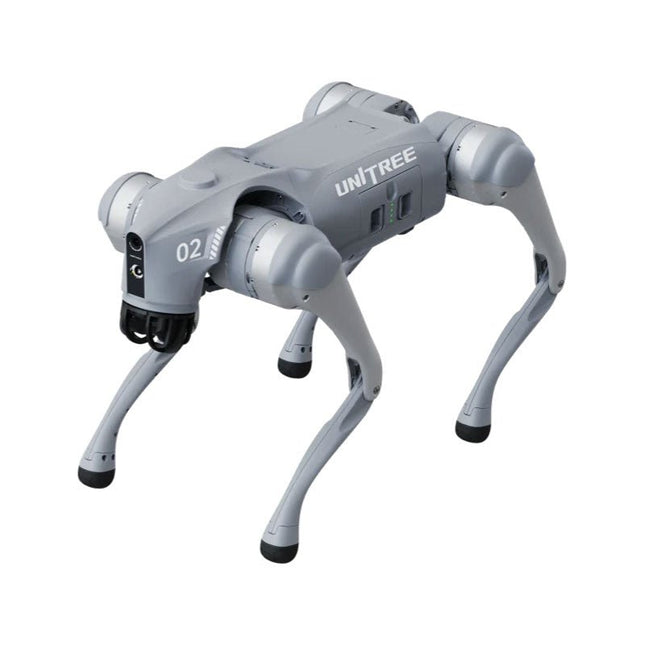
Unitree Unitree Go2 Air Vierbeiniger Roboter
Vorübergehende Verzögerung bei der Lieferung von Unitree-Robotern Wie viele andere Lieferanten erleben auch wir derzeit Verzögerungen bei der Lieferung von Unitree-Robotern. Eine Sendung unseres Lieferanten steckt derzeit im Zoll fest, was leider zu späteren Lieferungen bereits aufgegebener Bestellungen führt. Wir arbeiten aktiv mit unserem Lieferanten daran, dieses Problem zu lösen, und erwarten in Kürze mehr Klarheit. Leider können wir derzeit jedoch keine festen Zusagen machen. Eine neue Lieferung ist bereits auf dem Weg, wird aber noch etwas Zeit in Anspruch nehmen. Da auch andere Lieferanten mit denselben Herausforderungen konfrontiert sind, ist ein Wechsel zu einem anderen Anbieter derzeit keine schnellere Lösung. Unsere oberste Priorität ist die Lieferung der bestehenden Bestellungen. Falls Sie Fragen haben oder Ihre Bestellung aktualisieren möchten, zögern Sie bitte nicht, unseren Kundenservice zu kontaktieren. Wir halten Sie über weitere Entwicklungen auf dem Laufenden. Die Unitree Go2-Serie besteht aus vierbeinigen Robotern für die Forschung und Entwicklung. Entwicklung autonomer Systeme in den Bereichen Mensch-Roboter-Interaktion (HRI), SLAM & Transport. Aufgrund der vier Beine und des 12DOF kann dieser Roboter eine Vielzahl unterschiedlicher Gelände bewältigen. Der Go2 verfügt über einen perfektionierten Antrieb & Power-Management-System, das eine Geschwindigkeit (je nach Ausführung) von bis zu 3,7 m/s oder 11,88 km/h bei einer Betriebszeit von bis zu 4 Stunden ermöglicht. Darüber hinaus verfügen die Motoren über ein Drehmoment von 45 N.m am Körper/Oberschenkel und an den Knien, was auch Sprünge oder Backflips ermöglicht. Features Super-Erkennungssystem: 4D LIDAR L1 Maximale Laufgeschwindigkeit: ca. 5 m/s Spitzengelenkdrehmoment: ca. 45 Nm Wireless-Modul: WiFi 6/Bluetooth/4G Extrem lange Akkulaufzeit: ca. 2-4 Stunden Intelligentes Side-Follow-System: ISS 2.0 Technische Daten Tracking-Modul: Ferngesteuertes oder automatisches Tracking Frontkamera: Bildübertragungsauflösung 1280 x 720, Sichtfeld 120°, Ultraweitwinkelobjektiv sorgt für satte Klarheit Frontlampe: Erhellt den Weg vor Ihnen hell 4D LiDAR L1: 360°x90° omnidirektionales Ultraweitwinkel-Scannen ermöglicht automatisches Ausweichen mit kleinem toten Winkel und stabilen Betrieb 12 Kniegelenkmotoren: Stark und kraftvoll, schön und einfach, Brandy neues visuelles Erlebnis Intercom-Mikrofon: Effektive Kommunikation ohne Szenario-Einschränkungen Selbstaufrollender Gurt: Einfaches Tragen und Laden von Gegenständen Stabiler, leistungsfähiger mit fortschrittlichen Geräten: 3D LiDAR, 4G-ESIM-Karte, WiFi 6 mit Dualband, Bluetooth 5.2 für stabile Verbindung und Fernsteuerung Leistungsstarker Rechenkern: Motion Controller, Hochleistungs-ARM-Prozessor, verbesserter Al-Algorithmus-Prozessor, externes ORIN NX/NANO Intelligenter Akku: Standard 8000-mAh-Akku, langlebiger 15000-mAh-Akku, Schutz vor Übertemperatur, Überladung und Kurzschluss. Lautsprecher für die Musikwiedergabe: Hören Sie Musik nach Lust und Laune Unitree Go2-Varianten Der Go2 überzeugt nicht nur durch seine technischen Fähigkeiten, sondern auch durch ein modernes und schlankes Design, das ihm einen futuristischen Look verleiht und ihn zu einem echten Hingucker macht. Der Go2 Air ist speziell für Demos und Präsentationen konzipiert. Mit seinen Grundmerkmalen bietet es eine solide Grundlage, um die Bewegungsfähigkeiten und Funktionalität eines vierbeinigen Roboters zu demonstrieren. Wichtig: Der Go2 Air wird ohne Controller geliefert. Dies kann optional erworben werden. Mit einer leistungsstarken 8-Core-Hochleistungs-CPU bieten Pro und Edu beeindruckende Rechenleistung, die für komplexe Aufgaben und anspruchsvolle Berechnungen erforderlich ist. Dies ermöglicht eine schnellere und effizientere Datenverarbeitung und macht den Pro und Edu zu einem zuverlässigen Partner für Ihre Projekte. Ab der Edu-Version ist der Go2 programmierbar und eröffnet endlose Möglichkeiten für die Entwicklung und Erforschung eigener Robotikanwendungen. Der Go2 ist außerdem in der Lage, eine Stufenhöhe von bis zu 14 cm zu bewältigen. Dies macht es zu einem idealen Werkzeug für Forschung, Ausbildung und den Einstieg in die Welt der Robotik. Der Go2 Edu wird mit einer Fernbedienung geliefert, die Ihnen eine einfache und intuitive Steuerung ermöglicht. Außerdem erhalten Sie eine Dockingstation mit beeindruckender Rechenleistung von 100 TOPS, die mit leistungsstarken KI-Algorithmen ausgestattet ist und Ihnen technischen Support bietet. Go2 Edu ist mit einem leistungsstarken 15000 mAh-Akku ausgestattet, der ihm eine beeindruckende Laufzeit von bis zu 4 Stunden ermöglicht. Diese lange Betriebszeit ermöglicht es dem Roboter, längere Erkundungsmissionen durchzuführen und anspruchsvolle Aufgaben zu erledigen. Modellvergleich Air Pro Edu/Edu Plus Abmessungen (stehend) 70 x 31 x 40 cm 70 x 31 x 40 cm 70 x 31 x 40 cm Abmessungen (hockend) 76 x 31 x 20 cm 76 x 31 x 20 cm 76 x 31 x 20 cm Material Aluminiumlegierung + hochfester Kunststoff Aluminiumlegierung + hochfester Kunststoff Aluminiumlegierung + hochfester Kunststoff Gewicht (mit Akku) ca. 15 kg ca. 15 kg ca. 15 kg Spannung 28~33,6 V 28~33,6 V 28~33,6 V Spitzenleistung ca. 3000 W ca. 3000 W ca. 3000 W Nutzlast ≈7 kg (MAX ~ 10 kg) ≈8 kg (MAX ~ 10 kg) ≈8 kg (MAX ~ 12 kg) Geschwindigkeit 0~2.5 m/s 0~3.5 m/s 0~3.7 m/s (MAX ~ 5 m/s) Max. Steigfallhöhe ca. 15 cm ca. 16 cm ca. 16 cm Max. Steigwinkel 30° 40° 40° Basisrechenleistung N/A 8-Kern-Hochleistungs-CPU 8-Kern-Hochleistungs-CPU Aluminium-Kniegelenkmotor 12 Satz 12 Satz 12 Satz Gelenkinterne Schaltung (Knie) ✓ ✓ ✓ Joint Heat Pipe Kühler ✓ ✓ ✓ Bewegungsbereich Körper: −48~48° Körper: −48~48° Körper: −48~48° Oberschenkel: −200°~90° Oberschenkel: −200°~90° Oberschenkel: −200°~90° Schaft: −156°~−48° Schaft: −156°~−48° Schaft: −156°~−48° Max. Drehmoment N/A ca. 45 N.m ca. 45 N.m Super-Weitwinkel 3D-LiDAR ✓ ✓ ✓ Wireless Vektorpositionierungs-Tracking-Modul N/A ✓ ✓ HD-Weitwinkelkamera ✓ ✓ ✓ Fußende-Kraftsensor N/A N/A ✓ Grundlegende Aktion ✓ ✓ ✓ Auto-Skalierband N/A ✓ N/A Aktualisiertes intelligentes OTA ✓ ✓ ✓ RTT 2.0 Bildübertragung ✓ ✓ ✓ App Basic Fernsteuerung ✓ ✓ ✓ App-Daten anzeigen ✓ ✓ ✓ App Grafisches Programm ✓ ✓ ✓ Frontlampe (3 W) ✓ ✓ ✓ WiFi 6 mit Dualband ✓ ✓ ✓ Bluetooth 5.2/4.2/2.1 ✓ ✓ ✓ 4G-Modul N/A CN/GB CN/GB Sprachunktion N/A ✓ ✓ Musikwiedergabe N/A ✓ ✓ ISS 2.0 Intelligentes Side-Follow-System N/A ✓ ✓ Intelligente Erkennung und Vermeidung ✓ ✓ ✓ Sekundäre Entwicklung N/A N/A ✓ Manuelle Steuerung Optional Optional ✓ Modul mit hoher Rechenleistung N/A N/A Edu: 40 TOPS Rechenleistung Edu Plus: 100 TOPS Rechenleistung NVIDIA Jetson Orin (optional) Intelligente Batterie Standard (8000 mAh) Standard (8000 mAh) Lange Lebensdauer (15000 mAh) Akkulaufzeit 1-2 Stunden 1-2 Stunden 2-4 Stunden Ladegerät Standard (33,6 V, 3,5 A) Standard (33,6 V, 3,5 A) Schnellladung (33,6 V, 9 A) Lieferumgang 1x Unitree Go2 Air 1x Unitree Go2 Akku (8000 mAh) Downloads Documentation iOS/Android apps GitHub
€ 2.650,00
Bestpreis
-

UFactory UFactory 850 Roboterarm
UFactory 850 ist der leistungsstärkste Roboter mit Leistung auf Industrieniveau. Funktionen 6DoF Nutzlast: 5 kg Reichweite: 850 mm Wiederholgenauigkeit: 0,02 mm Gewicht: 20 kg Anwendungen Glambot Schweißen Schrauben Roboter-Vision Industrielle Produktion Entwickelt sowohl für mobile Plattformen als auch für Ihre Werkbank In der AC-Steuerbox befindet sich ein AC-DC-Adapter, 100-240 V AC ist alles betriebsbereit. Die DC-Steuerbox unterstützt 48-72 V breite Eingänge und passt perfekt zum Batteriesystem Ihrer mobilen Plattform. Flexible Bereitstellung mit sicherer Funktion Hand-Teaching, platzsparend und einfach für mehrere Anwendungen einsetzbar, ohne Ihr Produktionslayout zu ändern. Perfekt für wiederkehrende Aufgaben. Kollisionserkennung ist für alle unsere Cobots verfügbar. Ihre Sicherheit hat immer oberste Priorität. Grafische Oberfläche für einsteigerfreundliche Programmierung Kompatibel mit verschiedenen Betriebssystemen, einschließlich macOS und Windows. Webbasierte Technologie, kompatibel mit allen gängigen Browsern. Drag & Drop, um Ihren Code in wenigen Minuten zu erstellen. Leistungsstarkes und Open-Source-SDK immer zur Hand Das voll funktionsfähige Open-Source-Python/C++-SDK bietet eine flexiblere Programmierung. ROS/ROS2-Pakete sind einsatzbereit. Beispielcodes helfen Ihnen, den Roboterarm reibungslos einzusetzen. Technische Daten UFactory 850 xArm 5 xArm 6 xArm 7 Nutzlast 5 kg 3 kg 5 kg 3,5 kg Reichweite 850 mm 700 mm 700 mm 700 mm Freiheitsgrade 6 5 6 7 Wiederholbarkeit ±0,02 mm ±0,1 mm ±0,1 mm ±0,1 mm Maximale Geschwindigkeit 1 m/s 1 m/s 1 m/s 1 m/s Gewicht (nur Roboterarm) 20 kg 11,2 kg 12,2 kg 13,7 kg Maximale Geschwindigkeit 180°/s 180°/s 180°/s 180°/s Joint 1 ±360° ±360° ±360° ±360° Joint 2 -132°~132° -118°~120° -118°~120° -118°~120° Joint 3 -242°~3.5° -225°~11° -225°~11° ±360° Joint 4 ±360° -97°~180° ±360° -11°~225° Joint 5 -124°~124° ±360° -97°~180° ±360° Joint 6 ±360° ±360° -97°~180° Joint 7 ±360° Hardware Umgebungstemperaturbereich 0-50°C Stromverbrauch Typisch 240 W, maximal 1000 W Eingangsstromversorgung 48 V DC, 20,8 A Fußabdruck Ø 190 mm Materialien Aluminium, Kohlefaser Basis-Connector-Typ M8x4 Reinraum der ISO-Klasse 5 Robotermontage Alle Endeffektor-Kommunikationsprotokoll Modbus RTU Endeffektor-E/A 2x DI / 2x DO / 2x AI / 1x RS485 Kommunikationsmodus Ethernet Lieferumfang 1x UFactory 850 Roboterarm 1x AC-Steuerbox 1x Steuerbox-Stromkabel
€ 11.779,00
Bestpreis
-

Elektor Publishing Arduino & Co – Measure, Control, and Hack
Clever Tricks with ATmega328 Pro Mini Boards With a simple Pro Mini board and a few other components, projects that 20 or 30 years ago were unthinkable (or would have cost a small fortune) are realized easily and affordably in this book: From simple LED effects to a full battery charging and testing station that will put a rechargeable through its paces, there’s something for everyone. All the projects are based on the ATmega328 microcontroller, which offers endless measuring, switching, and control options with its 20 input and output lines. For example, with a 7-segment display and a few resistors, you can build a voltmeter or an NTC-based thermometer. The Arduino platform offers the perfect development environment for programming this range of boards. Besides these very practical projects, the book also provides the necessary knowledge for you to create projects based on your own ideas. How to measure, and what? Which transistor is suitable for switching a certain load? When is it better to use an IC? How do you switch mains voltage? Even LilyPad-based battery-operated projects are discussed in detail, as well as many different motors, from simple DC motors to stepper motors. Sensors are another exciting topic: For example, a simple infrared receiver that can give disused remote controls a new lease on life controlling your home, and a tiny component that can actually measure the difference in air pressure between floor and table height!
€ 39,95
Mitglieder: € 35,96
-

Elektor Digital Elektor March/April 2025 (PDF) EN
Elektor GREEN and GOLD members can download their digital edition here. Not a member yet? Click here. The RISC-V Open-Source Processor Architecture16 Boards and MCUs You Should Know An FPGA-Based Audio Player with Equalizer (1)Mixing Digital Audio with an Arduino MKR Vidor 4000 Laser Head for Pico-Based Sand ClockDrawing with Light Enter the STM32 Edge AI Contest A Multi-Sensor Environmental Monitoring System for PlantsWireless Measurement of Water Supply and Light Conditions Maixduino AI-Powered Automatic DoormanFace Detection with a Camera Embedded Electronics 2024AI Is Set to Redefine the Industry Charge-Based In-Memory Compute at EnCharge AI AI Inferencing at 10 Times Lower Power and 20 Fold Lower Cost Click Board Helps Develop and Train ML Models for Vibration Analysis The Elektor Mini-WheelieA Self-Balancing Robot Kit MCU, I See YouMCUViewer Open-Source Multiplatform Debugging Tool USB 2.0 IsolatorElectrically Isolated Connections for USB Devices Intervention Before DamagePredictive Maintenance in Practice SPoE – Electromagnetic CompatibilitySingle-Pair with Power-Over-Ethernet Through the Eyes of EMC Color TV: A Wonder of Its TimeCreating a New World ECG Graph MonitoringAn Implementation with Hexabitz Modules and an STM32CubeMonitor The Battle for AI at the Edge HaLow Hits Record 16-km Wi-Fi Distance at 900 MHz First CHERI RISC-V Embedded Chip and Early Access Programme Third-Generation Wildfire Detection Uses Satellite Links From Life’s ExperienceChoice Overload Starting Out in Electronics……Continues Filtering and Controls Tone Quasi-Analog ClockworkA Remake of an Elektor Classic A Modular Approach to Sensor TestingThe ESP32-S3-Based Sensor Evaluation Board 2025: An AI OdysseyThe Rise of Foundation Models and Their Role in Democratizing AI Raspberry Pi Standalone MIDI Synthesizer (1)Preparing a Platform for Some Edge AI Experiments Err-lectronicsCorrections, Updates, and Readers’ Letters Universal AI RISC-V Processor Does It All — CPU, GPU, DSP, FPGA CEO Interview: Ventiva’s Thin and Cool Tech Dual-Core Programming with a Raspberry Pi PicoVenture Into the World of Parallel Programming
€ 7,50
-

Elektor Digital Elektor Circuit Special 2025 (PDF) EN
Elektor GREEN and GOLD members can download their digital edition here. Not a member yet? Click here. USB Measurement AdapterTesting Current and Signal Quality of USB Ports 4...20 mA Current Output for Arduino UnoA Reliable, EMI-Insensitive Current Loop Interface Vacuum Cleaner Automatic ControlKeep Your Tools’ Work Area Clean DDS Generator with ATtiny Opamp-Tester V2New PCB – Now Also Suitable for SMDs 550-mW “Lamp” Audio AmplifierGet the Warm Sound of Vacuum Tubes With Ease Fuse GuardMonitoring a Fuse with a Flashing LED HQ RIAA PreamplifierGet the Most Out of Your Vinyl Records! Turntable Speed CalibratorAn Arduino-Based 100–120 Hz Strobe Light Generator Elektor Classics: video buffer/repeater Infrared Remote-Controlled DimmerControl Your Halogen or LED Floor Lamp Effortlessly and With Style How to Use switch…case on Strings in C++/Arduino IDE Magnet FinderWith a Simple Hall-Effect Sensor Raspberry Pi Smart Power ButtonA Solution for Raspberry Pi Up to Model 4 Essential Maker TipsProfessional Insights for Everyday Making Practical Projects with the 555 TimerDC Motor Control and Fast Reaction Challenges Basic AC-Load-On MonitorSave Energy with a Simple Device Power Banks in ParallelA Three-Day Continuous Power Solution VFO Up to 15 MHzAn Implementation With Raspberry Pi Pico Violin Tuner with ATtiny202 Elektor Classics: video amplifier for B/W television sets Capacitance Meter20 pF to 600 nF Quasi-Analog Clockwork Mk IITwo LED Rings for Hours and Minutes You Can Do Anything You Want(with the Arduino Ecosystem at Your Side) Neon Lamp Dice Elektor Classics: RTTY calibrator indicator Inspiring Hardware Designs for Your ESPs Elektor Classics: variable 3 A power supply RGB LEDs with Integrated Control CircuitLight with Precision: ICLEDs Set Standards Experiment: Towards a Mixed-Signal Theremin?Blending Modern Time-of-Flight Sensors With the Timeless XR2206 Analog Generator ESP32 Audio Transceiver Board (Part 1)SD Card WAV File Player Demo Infographics: Circuits and Circuit Design 2025 Small Audio MixerA Simple and Versatile Scalable Design Smart Staircase Light TimerSave More Money on the Energy Bill! Smarten Up Your ShuttersControlling Velux Hardware With an ESP32 and MQTT Solid-State Foot WarmerEnergy-Efficient Comfort Is the M5Stamp Fly Quadcopter the Next Tello? Boosting Wi-Fi Range of the ESP32-C3 SuperMiniA Simple and Effective Antenna Mod ZD-8968 Hot-Air Soldering StationA Budget-Friendly Workhorse or Just Hot Air? Parking Sensor TesterFinding Defects in the PDC System of a Car
€ 9,50
-

Elektor Digital Elektor Maart/April 2025 (PDF) NL
Elektor GREEN en GOLD leden kunnen deze uitgave hier downloaden. Nog geen lid? Klik hier om een lidmaatschap af te sluiten. De open-source processorarchitectuur RISC-V16 boards en MCU's die je moet kennen Een FPGA-gebaseerde audiospeler met equalizer (1)Digitaal audio mixen met een Arduino MKR Vidor 4000 Laserkop voor pico-gebaseerde zandklokTekenen met licht Doe mee aan de STM32 Edge AI Contest Een multi-sensor plantenmonitor-systeemdraadloze meting van watertoevoer en lichtomstandigheden Maixduino AI-gestuurde automatische portiergezichtsdetectie met een camera Embedded Electronics 2024AI gaat de industrie opnieuw vormgeven Lading-gebaseerde in-Memory computing bij EnCharge AI AI-Inferentie met 10 Keer Lager Energieverbruik en 20 Keer Lagere Kosten Click board ondersteunt het ontwikkelen en trainen van ML-modellen voor trillingsanalyse De Elektor Mini-WheelieEen kit voor een zelfbalancerende robot MCU, ik zie jeMCUViewer: open-source multiplatform debugging-tool USB 2.0-isolatorelektrisch geïsoleerde USB-aansluiting Voorkomen is betervoorspellend onderhoud in de praktijk SPoE – Elektromagnetische compatibiliteitSingle pair met Power-over-Ethernet door de ogen van EMC Retro techEen nieuwe wereld met kleurentelevisie ECG-monitorimplementatie met Hexabitz-modules en een STM32CubeMonitor De strijd om AI aan de edge Met HaLow Wi-Fi is een record afstand bereikt van 16 km op 900 MHz Eerste CHERI RISC-V Embedded Chip en Early Access programma Derde generatie bosbranddetectie maakt gebruik van satellietverbindingen Uit het leven gegrepenkeuzestress Alle begin......filtert verder en regelt tonen Quasi-analoog uurwerkwedergeboorte van een Elektor-klassieker Een modulaire sensortesterSensor-evaluatieboard met ESP32-S3 2025: Een AI-OdysseeDe opkomst van foundation modellen en hun rol in het democratiseren van AI Raspberry Pi standalone MIDI-synthesizer (1)voorbereiding van een platform voor enkele edge-AI-experimenten Err-lectronicsCorrecties, updates en brieven van lezers Universele AI RISC-V processor doet ze allemaal - CPU, GPU, DSP, FPGA Interview met de CEO: Ventiva's dunne en coole technologie Dual-core programmeren met een Raspberry Pi Picoduik in de wereld van parallel programmeren
€ 9,95
-

Elektor Digital Elektor November/Dezember 2022 (PDF)
Der vollständige Download dieser Nummer ist für unsere GOLD- und GREEN-Mitglieder auf der Elektor Magazine- Site verfügbar! Nicht noch einmal Mitglied? Klicken Sie hier . Die Spitzenklasse im Elektor-Labor Top-Verstärker der Klasse Fortissimo-100 Vollsymmetrische Audio-Ausgangsebene mit 100/190 W Überprüfung der Frequenz des Quarzes und der abgestimmten Schaltkreise Tipps, gute Praktiken und andere nützliche Informationen Tricks und Kniffe für gedruckte Schaltkreise souder – und so weiter?? Ein Blick auf die moderne Schweißtechnologie Garagentorsteuerung per Bluetooth mit schneller Reaktion Öffnen Sie Ihre Tür mit Ihrem Smartphone idealer Diodenregler Diodenschaltungen mit geringer Leistungsableitung LED-Girlanden mit ESP32 und FreeRTOS clignotantes und funkelndes elektronisch starten ...mit Vergnügen, dann weiter mit den Zener FM/DAB+-Empfänger das Beste aus zwei Welten auf der Lebe Electronica Obscura Drahtloses Verfahren zum Entfernen von Mikroorganismen Rundschreibenstempel und Webserver auf ESP32 Hat COVID-19 der technischen Innovation einen Schlag versetzt? Innovative Komponenten und Lösungen im Jahr 2022 Ersa i-CON TRACE ? die Schweißstation ist für Profis angeschlossen Infografiken warum nutzen wir all diese Informationen? So steuern Sie den E-Paper-Auftritt von Ynvisible Innovation von heute bei InnoFaith Unterhaltung mit Walter Arkesteijn industrielle Automatisierung étrofit IdO einfach und evolutiv Qt für Raspberry Pi Anleitung zur Konfiguration des grafischen Benutzeroberflächen-Frameworks Ultra-Platin-Line-Connectoren erleichtern die Verwaltung von Multi-Sign-Daten Intelligente - Innovative - Rentable Die in Deutschland entwickelten und hergestellten FPGA GateMate Tools zur Unterstützung der Entwicklung zuverlässiger Capture-Geräte schmelzbarer wiederaufladbarer CTP Drôle de Composant, die Serie Isolierter Analogausgang für Arduino Uno Besuch zu Hause ? Entdecken Sie die Thérémine electronica fast forward 2022 – eine Initiative von Elektor Mannschaft und Kalender Radiogoniometrie Wettersensoren ohne sichtbare Drähte nachschlagen Schätzen Sie das interne Geräusch eines integrierten Schaltkreises einfache Methode Ethische Fragen Gestartet durch das WEEF Ethik und Profit, eine Vernunftheirat Gespräch mit Professor Stefan Heinemann WEEF-Index 2023 Filterberechnungssoftware Werkzeuge zur Konzeption analoger Filter Warten Sie, ich habe diesen Fernseher! mit TV-B-Gone Luftqualitätsmessung mit RP2040 elektrisches Terminal Einführung in Python 3 Auszug aus dem Kapitel „Wand-Bibliothek und numerische Bildaufbereitung“ SOLARPUNK ein aufstrebender Avenir Hexadoku
€ 10,95


