
Suchergebnisse für "mendocino OR solar OR motor OR kit"
-

Elektor Digital Controller Area Network Projects with ARM and Arduino (E-book)
This book details the use of the ARM Cortex-M family of processors and the Arduino Uno in practical CAN bus based projects. Inside, it gives a detailed introduction to the architecture of the Cortex-M family whilst providing examples of popular hardware and software development kits. Using these kits helps to simplify the embedded design cycle considerably and makes it easier to develop, debug, and test a CAN bus based project. The architecture of the highly popular ARM Cortex-M processor STM32F407VGT6 is described at a high level by considering its various modules. In addition, the use of the mikroC Pro for ARM and Arduino Uno CAN bus library of functions are described in detail. This book is written for students, for practising engineers, for hobbyists, and for everyone else who may need to learn more about the CAN bus and its applications. The book assumes that the reader has some knowledge of basic electronics. Knowledge of the C programming language will be useful in later chapters of the book, and familiarity with at least one microcontroller will be an advantage, especially if the reader intends to develop microcontroller based projects using CAN bus. The book should be useful source of reference to anyone interested in finding an answer to one or more of the following questions: What bus systems are available for the automotive industry? What are the principles of the CAN bus? What types of frames (or data packets) are available in a CAN bus system? How can errors be detected in a CAN bus system and how reliable is a CAN bus system? What types of CAN bus controllers are there? What are the advantages of the ARM Cortex-M microcontrollers? How can one create a CAN bus project using an ARM microcontroller? How can one create a CAN bus project using an Arduino microcontroller? How can one monitor data on the CAN bus?
€ 32,95
Mitglieder: € 29,66
-

Elektor Digital Arduino ontdekken in 45 Elektronica Projecten (E-book)
In dit boek worden een serie spannende en leuke projecten voor de Arduino behandeld, zoals een stil alarm, mensensensor, lichtmeter, besturing van een motor, internet en draadloze bediening (via een radioverbinding). In tegenstelling tot veel gratis projecten op internet zijn de projecten in dit boek in de praktijk getest, en werken gegarandeerd! U kunt dit boek gebruiken als projectenboek, en de 45 projecten nabouwen en in de praktijk inzetten. Door de duidelijke uitleg, schema's en zelfs foto's van de opstelling op is het nabouwen een erg leuke bezigheid. De foto's zijn gemaakt van een werkende opstelling, dus u weet zeker dat ze kloppen. U kunt de projecten in dit boek ook met elkaar combineren om zo uw eigen projecten te maken. Per project wordt duidelijk uitgelegd waarom het project op die manier is uitgevoerd. Al doende leert u veel over het project en de gebruikte onderdelen, en kunt u het project zelf aanpassen en uitbreiden naar uw eigen wensen. Daarnaast is het boek ook als naslagwerk inzetbaar. Via de index vindt u gemakkelijk projecten die als voorbeeld voor het gebruik van C++ opdrachten en Arduino-functionaliteit kunnen dienen. Zelfs als u alle projecten gemaakt hebt zal dit boek om die reden nog lang een plekje naast uw PC behouden.
€ 24,95
Mitglieder: € 22,46
-

Elektor Digital Get Started with the Raspberry Pi AI Kit (E-book)
A Beginner's Guide to AI and Edge Computing Artificial Intelligence (AI) is now part of our daily lives. With companies developing low-cost AI-powered hardware into their products, it is now becoming a reality to purchase AI accelerator hardware at comparatively very low costs. One such hardware accelerator is the Hailo module which is fully compatible with the Raspberry Pi 5. The Raspberry Pi AI Kit is a cleverly designed hardware as it bundles an M.2-based Hailo-8L accelerator with the Raspberry Pi M.2 HAT+ to offer high speed inferencing on the Raspberry Pi 5. Using the Raspberry Pi AI Kit, you can build complex AI-based vision applications, running in real-time, such as object detection, pose estimation, instance segmentation, home automation, security, robotics, and many more neural network-based applications. This book is an introduction to the Raspberry Pi AI Kit, and it is aimed to provide some help to readers who are new to the kit and wanting to run some simple AI-based visual models on their Raspberry Pi 5 computers. The book is not meant to cover the detailed process of model creation and compilation, which is done on an Ubuntu computer with massive disk space and 32 GB memory. Examples of pre-trained and custom object detection are given in the book. Two fully tested and working projects are given in the book. The first project explains how a person can be detected and how an LED can be activated after the detection, and how the detection can be acknowledged by pressing an external button. The second project illustrates how a person can be detected, and how this information can be passed to a smart phone over a Wi-Fi link, as well as how the detection can be acknowledged by sending a message from the smartphone to your Raspberry Pi 5.
€ 29,95
Mitglieder: € 26,96
-

Elektor Digital Node-RED and Raspberry Pi Pico W (E-book)
From basics to flows for sensors, automation, motors, MQTT, and cloud services This book is a learning guide and a reference. Use it to learn Node-RED, Raspberry Pi Pico W, and MicroPython, and add these state-of-the-art tools to your technology toolkit. It will introduce you to virtual machines, Docker, and MySQL in support of IoT projects based on Node-RED and the Raspberry Pi Pico W. This book combines several elements into a platform that powers the development of modern Internet of Things applications. These elements are a flow-based server, a WiFi-enabled microcontroller, a high-level programming language, and a deployment technology. Combining these elements gives you the tools you need to create automation systems at any scale. From home automation to industrial automation, this book will help you get started. Node-RED is an open-source flow-based development tool that makes it easy to wire together devices, APIs, and online services. Drag and drop nodes to create a flowchart that turns on your lights at sunset or sends you an email when a sensor detects movement. Raspberry Pi Pico W is a version of the Raspberry Pi Pico with added 802.11n Wi-Fi capability. It is an ideal device for physical computing tasks and an excellent match to the Node-RED. Quick book facts Project-based learning approach. Assumes no prior knowledge of flow-based programming tools. Learn to use essential infrastructure tools in your projects, such as virtual machines, Docker, MySQL and useful web APIs such as Google Sheets and OpenWeatherMap. Dozens of mini-projects supported by photographs, wiring schematics, and source code. Get these from the book GitHub repository. Step-by-step instructions on everything. All experiments are based on the Raspberry Pi Pico W. A Wi-Fi network is required for all projects. Hardware (including the Raspberry Pi Pico W) is available as a kit. Downloads GitHub
€ 39,95
Mitglieder: € 35,96
-
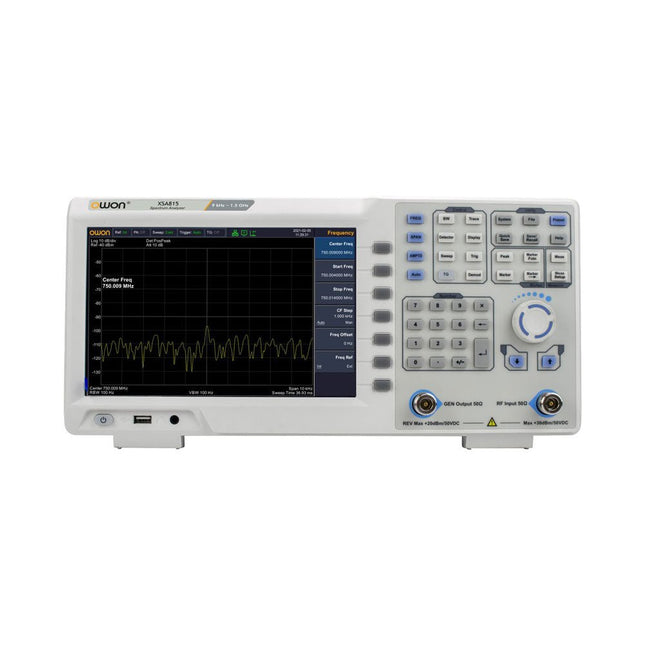
OWON OWON XSA815-TG Spektrum-Analyzer (9 kHz - 1,5 GHz)
Der OWON XSA815-TG 9 kHz-1,5 GHz ist ein kostengünstiger Spektrumanalysator mit Tracking-Generator und einer Frequenzauflösung von 1 Hz.FeaturesFrequenzbereich von 9 kHz bis 1,500009 GHz9-Zoll-Display9 kHz bis 1 MHz -95 dBm Angezeigter durchschnittlicher Geräuschpegel, 1 MHz bis 500 MHz 140 dBm (typisch), Phasenrauschen-10 kHz 100 kHz 1 MHz Auflösungsbandbreite (-3 dB): 1 Hz bis 1 MHz, in der Reihenfolge 1-3-5-10Tracking-Generator-Kit: 100 kHz bis 1,500009 GHzTechnische DatenFrequenzbereich9 kHz bis 500.009 MHzFrequenzauslösung1 HzFrequenzspanne9 kHz bis 1.500009 GHzSpan Range0 Hz, 100 Hz to max frequency of instrumentSpan Uncertainty± span / (sweep points-1)SSB Phase Noise (20°C to 30°C, fc=1 GHz) Carrier Offset10 kHz Resolution Bandwidth (-3 dB)1 Hz to 1 MHz, in 1-3-5-10 sequenceRBW AccuracyResolution Filter Shape Factor (60 dB: 3 dB)Video Bandwidth (-3 dB)10 Hz to 1 MHz, in 1-3-5-10 sequenceAmplitude measurement rangeDANL to +10 dBm, 100 kHz to 10 MHz, Preamp Off DANL to +20 dBm, 10 MHz to 1.5 GHz, Preamp OffReference Level-80 dBm to +30 dBm, 0.01dB by stepPreamp20 dB, nominal, 100 kHz to 1.5 GHzInput Attenuator0 to 40 dB, 1 dB by step Display Average Noise Level Input attenuation = 0 dB, RBW = VBW = 100 Hz, sample detector, trace average ≥ 50, 20°C to 30°C, input impedance = 50 Ω)Preamp Off 9 kHz to 1 MHz-95 dBm (Typical), Preamp Off 1 MHz to 500 MHz-140 dBm (Typical), Preamp On 100 kHz to 1 MHz-135 dBm (Typical), Preamp On 1 MHz to 500 MHz-160 dBm (Typical),Tracking Generator (optional) Frequency Range100 kHz to 1.500009 GHzOutput power level range-40 dBm to 0 dBmOutput level resolution 1 dB Output flatnessRelative to 50 MHz | ±3 dBTracking generator spuriousHarmonic spurious -30 dBc (Tracking generator output power -10 dBm) Non-harmonic spurious -40 dBc (Tracking generator output power -10 dBm)Tracking generator to input terminal isolation-60 dB (Tracking generator output power 0 dBm)Tracking generator to input terminal isolation-60 dB (Tracking generator output power 0 dBm)Tracking generator to input terminal isolation-60 dB (Tracking generator output power 0 dBm)Abmessungen375 x 185 x 120 mmGewicht3,7 kgLieferumfang1x XSA815-TG1x 220 V AC-Netzkabel1x USB-Kabel1x SchnellstartanleitungDownloadsQuick GuideSpecifications
€ 892,50
-

Elektor Digital Mastering Microcontrollers Helped by Arduino (3rd Edition) | E-book
Third, extended and revised edition with AVR Playground and Elektor Uno R4 Arduino boards have become hugely successful. They are simple to use and inexpensive. This book will not only familiarize you with the world of Arduino but it will also teach you how to program microcontrollers in general. In this book theory is put into practice on an Arduino board using the Arduino programming environment. Some hardware is developed too: a multi-purpose shield to build some of the experiments from the first 10 chapters on; the AVR Playground, a real Arduino-based microcontroller development board for comfortable application development, and the Elektor Uno R4, an Arduino Uno R3 on steroids. The author, an Elektor Expert, provides the reader with the basic theoretical knowledge necessary to program any microcontroller: inputs and outputs (analog and digital), interrupts, communication busses (RS-232, SPI, I²C, 1-wire, SMBus, etc.), timers, and much more. The programs and sketches presented in the book show how to use various common electronic components: matrix keyboards, displays (LED, alphanumeric and graphic color LCD), motors, sensors (temperature, pressure, humidity, sound, light, and infrared), rotary encoders, piezo buzzers, pushbuttons, relays, etc. This book will be your first book about microcontrollers with a happy ending! This book is for you if you are a beginner in microcontrollers, an Arduino user (hobbyist, tinkerer, artist, etc.) wishing to deepen your knowledge,an Electronics Graduate under Undergraduate student or a teacher looking for ideas. Thanks to Arduino the implementation of the presented concepts is simple and fun. Some of the proposed projects are very original: Money Game Misophone (a musical fork) Car GPS Scrambler Weather Station DCF77 Decoder Illegal Time Transmitter Infrared Remote Manipulator Annoying Sound Generator Italian Horn Alarm Overheating Detector PID Controller Data Logger SVG File Oscilloscope 6-Channel Voltmeter All projects and code examples in this book have been tried and tested on an Arduino Uno board. They should also work with the Arduino Mega and every other compatible board that exposes the Arduino shield extension connectors. Please note For this book, the author has designed a versatile printed circuit board that can be stacked on an Arduino board. The assembly can be used not only to try out many of the projects presented in this book but also allows for new exercises that in turn provide the opportunity to discover new techniques. Also available is a kit of parts including the PCB and all components. With this kit you can build most of the circuits described in the book and more. Datasheets Active Components Used (.PDF file): ATmega328 (Arduino Uno) ATmega2560 (Arduino Mega 2560) BC547 (bipolar transistor, chapters 7, 8, 9) BD139 (bipolar power transistor, chapter 10) BS170 (N-MOS transistor, chapter 8) DCF77 (receiver module, chapter 9) DS18B20 (temperature sensor, chapter 10) DS18S20 (temperature sensor, chapter 10) HP03S (pressure sensor, chapter 8) IRF630 (N-MOS power transistor, chapter 7) IRF9630 (P-MOS power transistor, chapter 7) LMC6464 (quad op-amp, chapter 7) MLX90614 (infrared sensor, chapter 10) SHT11 (humidity sensor, chapter 8) TS922 (dual op-amp, chapter 9) TSOP34836 (infrared receiver, chapter 9) TSOP1736 (infrared receiver, chapter 9) MPX4115 (analogue pressure sensor, chapter 11) MCCOG21605B6W-SPTLYI (I²C LCD, chapter 12) SST25VF016B (SPI EEPROM, chapter 13) About the author Clemens Valens, born in the Netherlands, lives in France since 1997. Manager at Elektor Labs and Webmaster of ElektorLabs, in love with electronics, he develops microcontroller systems for fun, and sometimes for his employer too. Polyglot—he is fluent in C, C++, PASCAL, BASIC and several assembler dialects—Clemens spends most of his time on his computer while his wife, their two children and two cats try to attract his attention (only the cats succeed). Visit the author’s website: www.polyvalens.com.Authentic testimony of Hervé M., one of the first readers of the book:'I almost cried with joy when this book made me understand things in only three sentences that seemed previously completely impenetrable.'
€ 34,95
Mitglieder: € 31,46
-

Rigol Rigol DSA815-TG Spektrum-Analyzer (9 kHz – 1,5 GHz)
Highlights Frequenz: 1,5 GHz DANL: -155 dBm Phasenrauschen: -80 dBc/Hz RBW: 10 Hz Tracking-Generator Technische Daten Volldigitale ZF-Technologie Frequenzbereich von 9 kHz bis 1,5 GHz Mindest. -161 dBm Angezeigter durchschnittlicher Geräuschpegel (typisch) Mindest. < -98 dBc/Hz bei 10 kHz Offset-Phasenrauschen Pegelmessunsicherheit < 0,8 dB 10 Hz Mindestauflösungsbandbreite Bis zu 1,5 GHz Tracking-Generator Erweiterte Messfunktionen (Opt.) EMI-Filter und Quasi-Peak-Detektor-Kit (Opt.) VSWR-Messkit (Opt.) PC-Software (Opt.) Optionales RF-TX/RX-Trainingskit Optionales HF-Zubehör (Kabel, Adapter, Dämpfungsglied, Brücke...) Vollständige Konnektivität: LAN (LXI), USB-Host und -Gerät, GPIB (Opt.) 8-Zoll-WVGA-Display (800 x 480). Kompakte Größe, leichtes Design Lieferumfang 1x Rigol DSA815-TG Spektrumanalysator 1x Netzkabel 1x USB-Kabel
€ 1.082,95€ 974,66Bestpreis
-
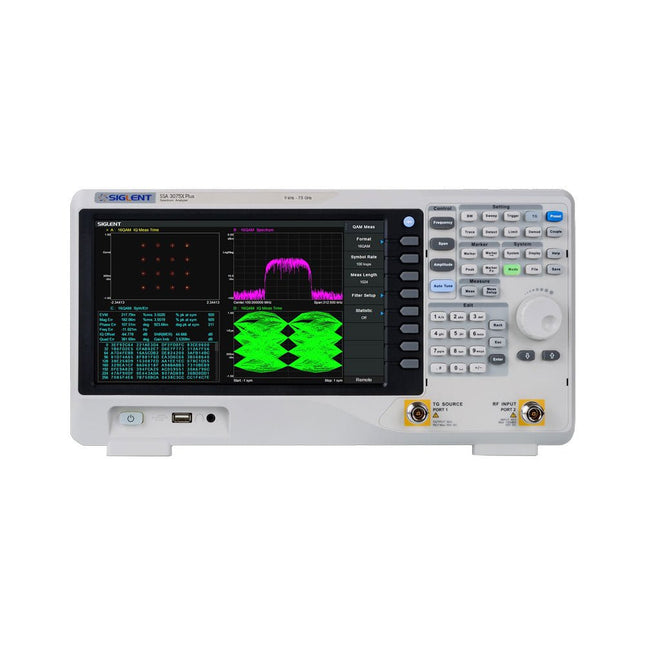
Siglent Siglent SSA3075X Plus Spektrum-Analyzer (9 kHz - 7,5 GHz)
Der Siglent SSA3075X Plus Spektrum-Analyzer ist ein leistungsstarkes und flexibles Werkzeug für die HF-Signal- und Netzwerkanalyse. Mit einem Frequenzbereich von 7,5 GHz bietet der Analysator zuverlässige automatische Messungen und mehrere Betriebsarten: Spektrum-Analyzer als Basis, optionale Funktionen umfassen HF-Leistungsmessung, Vektorsignal-Modulationsanalyse, Reflexionsmessung und EMI-Test. Zu den Anwendungsbereichen gehören die Überwachung/Bewertung von Sendungen, Standortvermessung, S-Parameter-Messung, analoge/digitale Modulationsanalyse, EMI-Vorprüfung, Forschung und Entwicklung, Ausbildung, Produktion und Wartung. Features Frequenzbereich des Spektrum-Analyzer von 9 kHz bis 7,5 GHz –165 dBm/Hz Angezeigter durchschnittlicher Geräuschpegel (typisch) –98 dBc/Hz. @ 10 kHz Offset-Phasenrauschen (1 GHz, typ.) Pegelmessunsicherheit <0,7 dB (typ.) 1 Hz Mindestauflösungsbandbreite (RBW) Vorverstärker (Std.) Tracking Generator (kostenlos inkl.) Analysemodus für analoge und digitale Signalmodulation (opt.) Reflexionsmesskit (opt.) EMI-Filter und Quasi-Peak-Detektor-Kit (opt.) Erweitertes Messkit (opt.) 10,1-Zoll-Multi-Touch-Bildschirm, Maus und Tastatur werden unterstützt Webbrowser-Fernsteuerung auf PCs und mobilen Endgeräten sowie Dateibetrieb Technische Daten SSA3015X Plus SSA3021X Plus SSA3032X Plus SSA3075X Plus Frequenzbereich 9 kHz ~ 1,5 GHz 9 kHz ~ 2,1 GHz 9 kHz ~ 3,2 GHz 9 kHz ~ 7,5 GHz Auflösung Bandbreite 1 Hz ~ 1 MHz 1 Hz ~ 1 MHz 1 Hz ~ 1 MHz 1 Hz ~ 3 MHz Phasenrauschen <–99 dBc/Hz <–98 dBc/Hz <–98 dBc/Hz <–98 dBc/Hz Genauigkeit der Gesamtamplitude <1,2 dB <0,7 dB <0,7 dB <0,7 dB Anzeige des durchschnittlichen Geräuschpegels –156 dBm/Hz –161 dBm/Hz –161 dBm/Hz –165 dBm/Hz Lieferumfang Siglent SSA3075X Plus Spektrum-Analyzer USB-Kabel Netzkabel Kurzanleitung Downloads Datasheet Manual Documentation Firmware
€ 7.875,89
Bestpreis
-

Siglent Siglent SSA3015X Plus Spektrum-Analyzer (9 kHz - 1,5 GHz)
Der Siglent SSA3015X Plus Spektrum-Analyzer ist ein leistungsstarkes und flexibles Werkzeug für die HF-Signal- und Netzwerkanalyse. Mit einem Frequenzbereich von 1,5 GHz bietet der Analysator zuverlässige automatische Messungen und mehrere Betriebsarten: Spektrum-Analyzer als Basis, optionale Funktionen umfassen HF-Leistungsmessung, Vektorsignal-Modulationsanalyse, Reflexionsmessung und EMI-Test. Zu den Anwendungsbereichen gehören die Überwachung/Bewertung von Sendungen, Standortvermessung, S-Parameter-Messung, analoge/digitale Modulationsanalyse, EMI-Vorprüfung, Forschung und Entwicklung, Ausbildung, Produktion und Wartung. Features Frequenzbereich des Spektrum-Analyzers von 9 kHz bis 1,5 GHz –156 dBm/Hz Angezeigter durchschnittlicher Geräuschpegel (typisch) –99 dBc/Hz. @ 10 kHz Offset-Phasenrauschen (1 GHz, typ.) Pegelmessunsicherheit <0,7 dB (typ.) 1 Hz Mindestauflösungsbandbreite (RBW) Vorverstärker (Std.) Tracking Generator (kostenlos inkl.) Analysemodus für analoge und digitale Signalmodulation (opt.) Reflexionsmesskit (opt.) EMI-Filter und Quasi-Peak-Detektor-Kit (opt.) Erweitertes Messkit (opt.) 10,1-Zoll-Multi-Touch-Bildschirm, Maus und Tastatur werden unterstützt Webbrowser-Fernsteuerung auf PCs und mobilen Endgeräten sowie Dateibetrieb Technische Daten SSA3015X Plus SSA3021X Plus SSA3032X Plus SSA3075X Plus Frequenzbereich 9 kHz ~ 1,5 GHz 9 kHz ~ 2,1 GHz 9 kHz ~ 3,2 GHz 9 kHz ~ 7,5 GHz Auflösung Bandbreite 1 Hz ~ 1 MHz 1 Hz ~ 1 MHz 1 Hz ~ 1 MHz 1 Hz ~ 3 MHz Phasenrauschen <–99 dBc/Hz <–98 dBc/Hz <–98 dBc/Hz <–98 dBc/Hz Genauigkeit der Gesamtamplitude <1,2 dB <0,7 dB <0,7 dB <0,7 dB Anzeige des durchschnittlichen Geräuschpegels –156 dBm/Hz –161 dBm/Hz –161 dBm/Hz –165 dBm/Hz Lieferumfang Siglent SSA3015X Plus Spektrum-Analyzer USB-Kabel Netzkabel Kurzanleitung Downloads Datasheet Manual Documentation Firmware
€ 1.402,39
Bestpreis
-

Elektor Digital Arduino Uno – 45 Projects for Beginners and Experts (E-book)
This book covers a series of exciting and fun projects for the Arduino, such as a silent alarm, people sensor, light sensor, motor control, internet and wireless control (using a radio link). Contrary to many free projects on the internet all projects in this book have been extensively tested and are guaranteed to work! You can use it as a projects book and build more than 45 projects for your own use. The clear explanations, schematics, and pictures of each project make this a fun activity. The pictures are taken of a working project, so you know for sure that they are correct. You can combine the projects in this book to make your own projects. To facilitate this, clear explanations are provided on how the project works and why it has been designed the way it has That way you will learn a lot about the project and the parts used, knowledge that you can use in your own projects. Apart from that, the book can be used as a reference guide. Using the index, you can easily locate projects that serve as examples for the C++ commands and Arduino functionality. Even after you’ve built all the projects in this book, it will still be a valuable reference guide to keep next to your PC.
€ 29,95
Mitglieder: € 26,96
-

Siglent Siglent SSA3032X Plus Spektrum-Analyzer (9 kHz - 3,2 GHz)
Der Siglent SSA3032X Plus Spektrum-Analyzer ist ein leistungsstarkes und flexibles Werkzeug für die HF-Signal- und Netzwerkanalyse. Mit einem Frequenzbereich von 3,2 GHz bietet der Analysator zuverlässige automatische Messungen und mehrere Betriebsarten: Spektrum-Analyzer als Basis, optionale Funktionen umfassen HF-Leistungsmessung, Vektorsignal-Modulationsanalyse, Reflexionsmessung und EMI-Test. Zu den Anwendungsbereichen gehören die Überwachung/Bewertung von Sendungen, Standortvermessung, S-Parameter-Messung, analoge/digitale Modulationsanalyse, EMI-Vorprüfung, Forschung und Entwicklung, Ausbildung, Produktion und Wartung. Features Frequenzbereich des Spektrum-Analyzer von 9 kHz bis 3,2 GHz –161 dBm/Hz Angezeigter durchschnittlicher Geräuschpegel (typisch) –98 dBc/Hz. @ 10 kHz Offset-Phasenrauschen (1 GHz, typ.) Pegelmessunsicherheit <0,7 dB (typ.) 1 Hz Mindestauflösungsbandbreite (RBW) Vorverstärker (Std.) Tracking Generator (kostenlos inkl.) Analysemodus für analoge und digitale Signalmodulation (opt.) Reflexionsmesskit (opt.) EMI-Filter und Quasi-Peak-Detektor-Kit (opt.) Erweitertes Messkit (opt.) 10,1-Zoll-Multi-Touch-Bildschirm, Maus und Tastatur werden unterstützt Webbrowser-Fernsteuerung auf PCs und mobilen Endgeräten sowie Dateibetrieb Technische Daten SSA3015X Plus SSA3021X Plus SSA3032X Plus SSA3075X Plus Frequenzbereich 9 kHz ~ 1,5 GHz 9 kHz ~ 2,1 GHz 9 kHz ~ 3,2 GHz 9 kHz ~ 7,5 GHz Auflösung Bandbreite 1 Hz ~ 1 MHz 1 Hz ~ 1 MHz 1 Hz ~ 1 MHz 1 Hz ~ 3 MHz Phasenrauschen <–99 dBc/Hz <–98 dBc/Hz <–98 dBc/Hz <–98 dBc/Hz Genauigkeit der Gesamtamplitude <1,2 dB <0,7 dB <0,7 dB <0,7 dB Anzeige des durchschnittlichen Geräuschpegels –156 dBm/Hz –161 dBm/Hz –161 dBm/Hz –165 dBm/Hz Lieferumfang Siglent SSA3032X Plus Spektrum-Analyzer USB-Kabel Netzkabel Kurzanleitung Downloads Datasheet Manual Documentation Firmware
€ 2.951,19
Bestpreis
-
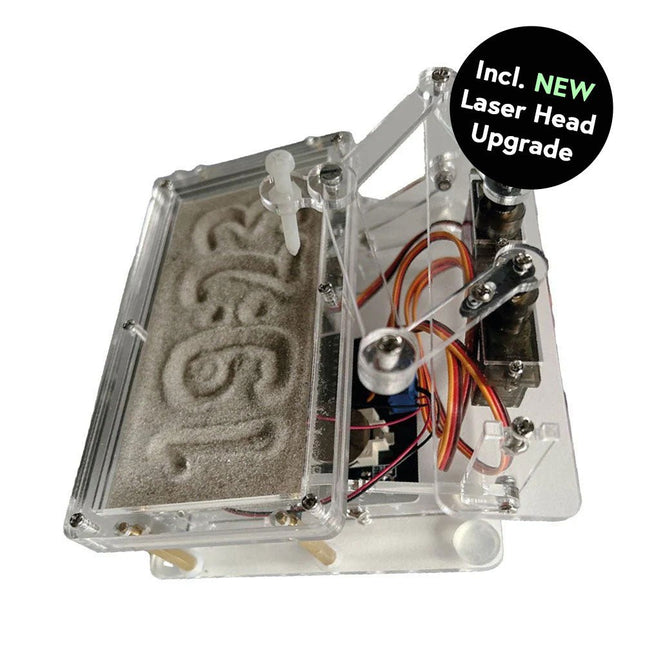
Elektor Labs Elektor Sanduhr für Raspberry Pi Pico (inkl. Laserkopf-Upgrade)
Dieses Bundle enthält die beliebte Elektor Sanduhr für Raspberry Pi Pico und das neue Elektor Laserkopf-Upgrade und bietet damit noch mehr Möglichkeiten zur Zeitanzeige. Sie können die aktuelle Uhrzeit nicht nur in Sand "gravieren", sondern sie jetzt auch alternativ auf eine im Dunkeln leuchtende Folie schreiben oder grüne Zeichnungen erstellen. Inhalt des Bundles Elektor Sanduhr für Raspberry Pi Pico (Einzelpreis: 50 €) Elektor Laserkopf-Upgrade für Sanduhr (Einzelpreis: 35 €) Elektor Sanduhr für Raspberry Pi Pico (Raspberry Pi-basierter Eyecatcher) Eine handelsübliche Sanduhr zeigt nur, wie die Zeit verrinnt. Dagegen zeigt diese Raspberry Pi Pico-gesteuerte Sanduhr die genaue Uhrzeit an, indem die vier Ziffern für Stunde und Minute in die Sandschicht "eingraviert" werden. Nach einer einstellbaren Verzögerung wird der Sand durch zwei Vibrationsmotoren flachgedrückt und der Zyklus beginnt von vorne. Das Herzstück der Sanduhr sind zwei Servomotoren, die über einen Pantographenmechanismus einen Schreibstift antreiben. Ein dritter Servomotor hebt den Stift auf und ab. Der Sandbehälter ist mit zwei Vibrationsmotoren ausgestattet, um den Sand zu glätten. Der elektronische Teil der Sanduhr besteht aus einem Raspberry Pi Pico und einer RTC/Treiberplatine mit Echtzeituhr, plus Treiberschaltungen für die Servomotoren. Eine ausführliche Bauanleitung steht zum Download bereit. Features Abmessungen: 135 x 110 x 80 mm Bauzeit: ca. 1,5 bis 2 Stunden Lieferumfang 3x vorgeschnittene Acrylplatten mit allen mechanischen Teilen 3x Mini-Servomotoren 2x Vibrationsmotoren 1x Raspberry Pi Pico 1x RTC/Treiberplatine mit montierten Teilen Muttern, Bolzen, Abstandshalter und Drähte für die Baugruppe Feinkörniger weißer Sand Elektor Laserkopf-Upgrade für Sanduhr Der neue Elektor-Laserkopf verwandelt die Elektor Sanduhr in eine Uhr, die die Zeit auf eine im Dunkeln leuchtende Folie statt auf Sand schreibt. Neben der Anzeige der Zeit können damit auch flüchtige Zeichnungen erstellt werden. Der 5-mW-Laserpointer mit einer Wellenlänge von 405 nm erzeugt leuchtend grüne Zeichnungen auf der im Dunkeln leuchtenden Folie. Um optimale Ergebnisse zu erzielen, verwenden Sie das Kit in einem schwach beleuchteten Raum. Achtung: Schauen Sie niemals direkt in den Laserstrahl! Der Bausatz enthält alle notwendigen Komponenten, es ist jedoch das Anlöten von drei Drähten erforderlich. Hinweis: Dieses Kit ist auch mit der originalen Arduino-basierten Sanduhr aus dem Jahr 2017 kompatibel. Weitere Einzelheiten finden Sie unter Elektor 1-2/2017 und Elektor 1-2/2018.


