This educational soldering kit is suitable for all kinds of applications such as model making and works with a 9 V battery (not included). You can control the flashing speed with two potentiometers.
Downloads
Manual
Mehrsprachiges DIY-Kit (inkl. 27 RGB-LEDs + Raspberry Pi Pico)
Verleihen Sie Ihrer Weihnachtszeit einen Hauch von Ingenieurskunst – mit dem "wortreichen" LED-Weihnachtsbaum von Elektor. Der kunstvoll gestaltete 3D-Weihnachtsbaum vereint elf Platinen, einen Raspberry Pi Pico und 27 adressierbare RGB-LEDs, um festliche Botschaften in sieben Sprachen erstrahlen zu lassen: Dänisch, Niederländisch, Englisch, Französisch, Deutsch, Italienisch und Spanisch.
Anders als bei herkömmlichen LED-Bäumen verfügt jedes Wort im Inneren über eine eigene Leuchtkammer. So entsteht eine elegante, sanft leuchtende Anzeige ohne Geräusche oder Flackern. Die LEDs sind vollständig WS2812-kompatibel und werden über die beliebte Adafruit NeoPixel-Bibliothek angesteuert, wodurch sich individuelle Animationen und Farbeffekte ganz einfach erstellen lassen.
Dieses Kit ist perfekt für Maker, Tüftler und alle, die sich für festliche Elektronik begeistern. Es bietet sowohl ein unterhaltsames Bauprojekt als auch eine beeindruckende Dekoration, die garantiert für Gesprächsstoff sorgt. Der Elektor LED-Weihnachtsbaum ist das ideale Bastelprojekt für die Feiertage!
Features
Mehrsprachige Begrüßungen (7 Sprachen) in die Frontplatte eingefräst
3D-Konstruktion aus 11 ineinandergreifenden Leiterplatten
Angetrieben von einem Raspberry Pi Pico
27 einzeln ansteuerbare RGB-LEDs (vormontiert)
Sanfte Ein- und Ausblendanimationen
Vollständig programmierbar mit der Arduino IDE
Für maximale Helligkeit wird ein 5-V-Netzteil (mit Micro-USB-Anschluss) mit einer Leistung von ≥1 A empfohlen (nicht im Lieferumfang enthalten)
Abmessungen (H x B x T): 130 x 115 x 75 mm
Lieferumfang
Alle benötigten Leiterplatten mit LEDs und anderen SMD-Bauteilen
Raspberry Pi Pico (vom Benutzer zu löten und zu programmieren)
3-polige Stiftleiste (vom Benutzer zu löten)
3-polige Buchse (vom Benutzer zu löten)
4x Selbstklebende Gummipuffer
Projektseite
Elektor Labs
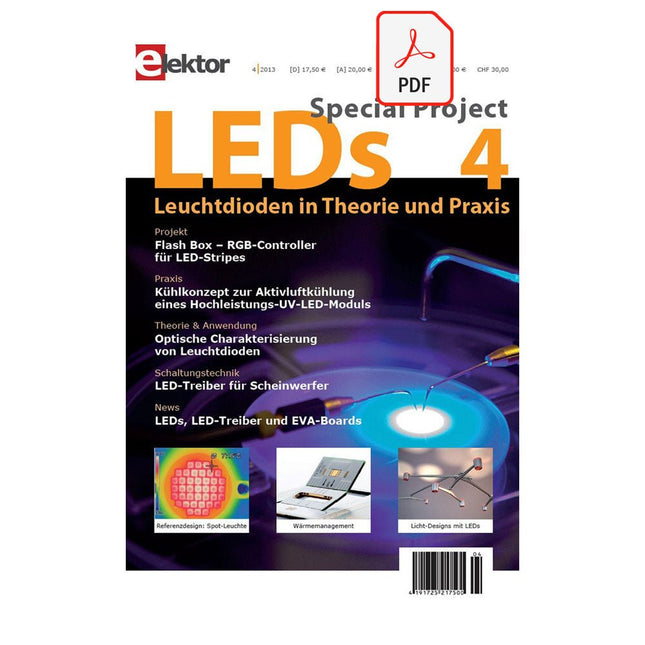
Inhalt
Praxis
Flash Box – Projekt: RGB-Controller für LED-Stripes
LED-Module für Spot-Leuchten à la Zhaga – Referenzdesign: Zhaga-kompatibles LED-Modul auf Basis der Cree XLamp XB-D
LUVLED II – Optimierung eines Kühlkonzeptes zur Aktivluftkühlung eines Hochleistungs-UV-LED-Moduls
Lumen-Pumpe – HB-LEDs für Niedervolt-Systeme mit Li-Ion-Batterien
Bei Licht besehen – Licht-Design mit LEDs
Qualitätssicherung – Optische Charakterisierung von Leuchtdioden
LED-Treiber für Scheinwerfer – Synchroner Buck-Boost-Schaltregler für LED-Frontscheinwerfer
Theorie & Anwendung
LEDs am TRIAC-Dimmer – LED-Treiber für isolierte Offline-LED-Beleuchtungen ohne Optokoppler
Kalte Platte – Platinentechnik ermöglicht effizientes Wärmemanagement und mehrdimensionale LED-Lichtgestaltung
Abweichler – Kolorimetrie und Binning-Grundlagen
Info
Marktübersicht – LED-Hersteller, LED-Treiber-Hersteller
Licht mit LEDs: kreatives Leuchten-Design
Plädoyer für LED-Arrays – Multichip-LED-Module für ein flexibleres Leuchtendesign
Zugeschnittene Lichtleistung – Optogan X10 Chip-on-Board-System
Mid-Power LEDs im Aufwind – Trends bei Seoul Semiconductor für LEDs der Allgemeinbeleuchtung
Aktuell – Treiber, LEDs, Entwicklungs-Boards
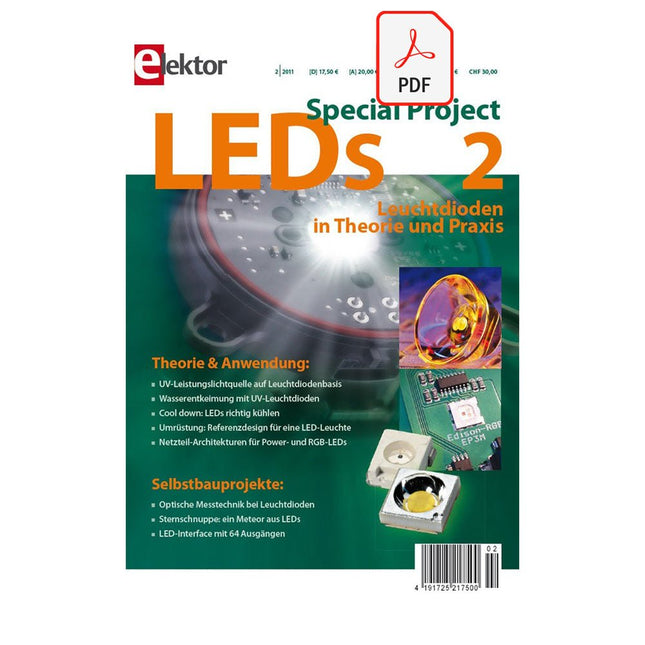
Inhalt:
Theorie & Anwendung
UV-Leistungslichtquelle auf Leuchtdiodenbasis
Wasserentkeimung mit UV-Leuchtdioden
Cool down: LEDs richtig kühlen
Umrüstung: Referenzdesign für eine LED-Leuchte
Netzteil-Architekturen für Power- und RGB-LEDs
Selbstbauprojekte
Optische Messtechnik bei Leuchtdioden
Sternschnuppe: ein Meteor aus LEDs
LED-Interface mit 64 Ausgängen
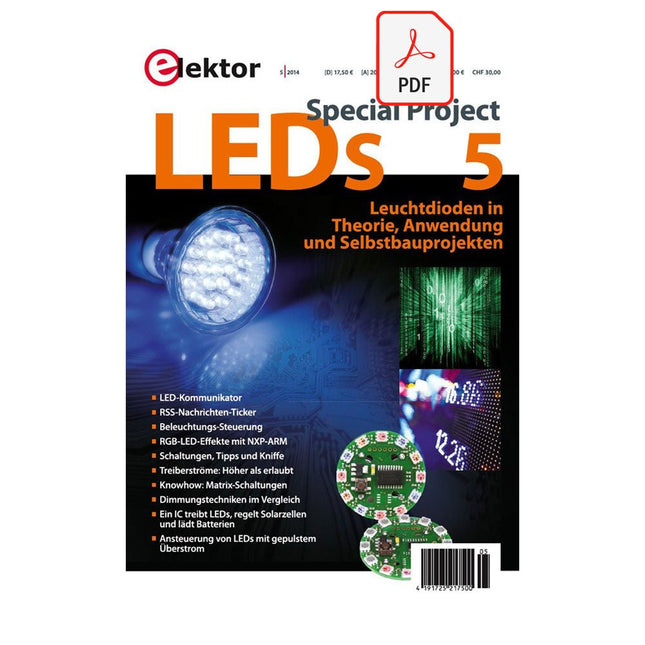
Inhalt
Praxis
LED-KommunikatorDesign-Studie: Verwendung von handelsüblichen LEDs zur bidirektionalen Kommunikation
Nachrichten-Ticker Bau eines Internet-News-Tickers
ALS es Licht wurde Controller steuert Beleuchtungseinrichtungen nach Umgebungshelligkeit und Uhrzeit
BULI - Button-Lichtspiele Effekte mit LED2812 und Cortex-M0+
Theorie & Anwendung
DesignCorner: Schaltungen, Tipps und Kniffe- Posistor gegen den Hitzetod- High-Brightness-LEDs an Niedervolt-Stromversorgungen betreiben- Derating mit PTC-Thermistoren in LED-Treiberschaltungen- Der Umgang mit LED-Strings- LED-Treiber für unterschiedliche Wandler-Topologien- LED-Konstantstromtreiber in Schaltreglertechnik
Grenzen überschreiten
Ansteuerung von LEDs mit gepulstem Überstrom
Ansteuerung von LED-Matrixschaltungen
MultitalentController treibt LEDs, regelt Solarzellen und lädt Batterien
Dimmungstechniken für LEDs
Info
OLED – Die FlächenlichtquelleZum Entwicklungsstand der organischen Leuchtdiode
400 LED-Lampen auf dem Prüfstand
Über dem LimitLEDs mit höheren Treiberströmen ansteuern
AktuellNeue LEDs, LED-Lampen, Treiber, Netzteile, Zubehör und Entwicklungs-Tools
Diese Schreibtischlampe ist ideal für Ihren Arbeitsplatz. Mit der 5-Zoll großen 5D-Linse gelingen feinste Arbeiten. Die Lampe verfügt über 80 integrierte LEDs.
Features
Linsengröße: 5 Zoll
Linsenmaterial: Glas
Dioptrie: 5D
Lichtquelle: T5 22 W fluoreszierende Energiesparlampe (80 Stück LED)
Standardmontage: Tischfuß
Spannung: 220-240 V
Leistung: 22 W
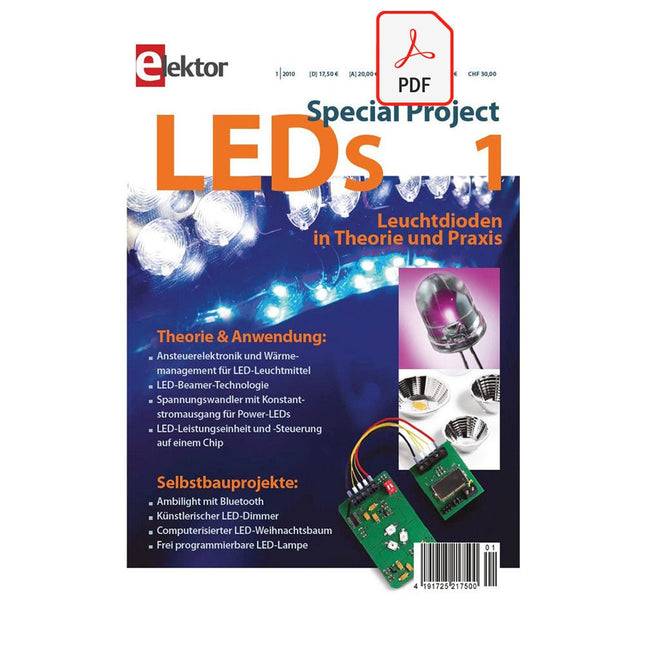
Inhalt
Theorie & Anwendung
Es werde Licht – Physikalische Grundlagen zu Licht und Beleuchtung
Illuminati – Beleuchtungstechnik: Grundlagen und Anwendungen
Steuerzentrale – LED-Leistungseinheit und -Steuerung auf einem Chip
LED-Beamer-Technologie – Funktionsweise und Anwendungen
Hitzeschild – Kaltleiter als Strombegrenzer für LEDs
Strahler 09 – Ansteuerelektronik und Wärmemanagement für Leuchtmittel auf LED-Basis
LEDs für eine neue Ära in der Lichttechnik – Die Leuchtdiode und ihre Möglichkeiten aus Sicht eines Herstellers
Ökobilanz von LED-Lampen – Ergebnisse einer Gesamtlebenszyklusanalyse für LED-Lampen
Lichtpumpe – Spannungswandler mit Konstantstromausgang für 0,5-W- und 1-W-Power-LEDs
LED the sun shine – LED-Licht fürs Automobil
Licht im Tunnel – Die XLamp LED-Serie von Cree
Selbstbauprojekte
Ambilight mit Bluetooth – Ein modulares RGB-Power-LED-System mit PC-Schnittstelle
Universelle LED-Lampe – Mit programmierbarem Farbwechsel
LED-Tester – Lichtstärke prüfen und vergleichen
Künstlerischer LED-Dimmer – Farbmischung stufenlos einstellen
Computerisierter LED-Weihnachtsbaum
LED-Würfel – Mogeln unmöglich!
Inhalt
Theorie & Anwendung
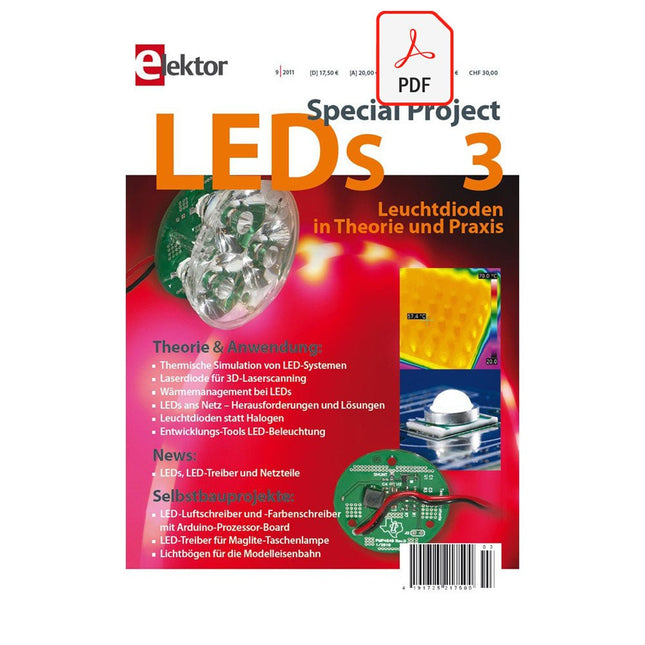
Thermische Simulation von LED-Systemen
LUVLED
100 LEDs
LEDs ans Netz
Laserstrukturierung von TCOs
Ha(l)lo LED
Wärmemanagement bei LEDs
3D-Laserscanning mit Linienlaser und Smart Camera
Selbstbauprojekte
Lichtbögen für die Modelleisenbahn
LED-Anwendungen mit Arduino
LED-Treiber für Maglite-Taschenlampe
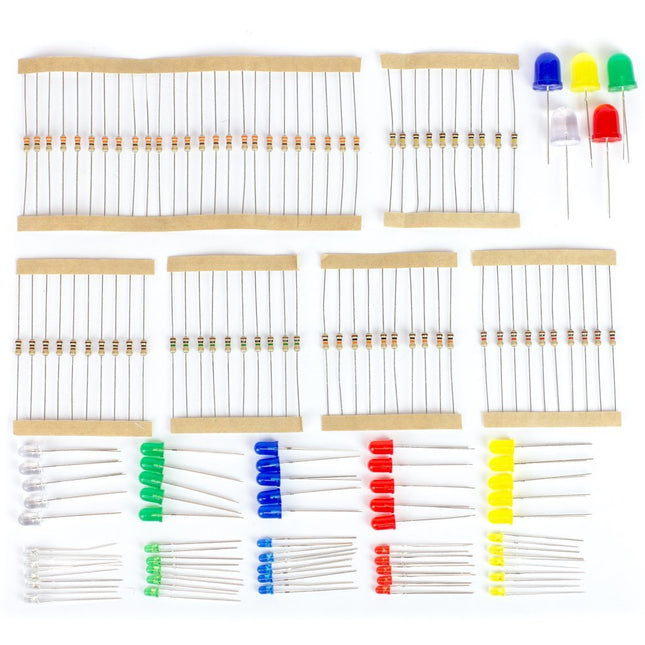
Bringen Sie Farbe in Ihre Projekte mit dieser Kollektion aus roten, grünen, gelben, blauen und weißen LEDs. Sie sind mit verschiedenen Strombegrenzungswiderständen ausgestattet, um die Teile zu schützen und die Helligkeit zu steuern.
Inbegriffen
10-mm-LEDs
1x Hrsg
1x grün
1x gelb
1x blau
1x weiß
5-mm-LEDs
5x Aufl
5x grün
5x gelb
5x blau
5x weiß
3mm LEDs
5x Aufl
5x grün
5x gelb
5x blau
5x weiß
25x 330 Ω Widerstände
10x 1 kΩ Widerstände
10x 10 kΩ Widerstände
10x 100 kΩ Widerstände
10x 1 MΩ Widerstände
In this book the author presents all essential aspects of microcontroller programming, without overloading the reader with unnecessary or quasi-relevant bits of information. Having read the book, you should be able to understand as well as program, 8-bit microcontrollers.
The introduction to microcontroller programming is worked out using microcontrollers from the PIC series. Not exactly state-of-the-art with just 8 bits, the PIC micro has the advantage of being easy to comprehend. It is offered in a DIP enclosure, widely available and not overly complex. The entire datasheet of the PIC micro is shorter by decades than the description of the architecture outlining the processor section of an advanced microcontroller. Simplicity has its advantages here. Having mastered the fundamental operation of a microcontroller, you can easily enter into the realms of advanced softcores later.
Having placed assembly code as the executive programming language in the foreground in the first part of the book, the author reaches a deeper level with ‘C’ in the second part. Cheerfully alongside the official subject matter, the book presents tips & tricks, interesting measurement technology, practical aspects of microcontroller programming, as well as hands-on options for easier working, debugging and faultfinding.
Design IoT Projects with Raspberry Pi, Arduino and ESP32 The Internet of Things (IoT) is becoming a major application area for embedded systems. As a result, more and more people are becoming interested in learning about embedded design and programming. Technical colleges and universities are moving away from legacy 8 and 16-bit microcontrollers and are introducing 32-bit embedded microcontrollers to their curriculums. Many IoT applications demand precision, high processing power, and low power consumption. Produced by IBM, Node-RED is an open-source visual editor for wiring the Internet of Things. Node-RED comes with a large number of nodes to handle a multitude of tasks. The required nodes are selected and joined together to perform a particular task. Node-RED is based on flow type programming where nodes are configured and joined together to form an application program. There are nodes for performing complex tasks, including web access, Twitter, E-mail, HTTP, Bluetooth, MQTT, controlling GPIO ports, etc. One particularly nice aspect of Node-RED is that the programmer does not need to learn how to write complex programs. For example, an email can be sent by simply joining nodes together and writing only a few lines of code. The aim of this book is to teach how Node-RED can be used in projects. The main hardware platform used with most of the projects in this book is Raspberry Pi 4. Chapters are included to show how Node-RED can be also be used with Arduino Uno, ESP32 DevKitC, and the ESP8266 NodeMCU microcontroller development boards.
STM32 Nucleo family of processors are manufactured by STMicroelectronics. These are low-cost ARM microcontroller development boards. This book is about developing projects using the popular Nucleo development board. In the early chapters of the book, the architecture of the Nucleo family is briefly described.
Software development tools that can be used with the Nucleo boards such as the Mbed, Keil MDK, TrueSTUDIO, and the System Workbench are described briefly in later Chapters.
The book covers many projects using most features of the STM32 Nucleo development boards where the full software listings for Mbed and System Workbench are given for every project. The projects range from simple flashing LEDs to more complex projects using modules and devices such as GPIO, ADC, DAC, I²C, LCD, analog inputs and others.
In addition, several projects are given using the Nucleo Expansion Boards, including popular expansion boards such as solid-state relay, MEMS and environmental sensors, DC motor driver, Wi-Fi, and stepper motor driver.
These Expansion Boards plug on top of the Nucleo development boards and simplify the task of project development considerably.
Features of this book
Learn the architecture of the STM32 microcontrollers
Learn how to use the Nucleo development board in projects using Mbed and System Workbench Toolchains
Learn how to use the Nucleo Expansion Boards with the Nucleo development boards
Update
The Mbed compiler has been replaced with two software packages: The Mbed Studio and Keil Studio Cloud. Both of these software packages are free of charge and are available on the Internet. If you need assistance using the Keil Studio Cloud, please download the Guide below.